by Founder of USDC | 14th August 2026 | Self-Defense Training
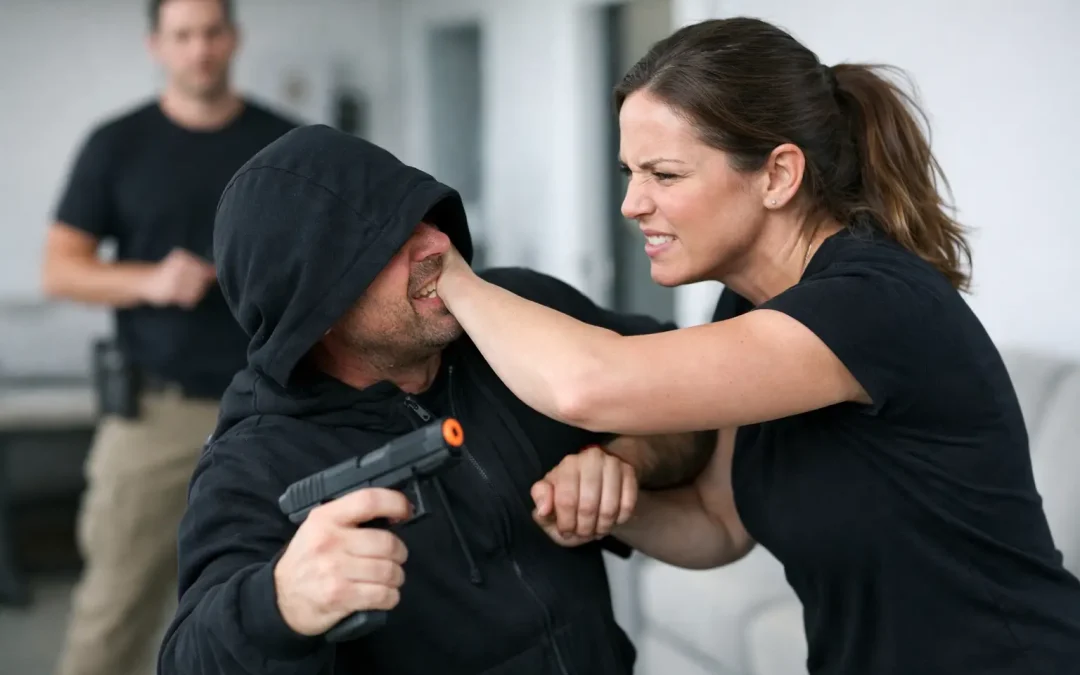
A crowded parking garage. A stranger who keeps closing distance after you have said no. A confrontation that begins with words, then suddenly changes. Scenario based self defense training prepares you for the moment when a situation stops feeling normal and you need to make a fast, clear decision.
That is the difference between knowing a move and being able to use it. Real danger does not arrive on schedule. It does not pause so you can set your stance, remember a sequence, or wait for a referee. Effective self-defense training must account for confusion, fear, awkward spaces, uneven footing, noise, and the pressure of another person refusing to back off.
What Scenario Based Self Defense Training Really Means
Scenario-based training puts skills inside realistic problems. Instead of repeating a technique in isolation, you practice recognizing a threat, using your voice, managing distance, responding to physical pressure, creating an opening, and getting to safety.
The goal is not to win a fight. The goal is to avoid harm and escape as quickly as possible.
A useful scenario has context. You may be standing beside your car with your hands full. You may be seated at a restaurant. You may be moving through a hallway, entering an elevator, commuting after work, or dealing with an aggressive person at close range. Each setting changes your options.
This is why a technique that looks impressive in a controlled class may fail outside it. A high kick may be a poor choice in narrow clothing or on a wet surface. A complicated joint lock may disappear the moment someone jerks, shoves, or throws repeated strikes. No fancy moves – just what works when your balance, space, and attention are compromised.
Why Pressure Changes Everything
Under stress, your body does not perform like it does during a relaxed demonstration. Your heart rate rises. Fine motor control drops. Vision can narrow. You may freeze, rush, or struggle to process what is happening.
That is not weakness. It is a human stress response.
Good training does not pretend stress will vanish. It teaches you to work through it. Students need gradual exposure to resistance, verbal aggression, movement, and uncertainty so they can practice staying functional when their body wants to panic.
Pressure has to be introduced responsibly. Beginners do not need to be thrown into full-contact chaos on day one. They need a supportive environment where drills become progressively more difficult as awareness and confidence grow. The lesson is simple: stay present, protect yourself, act decisively, and leave.
Controlled sparring and resistance drills matter because a cooperative partner can make almost any technique look effective. A resisting partner reveals what is simple enough to remember, direct enough to apply, and adaptable enough to continue if the first attempt does not work.
The Skills That Matter Before Physical Contact
The strongest response often happens before an attack begins. Scenario training should teach students to read behavior, not just react to hands.
Look for patterns that deserve attention: someone testing your boundaries, blocking your path, asking questions that keep you engaged, following too closely, invading your personal space, or ignoring a clear refusal. One signal alone does not always mean danger. Several signals, especially combined with isolation or escalating behavior, should change your decision-making.
Your voice is a practical tool. Clear commands such as “Stop,” “Back up,” and “Do not touch me” establish a boundary, attract attention, and create mental space to act. You do not need to sound polite when someone is violating your safety. You need to be understood.
Positioning matters too. Keep distance where possible. Avoid allowing an unknown person to trap you against a wall, vehicle, table, or doorway. Notice exits and move toward people, light, or a staffed area when something feels wrong. These decisions are not dramatic. They are smart.
What Realistic Scenarios Should Cover
A well-designed program does not train one “perfect” response. It builds a small set of reliable principles that can be adapted across situations.
For urban adults, useful training scenarios commonly include boundary violations and unwanted grabbing, close-range pushing or striking, escapes from common holds, defending yourself in tight spaces, and dealing with verbal intimidation. Training can also address personal-safety decisions around commuting, parking areas, workplace conflict, travel, and social settings.
The physical response should stay simple. Protect your head and balance. Create space. Use direct actions that interrupt the attack. Move toward an exit. Get help. The exact choice depends on the threat, your physical condition, who is with you, and whether escape is available.
Weapon situations require extra honesty. There is no guaranteed unarmed defense against a weapon. Training should never sell fantasy or encourage unnecessary risk. The priority is awareness, escape, cooperation when appropriate, and survival. Physical action is a last-resort decision when there is no safer option.
Scenario Based Self Defense Training Is Not Choreography
Choreographed drills have a place when learning basic movement. They give beginners a way to understand position, timing, and body mechanics. But choreography cannot be the destination.
If every partner attacks at the same speed, with the same hand, from the same angle, students learn to predict rather than respond. They may feel confident until the pattern breaks. Real threats are messy. People move unexpectedly, resist, grab clothing, crowd your space, and do not follow a script.
Reality-based training adds variation. The attacker may begin with words instead of a punch. The student may not know what is coming. The room may be loud. The goal may be to protect a friend or move around an obstacle. These details force the brain to make decisions instead of reciting routines.
That does not mean every session must be extreme. Safety, control, and skill level still matter. It means the training must eventually test whether a student can apply a principle outside the exact drill where it was learned.
Building Instinct Without Building Recklessness
Instinctive action is not magic. It is built through repetition under changing conditions.
A useful class repeats high-value movements until they become more available under pressure, then places them in different scenarios. You learn when to use verbal boundaries, when to disengage, when to protect yourself, and when force is necessary to stop immediate harm.
This approach also builds judgment. Self-defense is not permission to escalate every rude encounter. A person who insults you, cuts you off, or acts disrespectfully may be unpleasant, but that is not automatically a physical threat. The best outcome is often distance, de-escalation, and a safe exit.
Use force only when you reasonably need to protect yourself or another person from immediate harm, and stop when the danger stops. Local laws and circumstances matter. A responsible instructor teaches the mindset behind physical skills, not just the physical skills themselves.
Who Benefits Most From This Training
Scenario-based instruction is valuable for beginners because it starts with natural, usable actions rather than years of forms or rank requirements. It is also valuable for experienced martial artists who want to test whether their skills hold up in closer, less predictable conditions.
Working professionals often benefit because everyday risk tends to happen around routines: getting into a car, leaving an office, walking through a parking area, meeting someone unfamiliar, or traveling alone. Corporate teams can benefit as well when training includes awareness, communication, boundary setting, and practical emergency decision-making.
For women-focused groups, the value is not limited to a set of physical techniques. It is permission to trust discomfort, use a strong voice, break the social habit of being accommodating, and act fast when boundaries are ignored. For private groups, realistic scenarios can be shaped around the places and concerns participants actually face.
At Urban Street Defense, this means training principles inspired by Jeet Kune Do: simplicity, directness, adaptability, and effectiveness under pressure. The standard is not whether a movement looks traditional. The standard is whether it gives you a better chance to get home safely.
How to Judge a Self-Defense Program
Ask direct questions before you train. Does the program include realistic resistance, or do partners always cooperate? Does it teach awareness and verbal boundaries alongside physical responses? Are instructors honest about the limits of unarmed defense? Can beginners progress safely without being overwhelmed?
Also look at class culture. Serious training does not need to be macho, humiliating, or reckless. You should be challenged, corrected, and supported. Small classes and private instruction can be especially useful if you want more feedback or need to work around a specific concern.
The right program will not promise invincibility. It will give you practical options, better habits, and a clearer response when seconds matter.
Personal safety is not about living afraid. It is about refusing to be unprepared. Train for the situations that can actually happen, practice until simple actions become familiar, and give yourself the best possible chance to move, act, and get safe.
by Founder of USDC | 13th August 2026 | Self-Defense Training
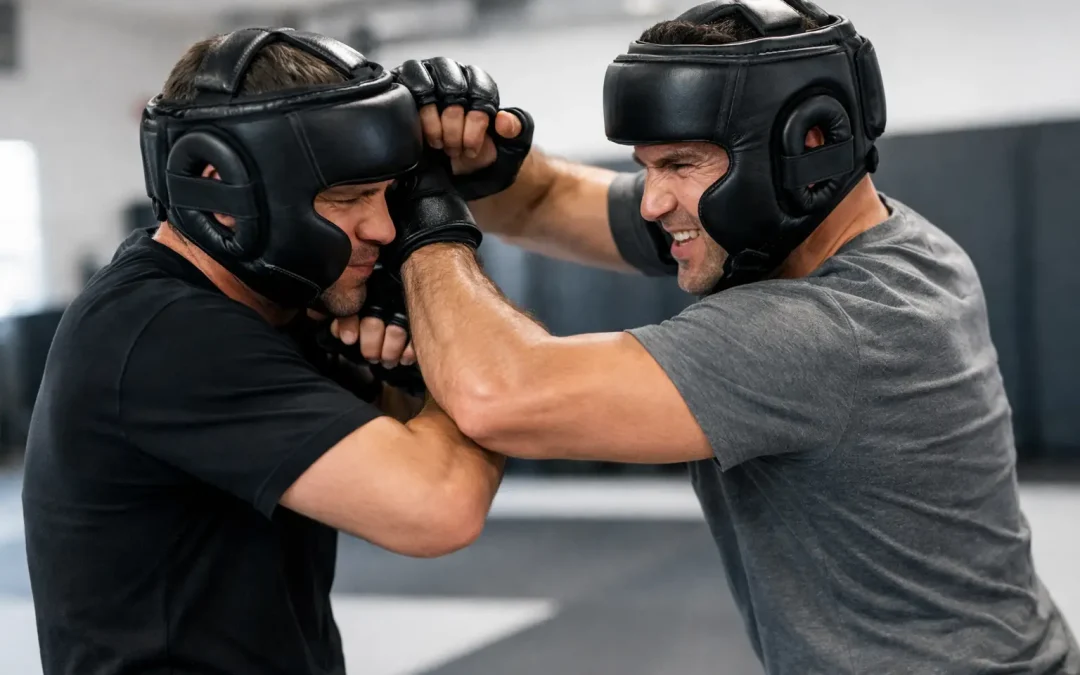
A threat does not wait for you to settle into a stance, remember a sequence, or agree on the rules. That is why realistic self defense sparring matters. It exposes the gap between knowing a move and being able to act when someone is crowding you, grabbing you, shouting, or driving forward with real intent.
This does not mean training should become reckless. Good sparring is controlled, progressive, and built around one goal: developing simple responses that still work when your heart rate rises. No fancy moves. No point-scoring habits. Just practical action under pressure.
What Realistic Self Defense Sparring Actually Means
Realistic sparring is not a staged fight where both people trade clean punches from a polite distance. It uses resistance, unpredictability, and scenario-specific problems to test whether your movement, awareness, and decisions hold up.
The pressure has to be honest. Your partner should not freeze after your first technique. They should move, cover, clinch, push, pull away, or keep advancing within the safety rules of the drill. If every attack arrives slowly and every defense succeeds on cue, you are rehearsing cooperation, not building a usable response.
At the same time, realism has limits. A street assault can involve concrete, weapons, multiple attackers, surprise, and legal consequences. Training cannot safely reproduce every risk. It can, however, prepare you to recognize danger earlier, protect yourself under stress, create space, and escape.
That distinction matters. The win condition in self-defense is not looking dominant. It is getting away safely.
Why Technique Changes Under Pressure
Many techniques look convincing when both people know what comes next. Add speed, resistance, confusion, and fatigue, and the picture changes fast. Fine motor movements become less reliable. Long combinations get interrupted. Distance disappears. Your plan may last one second.
This is where sparring earns its place. It teaches you what your body actually does when pressure arrives. You may blink, back straight up, hold your breath, reach for the attacker, or turn away. None of that is a character flaw. It is useful information.
Once you can see your default reaction, you can improve it. You learn to keep your hands active, protect your head, manage range, use direct strikes when appropriate, and move toward an exit instead of staying planted. You also learn when a technique is not working and when it is time to disengage.
The best self-defense methods are usually not complicated. They are simple enough to access when your mind is overloaded. That is the Jeet Kune Do principle in practical terms: remove what does not serve the moment.
Start With Progressive Resistance
Throwing beginners into hard sparring is not realistic. It is poor coaching. Panic does not automatically create skill, and repeated overwhelming experiences can teach people to freeze even more.
Pressure should build in stages. First, learn a movement or response against a cooperative partner. Then add light resistance. Next, make the timing less predictable. Add verbal stress, limited space, awkward starting positions, and the need to identify an exit. As confidence and control improve, intensity can rise.
A useful drill might begin with a partner reaching for a wrist. Later, that same partner can grab, shove, crowd, or use deceptive movement while the defender must protect their balance, respond decisively, and move away. The core idea stays simple, but the problem becomes more alive.
Progressive resistance lets you make mistakes without paying the full price for them. It also prevents a common trap: confusing exhaustion with effective training. You should leave a hard session challenged, not injured or unable to learn next time.
The Right Level of Contact
Contact is necessary, but more contact is not always better. Light and controlled contact can teach distance, defensive reactions, and composure. Protective equipment can allow harder rounds when the training objective calls for it. Yet equipment is not permission to abandon control or turn class into an ego contest.
The appropriate intensity depends on experience, body size, the scenario, and the drill’s purpose. A new student learning to break contact from a grab needs a different level of pressure than an experienced student working on close-range striking and escape.
Good partners make each other better. They apply believable resistance without trying to prove who is tougher.
Train the Problems Urban People Actually Face
Street defense is often messy and close. The attacker may be within talking distance before you realize the situation has changed. You may be carrying a bag, standing beside a car, leaving an elevator, walking through a parking area, or squeezed into a narrow corridor.
Realistic self defense sparring should reflect these constraints. Begin some rounds from non-fighting positions. Practice using your voice. Learn to manage a person who is too close without automatically escalating to strikes. Work from walls, chairs, doorways, and other common environmental barriers when it is safe to do so.
Verbal boundary setting belongs in the training. A clear command can draw attention, create distance, or give you a moment to leave. It will not stop every aggressor, but silence is not a strategy either. You need practice speaking while your body is under stress.
Scenario training should also teach judgment. A stranger asking a question is not automatically an attacker. A shove is serious, but it may still be possible to leave. The goal is not to treat every encounter as a fight. The goal is to identify danger, avoid unnecessary conflict, and act fast when avoidance fails.
Do Not Let Sport Habits Take Over
Combat sports build valuable attributes: timing, fitness, distance control, resilience, and the ability to function against resistance. Those are real advantages. But sport has rules, referees, rounds, gloves, weight classes, and shared expectations that do not exist in an assault.
Self-defense sparring must account for this without disrespecting sport training. A stance designed for a match may expose you when you are surprised. Chasing a knockout may keep you in danger longer than necessary. Going to the ground may be technically effective against one person but a bad decision if there are others nearby.
Use what works. Drop what depends on a controlled sporting environment. Your training should repeatedly return to awareness, balance, protecting vulnerable targets, creating space, and leaving.
What to Look for in a Training Partner and Coach
The atmosphere in the room matters as much as the drill. You need people who can apply pressure responsibly, communicate clearly, and respect safety boundaries. A training partner who ignores the purpose of the exercise to land hard shots is not making you more prepared. They are making training less useful.
A capable coach should explain why a drill exists, set clear rules, and adjust intensity for the student in front of them. They should challenge you without feeding fear or false confidence. Watch for classes that rely only on choreographed attacks, as well as classes that celebrate uncontrolled aggression as realism.
At Urban Street Defense, the focus is on building instinctive responses through pressure-oriented, scenario-based training. The standard is not how impressive a technique looks. The standard is whether it helps you protect yourself and get home.
Train for the Exit, Not the Applause
The strongest lesson from sparring is humility. You learn that even a smaller, simpler drill can become difficult once another person resists. That is not discouraging. It is exactly why you train.
You do not need a library of techniques. You need awareness, direct movement, emotional control, and enough pressure-tested skill to act when the moment is ugly and fast. Practice hard, train smart, and make every round point toward the same result: creating the chance to leave safely.
by Founder of USDC | 12th August 2026 | Self-Defense Training
A threat rarely starts with a punch. It starts with someone standing too close, blocking your path, ignoring your “no,” following you from a parking area, or creating pressure before you have named it as danger. Online self defense fundamentals help you recognize that moment sooner and act with purpose. The goal is not to win a fight. The goal is to stay safe, create space, and get out.
For busy adults, online learning is a practical starting point. You can build awareness, understand your options, and rehearse simple responses on your own schedule. But keep the standard clear: real self-defense is not choreography for a camera. It is decision-making under stress.
What Online Self Defense Fundamentals Should Teach
A useful online program does not promise secret techniques or instant fearlessness. It teaches principles that hold up when your heart rate rises and your thinking narrows. Simplicity wins because complicated movements are the first things to disappear under pressure.
Start with awareness. This means noticing who is around you, where the exits are, and whether a situation is changing. Awareness is not paranoia. It is giving yourself time to make a better decision before you are trapped in someone else’s plan.
Next comes boundary setting. A clear, loud voice can interrupt predatory behavior, attract attention, and signal that you will not cooperate quietly. Practice direct language: “Stop.” “Back up.” “Do not touch me.” The words matter, but so does the delivery. Stand balanced, keep your hands between yourself and the other person, and do not let embarrassment make you shrink.
Movement is equally fundamental. If you can move away early, do it. Keep space, avoid being cornered, and place obstacles between you and the person causing concern. A table, car, gate, security counter, or group of people can buy valuable seconds. Self-defense is often less about a dramatic counterattack and more about refusing to be where the attack can happen.
Finally, understand escape as the priority. Physical action may be necessary when you cannot leave, but it is a last-resort response to create a path out. Your objective is not to stay and prove anything. Break contact. Move toward safety. Call for help. Report what happened when you can do so safely.
Build the Right Response Before You Need It
Watching a lesson once does not create an instinctive response. The value of online training comes from deliberate practice. Short, focused sessions repeated consistently are more useful than a single weekend of watching videos.
Begin by practicing your ready position. Keep your feet underneath you, your posture upright, and your hands up naturally as if you are talking. This is not a fighting pose. It is a protective position that lets you manage distance while appearing non-confrontational. Say your verbal boundaries out loud. Your voice should not be a surprise to you when the moment is serious.
Then practice movement in a clear space. Step back, angle away, and move toward an exit rather than straight into an obstacle. Notice how your balance changes when you turn too quickly or cross your feet. The lesson is simple: stay stable enough to move again.
Use realistic mental scenarios as well. What would you do if someone approached your car door? What if a person would not stop following you through a public area? What if an acquaintance ignored physical boundaries at a gathering? There is no single answer for every situation. Your location, the presence of other people, available exits, and the level of danger all matter. Thinking through options before an incident makes freezing less likely.
Avoid practicing techniques against an untrained partner at full speed. Poor control can injure both people and reinforce bad habits. Use online material to learn the purpose of a movement, the timing of an escape, and the decisions around it. Save high-contact practice for qualified instruction with proper supervision.
The Skills Video Alone Cannot Measure
Online self-defense training has a real limitation: a screen cannot create the pressure of resistance, noise, fatigue, surprise, or an opponent who does not cooperate. It also cannot correct every issue in your posture, distance, timing, or decision-making.
That does not make online learning useless. It makes it foundational. It is excellent for learning safety concepts, building a consistent practice habit, reviewing key movements, and preparing for hands-on training. It is not a substitute for experiencing controlled pressure with a trained instructor and safe training partners.
This distinction matters because many people confuse knowing a technique with being able to use it. Under stress, your body needs familiar, simple actions. That ability is built through repetition, feedback, and gradually increased resistance. No fancy moves. No pauses while an attacker waits for you to remember the next step.
Make Your Daily Routine Part of Your Training
The strongest self-defense habit is one you use before danger becomes obvious. Small choices reduce exposure without requiring you to live in fear.
When commuting, avoid walking distracted through isolated areas. Keep your phone available, but do not let it take your attention from what is around you. If something feels wrong, change direction early, enter a staffed business, contact someone, or move toward other people. You do not need proof that a person is dangerous before you choose safety.
At work, know where reception, security, stairwells, and exits are located. If a coworker, client, or visitor creates repeated discomfort, document patterns and use reporting channels. Workplace safety is not only a security team’s responsibility. It includes clear boundaries, a plan for uncomfortable interactions, and a culture that takes concerns seriously.
During travel or social events, manage impairment and isolation. Arrange transportation before drinking, keep control of your belongings, and make sure a trusted person knows your plan when possible. These are not rules that transfer blame to someone targeted by violence. Responsibility always belongs to the offender. They are practical ways to preserve options when conditions are uncertain.
Choose Training That Respects Reality
Good online self defense fundamentals should make you more capable, not more reckless. Be cautious of courses built around disarming weapons, memorizing long sequences, or guaranteed outcomes. A weapon changes the risk immediately. Compliance, distance, escape, and getting help may be safer than physical resistance depending on the situation.
Look for instruction that explains context. When should you use your voice? When should you leave? What happens if your first attempt to create space fails? Does the course address awareness, positioning, emotional control, and aftermath, or does it only show strikes? A complete approach prepares you to think, not just imitate.
For people in Kuala Lumpur, Petaling Jaya, or Ipoh who want to move beyond the screen, Urban Street Defense pairs practical foundations with scenario-based coaching and controlled pressure training. That progression matters. You learn the idea, rehearse the movement, test it safely, and improve it.
Personal safety is not built by waiting for confidence to arrive. Start with awareness. Practice a strong voice. Learn to move, create space, and leave. Then keep training until simple actions feel familiar enough to show up when they count.
by Founder of USDC | 11th August 2026 | Self-Defense Training
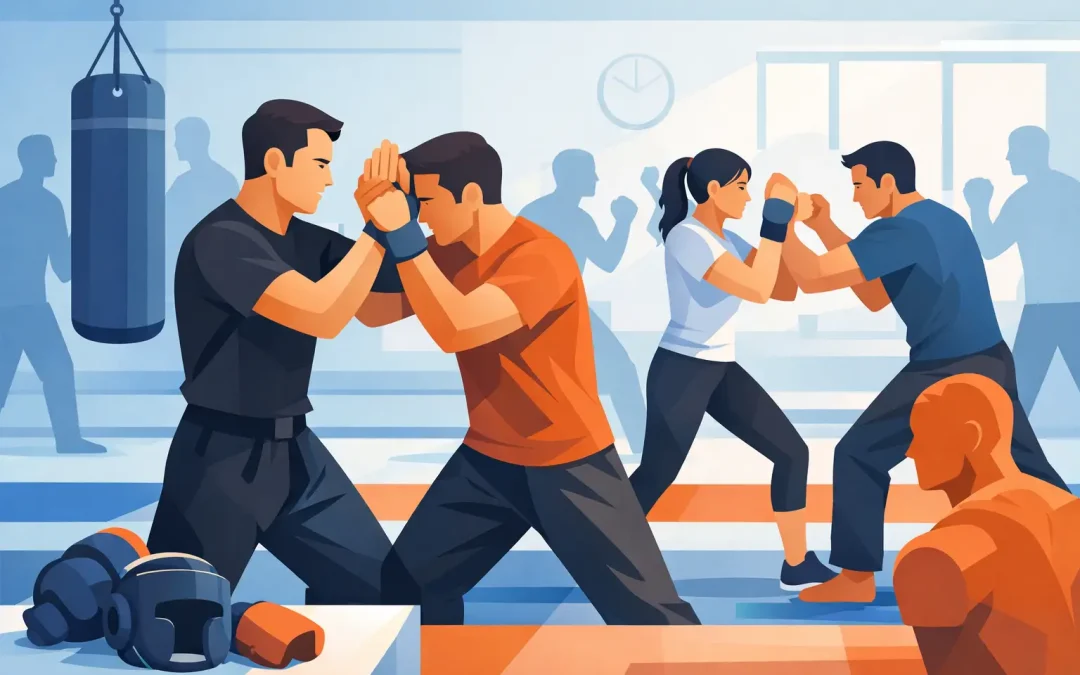
A threat does not arrive on a clean mat, with a referee, or after you have had time to plan your next move. It can happen in a parking area after work, at an elevator, on public transport, or during a night out with friends. Group self defense classes should prepare you for that reality: fast decisions, limited space, adrenaline, confusion, and the need to get safe.
That is why the right class is not built around memorizing long routines or collecting belts. It is built around usable movement, clear thinking, and actions you can access when pressure hits. No fancy moves. Just what works.
What Group Self Defense Classes Should Teach
A practical group class starts with a simple question: what is the safest response to a real threat? Sometimes that means creating distance and leaving. Sometimes it means using your voice, setting a boundary, breaking a grip, striking a vulnerable target, or getting back to your feet after being pushed down.
The goal is not to win a fight. The goal is to recognize danger early, respond decisively, and escape when the opportunity appears.
Effective training focuses on natural actions that do not require years of flexibility or athletic ability. A good instructor teaches you how to protect your head, manage your balance, move under pressure, and use direct techniques that make sense when your heart rate is high. You should understand why an action works, when it may fail, and what to do next.
Reality does not pause. Your training should not either.
Why Training With a Group Makes You Better
Learning in a group creates something solo practice cannot fully reproduce: unpredictability. Different partners have different heights, builds, energy levels, reactions, and ways of moving. That variation matters because a real attacker will not cooperate with your technique.
A controlled group environment also helps students become familiar with pressure. At first, even a raised voice, a close approach, or a firm grab can feel overwhelming. With progressive training, your body learns not to freeze. You begin to see openings, protect yourself, and act with greater purpose.
There is a community benefit too. Training alongside working professionals, beginners, women, men, and people from different backgrounds removes the intimidation factor. Everyone starts somewhere. The right class is demanding, but it is not about showing off or putting people down. You train hard, support your partners, and improve together.
For friends, couples, and colleagues, group training can also create a shared safety language. You can talk openly about risky situations, practice awareness habits, and make better decisions when you are out together.
Realistic Does Not Mean Reckless
Some people hear “reality-based self-defense” and imagine uncontrolled fighting. That is not practical training. Good instruction uses pressure intelligently.
Beginners need time to learn positioning, movement, and safe mechanics. Then intensity can increase through drills that include verbal stress, movement, resistance, awkward angles, and changing scenarios. Protective equipment and clear class rules allow students to work with intent without turning every session into an injury risk.
The balance matters. Training that is too soft can create false confidence. Training that is too hard too soon can overwhelm students, discourage attendance, or cause unnecessary injuries. The best group self defense classes build capability step by step, while keeping the focus on actions that hold up when a partner resists.
This is where sport martial arts and street defense can differ. Sport training can develop timing, fitness, discipline, and useful skills. But it also operates within rules, weight categories, gloves, rounds, and a known opponent. Real-world violence may involve surprise, confined space, uneven footing, multiple people, or an attempt to grab and control you. A practical self-defense class addresses those realities without pretending there is a guaranteed answer for every situation.
What a Useful Class Session Looks Like
You should leave class feeling that you practiced something you could apply, not merely watched a demonstration. A strong session often begins with awareness, movement, and a warm-up that builds relevant coordination rather than exhausting you for no reason.
From there, students may work on common situations: handling an aggressive approach, escaping wrist or clothing grabs, responding to a choke attempt, defending against a push, or creating space after being trapped against a wall. The techniques should stay simple. Under stress, simple is faster to recall and easier to repeat.
Partners then add resistance at an appropriate level. This is where technique becomes a response instead of a sequence. You learn how a grab actually feels, how quickly balance can disappear, and why continuing to move matters. You may also practice verbal commands, because a clear, forceful “No” can draw attention, set a boundary, and create a moment to escape.
As students gain experience, pressure-oriented sparring and scenario drills help close the gap between knowing and doing. You do not need to become a fighter to benefit from this work. You need to experience enough controlled resistance that your body stops expecting perfect conditions.
Who Benefits Most From Group Training?
Group self-defense training is useful for adults who commute, travel, work late, use parking garages, attend events, or simply want to feel less vulnerable in public spaces. It is especially valuable for people who have never trained before, because it replaces vague fear with a practical plan.
Working professionals often appreciate the structure and efficiency. A focused class can improve awareness, confidence, stress management, and physical readiness without requiring a competitive martial arts lifestyle. You do not need to spend years learning ceremonial forms before you can develop useful skills.
Corporate teams can benefit as well. Workplace safety does not end at the office door. Employees may travel, meet clients, work irregular hours, or commute alone. A practical workshop gives teams a direct way to discuss personal safety and practice simple responses together. For employers, it can be a meaningful part of a broader well-being and safety culture.
Women-focused sessions and private groups can be a better fit for some participants, particularly when they want to address specific concerns in a familiar setting. There is no single format that suits everyone. The key is choosing training that stays practical, respectful, and pressure-aware.
How to Choose the Right Class
Before joining, look past impressive photos and technical names. Ask what students actually practice. Are they learning long combinations that require a compliant partner, or are they working on direct responses against realistic resistance?
A worthwhile program should be able to explain its approach clearly. Look for limited class sizes, qualified instruction, safety standards, and opportunities to train with different partners. The instructor should correct poor habits, not simply praise every attempt. Encouragement matters, but honest feedback is what helps you improve.
Pay attention to whether the class teaches avoidance and escape alongside physical defense. Anyone who promises that one technique will solve every problem is selling certainty where none exists. Personal safety depends on awareness, judgment, movement, communication, and action when action is unavoidable.
Urban Street Defense applies Jeet Kune Do-inspired principles to this kind of training: simplicity, directness, adaptability, and effectiveness under pressure. The point is not tradition for tradition’s sake. The point is building responses that make sense when the situation is messy and time is short.
Confidence Comes From Repetition, Not Wishful Thinking
You do not become safer by watching videos or telling yourself you would know what to do. Confidence grows when you have practiced moving, speaking, protecting yourself, and recovering from mistakes with real people in front of you.
Start where you are. Attend consistently. Ask questions. Train with purpose. A few practical habits learned and repeated in a supportive group can change how you carry yourself through the world: more aware, more prepared, and harder to intimidate.
Better. Faster. Stronger.
by Founder of USDC | 10th August 2026 | Self-Defense Training
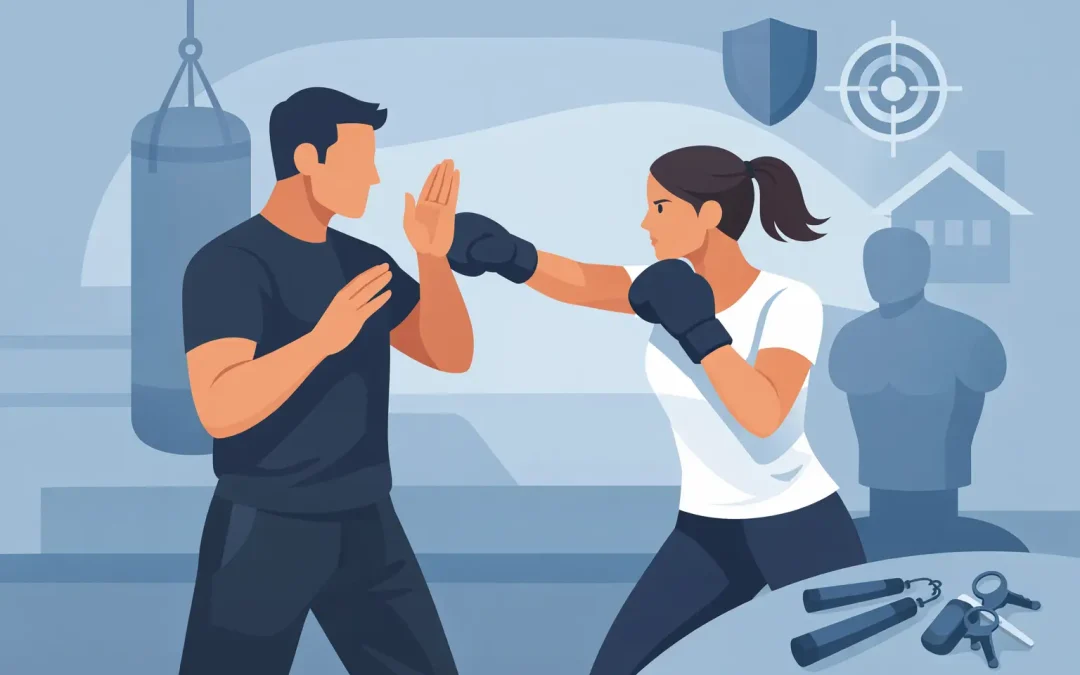
A crowded parking garage. An aggressive stranger closing distance. A wrist grabbed before you have time to think. Private self defense lessons are not about collecting impressive moves for a future that may never come. They are about building a fast, usable response when your space, safety, and choices are under pressure.
For many adults, group classes are a strong starting point. But a private setting gives you something different: focused coaching built around your body, your routine, your concerns, and the situations you are most likely to face. No waiting for your turn. No trying to copy a sequence designed for someone else. Just practical training with a clear purpose – get safer, faster.
Why Private Self Defense Lessons Work Differently
A real confrontation is messy. You may be carrying a laptop bag, wearing work clothes, walking to your car after dark, managing a child, or caught off guard in a confined space. There is no referee, no clean starting position, and no guarantee that the other person follows rules.
That is why private instruction should not look like a performance. It should focus on awareness, positioning, verbal boundaries, escaping grabs, creating distance, and responding decisively when escape is not immediately available. The best answer is often leaving early. The second-best answer is creating the opening to leave.
Private coaching allows the instructor to identify what slows you down. Some people freeze when someone raises their voice. Others have trouble maintaining balance when pulled or pushed. Someone with prior martial arts experience may default to techniques that work in a controlled gym but break down under surprise and resistance. These are not failures. They are training priorities.
Instead of repeating forms or rehearsed choreography, you can work on the moments that matter: recognizing danger sooner, protecting yourself at close range, moving with purpose, and making simple actions work under stress.
Training Should Fit the Threat, Not a Template
Good private self defense lessons begin with an honest conversation. What is making you seek training now? Is it commuting alone, traveling for work, dealing with unwanted attention, workplace concerns, or a recent incident that has changed how safe you feel?
Your answer shapes the training. A person concerned about elevator or hallway encounters needs different practice from someone who wants to feel more prepared while jogging, using ride-share services, or returning to a vehicle late at night. A corporate leader arranging coaching for a small team may need practical awareness and boundary-setting alongside physical escape skills.
A focused instructor will also consider your current fitness, injuries, height, reach, confidence level, and available training time. You do not need to be athletic to start. You do need instruction that respects reality. A technique that requires perfect timing, high flexibility, or exceptional strength is a poor first answer for most people.
The goal is simple: use direct, natural movements that can be learned, tested, and repeated. At Urban Street Defense, that means a Jeet Kune Do-inspired approach centered on simplicity, directness, adaptability, and effectiveness under pressure. No fancy moves – just what works.
What a Productive Session May Cover
Private training is not one fixed syllabus. Still, effective sessions commonly build around four areas:
- situational awareness and early decision-making
- verbal boundaries, posture, and managing distance
- releases and escapes from common grabs or close-range attacks
- pressure-based drills that test whether the response still works when you are startled or resisted
The physical work matters, but mindset matters too. Many people have been taught to be polite, avoid making a scene, or second-guess their instincts. Self-defense training gives you permission to act early, use your voice, protect your space, and leave without apologizing for it.
Who Benefits Most From One-to-One Coaching?
Private lessons are especially useful for beginners who do not want to feel lost in a larger class. You can ask questions, slow down a drill, and repeat the same scenario until the movement begins to feel natural. That focused attention often builds confidence quickly.
They also suit busy professionals. A scheduled one-to-one session can be more efficient than trying to fit into a fixed class timetable, especially if your work involves travel, late hours, or unpredictable commitments. You are training for your actual life, not an ideal schedule.
Private instruction can also help people returning after an injury, those who feel anxious in group environments, and students with past martial arts training who want to strip away unnecessary habits. For couples, friends, or families, a private small-group format can create a more comfortable learning environment while still allowing realistic partner drills.
There is a trade-off. Group classes expose you to different body types, energy levels, and reactions. That variety is valuable. Private training delivers individual correction and targeted repetition. The strongest path for many students is to start privately, then add group sessions or controlled sparring once they have core movement and confidence.
How to Choose Private Self Defense Lessons
Do not choose based on flashy social media clips, belt rank, or how complicated the techniques look. Ask what the training prepares you to do when someone is bigger, closer, angry, and not cooperating.
A quality instructor should be able to explain why a technique works, when it does not, and what the safer alternative is. They should not promise that any move works every time. Real safety training deals in probabilities, positioning, awareness, and repeated practice – not guarantees.
Look for instruction that includes progressive resistance. Learning a movement slowly is useful at first. Staying there is not. If every drill ends with a compliant partner pausing in the right place, you have learned choreography, not response. Pressure must be introduced carefully and progressively so you can think, move, and recover when the situation feels less predictable.
Also pay attention to the atmosphere. You should feel challenged, not intimidated. The instructor must be direct about danger without using fear as a sales tool. A supportive environment lets you make mistakes, ask questions, and train hard without embarrassment.
Before committing, ask practical questions. How are sessions tailored? Will you practice verbal and physical responses? How is pressure introduced? Can training account for injuries or mobility limits? Is there a clear progression beyond the first lesson? Straight answers are a good sign.
What to Expect in Your First Session
Your first private lesson should not throw you into full-intensity sparring. It should establish a baseline. You may discuss your daily routines, past experience, physical limitations, and the situations that concern you most.
From there, expect simple work: how to stand without looking confrontational, how to use your voice, how to maintain a safer distance, and how to move when someone crowds or grabs you. The instructor may use pads or controlled resistance to help you experience contact safely. That contact is useful because it replaces imagination with feedback.
You may feel awkward at first. That is normal. Under pressure, most people discover that knowing an idea and doing it quickly are not the same thing. Private coaching closes that gap through repetition, correction, and realistic progression.
Wear comfortable clothing you can move in. Leave jewelry that could catch or snag at home. More importantly, arrive ready to be coached. Self-defense is not about proving toughness. It is about being willing to learn what you need before you need it.
Build Capability, Not False Confidence
One lesson can improve awareness and introduce useful actions. It cannot create dependable instinct by itself. Skill comes from practice over time, especially when drills become more dynamic and less predictable.
You do not need to train every day. Consistency beats intensity followed by long gaps. A regular private session, combined with simple practice and occasional group pressure training, can build meaningful progress. Your reactions become cleaner. Your voice becomes more decisive. Your ability to recognize when to leave improves.
Personal safety is not about living afraid. It is about refusing to be unprepared. Start with the situations you face most often, train the simplest responses until they are reliable, and give yourself more options when seconds count.
by Founder of USDC | 9th August 2026 | Self-Defense Training
A threat rarely arrives when you are warmed up, focused, and standing in a fighting stance. It can happen while getting into your car, walking from public transport, opening your front gate, or leaving work with your hands full. A women’s self defense crash course should prepare you for that reality: fast decisions, simple movement, and the confidence to act when your body wants to freeze.
This is not about collecting impressive techniques. It is about recognizing danger early, creating space, breaking contact, and getting to safety. No fancy moves. No routines performed in slow motion. Just practical action for moments when hesitation carries a cost.
What a Women’s Self Defense Crash Course Should Teach
A good crash course does not promise that one afternoon makes anyone invincible. Real safety is more complicated than that. Size, fitness, environment, surprise, multiple attackers, and weapons all change the situation. The goal is not to win a fight. The goal is to avoid one where possible and escape one when necessary.
That means the training must begin before physical contact. Students need to practice awareness without becoming fearful or paranoid. They need to notice who is around them, spot behavior that feels wrong, and make early choices that improve their position. Crossing the street, entering a busy shop, calling someone, changing direction, or leaving an uncomfortable situation are not signs of weakness. They are smart decisions.
When avoidance is no longer available, the course should focus on natural responses that hold up under stress. Complex sequences often disappear when adrenaline hits. Simple actions are easier to remember, faster to apply, and more likely to work when space is tight.
The Skills That Matter Under Pressure
Awareness is your first line of defense
Most dangerous situations do not begin with a dramatic attack. They begin with an approach, an unwanted conversation, someone standing too close, a person following you, or an attempt to isolate you. Learn to trust the signal that says something is off. You do not owe a stranger politeness at the expense of your safety.
Practical training teaches you to keep a safe distance, maintain an exit route, and use your voice early. A clear, loud command such as “Stop,” “Back off,” or “Don’t touch me” can draw attention, establish a boundary, and disrupt a person who expected compliance. Your voice is not an accessory. It is a tool.
Position and balance beat panic
If someone crowds, grabs, or pushes you, your first job is to stay on your feet. Balance gives you options. A stable stance, hands positioned between you and the other person, and movement toward open space can prevent a situation from becoming worse.
This is where scenario training matters. Standing still while an instructor explains a move is not enough. You need to feel what it is like when someone closes distance suddenly, grabs clothing, blocks your path, or applies pressure. Controlled practice builds recognition. Recognition shortens the time between seeing the problem and responding to it.
Create distance, then leave
Self-defense is not a test of toughness. Once you create an opening, use it. Move toward people, light, security, a store, a guard station, or any place where help is available. Call emergency services and contact someone you trust as soon as you are safe.
A crash course should teach direct, gross-motor responses designed to interrupt an attack long enough to escape. The best response depends on range and circumstance. A close grab needs a different answer than someone approaching from several steps away. Training should explain those differences without burying beginners under dozens of techniques.
Expect an adrenaline response
Under fear, people may shake, lose fine motor control, experience tunnel vision, or struggle to remember what happened. That is a normal stress response, not a personal failure. Training that introduces manageable pressure helps students work through it.
Pressure does not mean recklessness. It means practicing with realistic intent, protective equipment, clear rules, and qualified supervision. You should be challenged, but never placed at unnecessary risk. The lesson is to keep moving, keep breathing, and act decisively even when your heart is racing.
What One Session Can and Cannot Do
A women-focused crash course can make an immediate difference. It can replace vague fear with a workable plan. You can learn stronger boundaries, safer positioning, basic escape priorities, and how to respond with more purpose if someone crosses the line.
But a single session is a starting point, not a finish line. Physical skills fade when they are not practiced. Your timing improves through repetition. Your ability to stay functional under pressure improves when you gradually experience pressure in training.
Think of a crash course as a foundation. It gives you practical tools now and shows you what continued training can build: better awareness, sharper reactions, stronger movement, and more confidence in unfamiliar environments. For many busy professionals, it is the right first step because it fits into a demanding schedule. For others, private coaching or regular classes may be the better choice because they want more repetition and individualized feedback.
Avoid Training That Looks Good but Fails Fast
Not every self-defense program prepares people for real danger. Be cautious of classes built around long choreographed sequences, complicated wrist-lock collections, or cooperative demonstrations where the attacker pauses and waits. Those methods may have a place in sport or traditional martial arts, but they are not automatically useful in an unexpected assault.
Ask direct questions before you enroll. Will you practice verbal boundary-setting? Will you train from common urban situations, such as parking areas, lifts, hallways, public transport, and close-range grabs? Will the instructor explain how stress changes movement? Is there controlled resistance, or does every partner cooperate?
The answer should be practical. Good instruction adapts to the student, the environment, and the threat. It does not pretend there is one perfect move for every situation.
Build a Personal Safety Plan Beyond the Class
Training works best when it supports everyday habits. Keep your phone accessible rather than buried in a bag. Know your route before leaving a new place. Tell a trusted person when you are traveling late. Avoid distractions when walking through isolated areas, especially when entering or leaving a vehicle.
These actions are not about blaming women for violence. Responsibility always belongs to the person choosing to harm someone. Safety habits simply give you more options, and options matter.
It also helps to decide in advance what you will do if something feels wrong. Where is the nearest busy place? Who can you call? What words will you use to set a boundary? What is your fastest route away? A plan is easier to use when you have considered it before stress takes over.
Train for Reality, Not Performance
At Urban Street Defense, women-focused training is built around simplicity, directness, and action under pressure. Students do not need previous martial arts experience to begin. The focus is on usable movement, clear decision-making, and the mindset to respond instead of freezing.
A supportive class environment matters, especially for beginners. You should be able to ask questions, train at an appropriate pace, and develop confidence without being treated as fragile. At the same time, training must stay honest. Real danger is chaotic. Effective instruction respects that fact while giving students practical ways to improve their chances.
Your safety is not a performance, and confidence is not pretending nothing can happen. It is knowing that if a boundary is crossed, you have a voice, a plan, and actions you have practiced. Start there. Then keep building.