by Founder of USDC | 20th August 2026 | Self-Defense Training
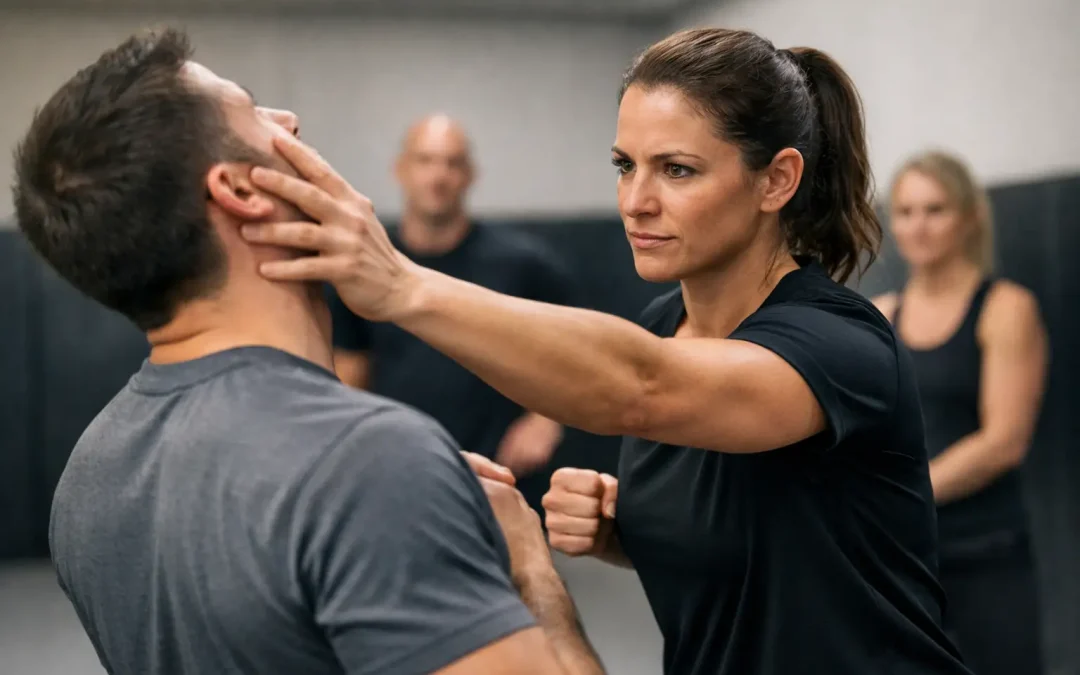
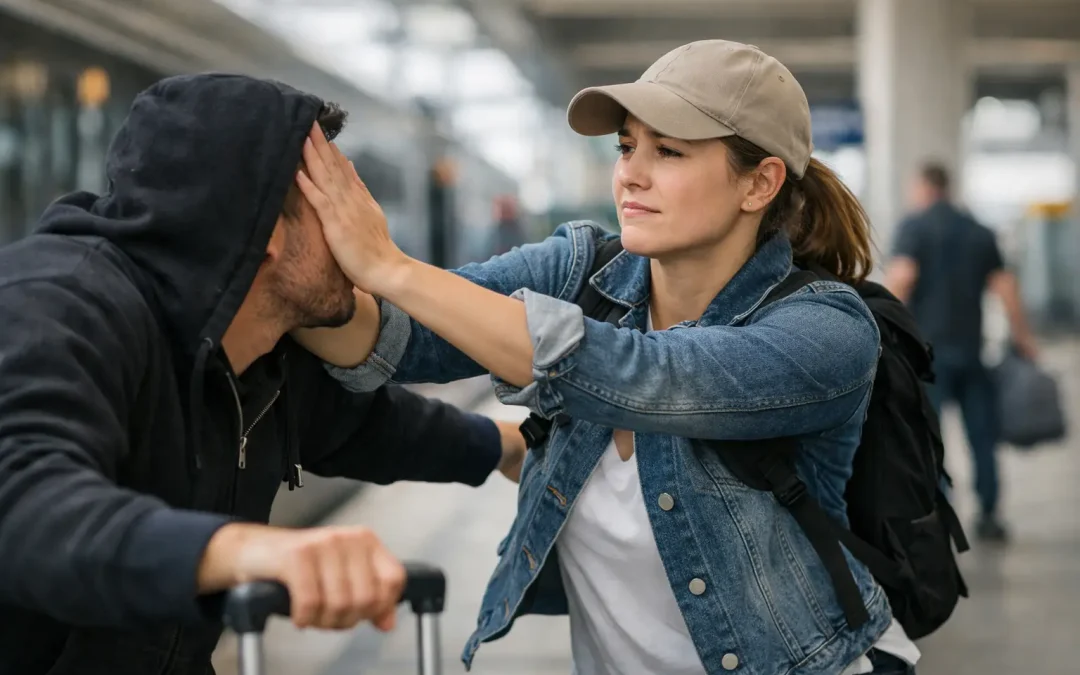
A safety briefing cannot prepare someone for the moment a stranger closes distance, a confrontation escalates in a parking area, or an employee feels trapped while commuting. HRDCorp claimable safety training gives employers a practical way to invest in skills that matter before a stressful situation turns physical.
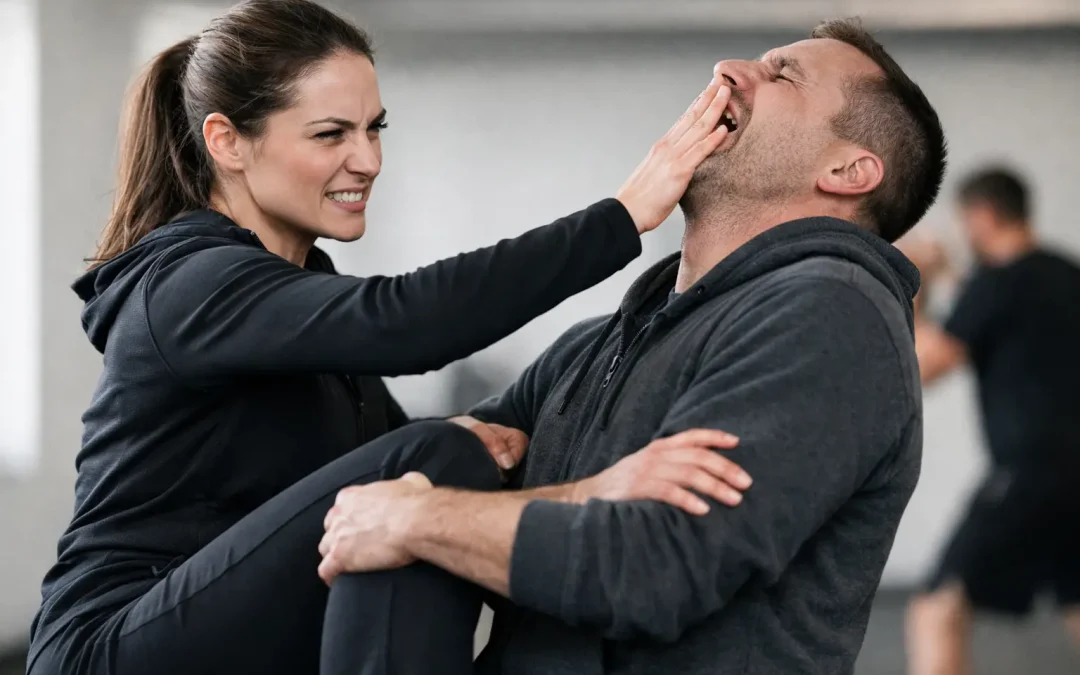
For employers, the goal is not to turn staff into fighters. It is to help people recognize risk early, set boundaries with confidence, make better decisions under pressure, and create space to get away. No ceremonial forms. No complicated routines that disappear when adrenaline hits. Just practical action built around reality.
What HRDCorp Claimable Safety Training Should Deliver
Claimable training should create a clear workplace outcome, not just fill a training calendar. Personal safety training is most valuable when employees leave with a sharper understanding of awareness, prevention, verbal boundary setting, escape options, and the physical principles that can help when avoidance fails.
That means training must go beyond a lecture on general safety. A slide presentation may explain risk, but it cannot show a participant how stress affects distance, balance, reaction time, and decision-making. People need controlled, scenario-based practice. They need to experience what it feels like to move, speak, disengage, and respond while another person is creating pressure.
The right program also respects the reality of a mixed workplace. Participants may have different sizes, fitness levels, ages, and previous experience. A good instructor does not expect everyone to execute athletic techniques. Training should use natural movements, simple principles, and adaptable responses that a beginner can remember.
For teams in Kuala Lumpur, Petaling Jaya, and Ipoh, that relevance may include commuting, rideshares, parking areas, business travel, public spaces, late shifts, and encounters around office buildings. The scenarios should match the risks people actually face, not movie-style attacks designed to look impressive.
Why Practical Safety Skills Belong in Workplace Learning
Organizations already train employees to manage operational, digital, and compliance risks. Personal safety deserves the same serious attention. An employee who feels alert and capable is better positioned to make sound choices outside the meeting room as well as inside it.
This is not about creating fear. It is about reducing helplessness. When people have never considered a threatening situation, they can freeze, comply without thinking, or waste critical seconds trying to remember a complicated technique. Training gives them a practical framework: identify danger, use distance and positioning, communicate clearly, act decisively when necessary, and leave.
There is also a human benefit that does not fit neatly into a report. Employees who know their employer has invested in their well-being often feel seen. This matters especially for teams that travel, work irregular hours, meet clients off-site, or rely on public transportation. Safety training says the organization understands that work does not begin and end at the office door.
Still, the training must be positioned honestly. A single workshop does not make anyone invincible. It cannot remove every risk, and physical action is always a last-resort option when escape is not immediately available. Its value is giving people better odds, clearer choices, and a foundation they can continue to practice.
What a Strong Corporate Session Looks Like
A useful corporate safety session is active, focused, and appropriately challenging. It starts with prevention because the best confrontation is the one avoided. Participants learn to notice unusual behavior, manage personal space, avoid being cornered, and use their voice before a situation becomes physical.
Then comes practical movement. Rather than memorizing long sequences, participants work with direct concepts: protect vulnerable areas, maintain balance, create distance, break contact, and move toward safety. These principles are easier to adapt when an incident does not happen exactly as rehearsed.
Pressure matters, but it must be introduced responsibly. Safe drills can include verbal stress, time limits, movement, resistance, and unpredictable prompts. This reveals the gap between knowing a technique and being able to use it. The instructor should control intensity carefully, especially with beginners, so the session builds confidence without exposing participants to unnecessary injury risk.
A quality program also makes room for questions that people are often reluctant to ask. What should I do if someone grabs my wrist? How do I handle an aggressive person who keeps moving closer? What if I am carrying a bag, wearing work clothes, or walking to my car alone? Direct answers are more useful than vague advice to “be aware.”
Urban Street Defense uses a reality-based approach shaped by simplicity, directness, and adaptability. The focus is not on looking technical. The focus is on giving ordinary people workable responses when stress strips away fine motor control and perfect timing.
The difference between awareness and action
Awareness is essential, but awareness alone is not a complete safety plan. Seeing a threat early gives someone more options. They may change direction, enter a public space, call for help, or leave before contact occurs. That is a win.
But employees also need to know what to do if the other person ignores boundaries. Practical training bridges that gap. It teaches participants to use body language and assertive communication first, then transition to simple physical actions if there is no safe alternative. The objective remains the same throughout: get away, get help, and get home.
How HR Teams Can Plan a Claimable Program
Before booking a course, define the problem the training needs to solve. A team of office-based employees may need commuting and public-space awareness. A sales team may need travel and client-meeting scenarios. A workforce with late shifts may need greater attention on parking, transport, and leaving the workplace safely.
Next, ask the provider how the program will be delivered. The strongest answer is specific. It should cover learning objectives, practical exercises, duration, participant numbers, instructor qualifications, venue needs, and how the session can be adjusted for the team. Be cautious of generic programs that promise transformation without explaining what participants will actually practice.
For HRDCorp claims, employers should confirm their current eligibility, available levy balance, grant requirements, course details, supporting documents, and submission timelines directly through their applicable HRDCorp process. Requirements can change, and claimability is not a reason to assume automatic approval. Get the administrative details right before the program begins, not after the attendance sheets are signed.
It also helps to appoint one internal coordinator. This person can collect participant information, communicate clothing and venue guidance, manage attendance, and gather feedback after the session. Simple preparation makes the training feel professional rather than like a last-minute activity.
If your organization is considering several safety topics, avoid trying to cram everything into one session. Personal safety, first aid, fire response, and mental health awareness each require different learning methods. A focused self-defense workshop can deliver a stronger outcome than a rushed, all-purpose safety day.
Choose Training That Holds Up Under Pressure
Not all self-defense instruction is designed for real-world use. Some programs emphasize forms, rank progression, competition rules, or techniques that demand precision and cooperation. Those approaches may have their place, but they are not automatically the best fit for workplace personal safety.
Ask whether participants will practice against realistic movement and whether the instructor explains the limits of each response. Ask how the program accommodates participants who are smaller, less athletic, or completely new to physical training. Ask whether escape and de-escalation are treated as success, rather than encouraging people to stay and “win” a confrontation.
The trade-off is straightforward. Highly realistic training can feel uncomfortable because it asks people to confront uncertainty. Yet training that is too soft can create false confidence. The right balance is progressive: clear instruction first, controlled practice next, then enough pressure to make the lesson real.
Make Safety Training Part of the Culture
One session can start a conversation. Continued reinforcement turns that conversation into a habit. Employers can support the learning with brief follow-up discussions, refresher workshops, travel-safety reminders, and clear procedures for reporting concerns around the workplace.
Do not measure success by how many techniques employees can name. Measure it by whether they can identify unsafe situations earlier, speak with more authority, create distance, and make decisions without panic. Those are skills that carry into commutes, travel, family life, and daily routines.
The strongest safety culture does not wait for an incident to prove it was needed. Give your people practical options now, let them train with purpose, and help them walk out more prepared than they walked in.
by Founder of USDC | 19th August 2026 | Self-Defense Training
A self-defense instructor is not judged by how sharp their own technique looks. They are judged by what their students can do when a threat is sudden, close, confusing, and frightening. Train the trainer self defense is about building instructors who can teach usable action, not repeat choreography.
For companies, community groups, educators, and safety leaders, that distinction matters. A polished demonstration can create false confidence. A well-run training session develops awareness, decision-making, verbal boundaries, escape priorities, and simple physical responses that people can recall under pressure.
At Urban Street Defense, the standard is clear: no fancy moves, no routines for their own sake, and no pretending that real danger comes with a warning bell. Trainers must be able to make safety skills accessible while keeping the learning environment controlled, responsible, and practical.
What Train the Trainer Self Defense Must Deliver
A credible instructor program does more than teach participants a collection of strikes, releases, or defenses. It develops the judgment to know what to teach, when to teach it, and how to scale it for the people in front of them.
A trainer may work with office staff who commute after dark, university groups, women attending a short safety course, or a private team that wants practical skills without becoming martial artists. Their fitness levels, confidence, previous experience, and risk concerns will differ. The core principles should not.
The best self-defense training stays simple. It teaches people to recognize trouble early, create distance, use their voice, move toward safety, and respond decisively only when they cannot safely disengage. The instructor’s job is to make those priorities clear before technical detail starts taking over.
A train-the-trainer program should also teach the difference between self-defense and fighting. Fighting is often about staying engaged, winning an exchange, or proving something. Self-defense is about breaking contact, protecting yourself and others, and getting out. That shift changes how a trainer frames every drill.
Teach Principles, Not a Script
Real confrontations are not rehearsed. The environment may be crowded, wet, dark, cramped, or unfamiliar. A person may be carrying a bag, wearing work clothes, standing beside a car, or trying to protect a child. There is no reliable script.
That is why trainers need to teach adaptable principles rather than long sequences. A student should understand position, distance, balance, targets, timing, and escape routes. They should not need to remember twelve steps before taking action.
A useful instructor asks practical questions throughout a session. Where is the exit? What happens if the first response fails? Can the student move? Is there an object, wall, vehicle, or second person changing the situation? Does the response create a chance to leave?
Jeet Kune Do-inspired training is valuable here because it prioritizes directness, simplicity, and adaptation. But the point is not to copy a style label. The point is to help students use natural, efficient movement when they are under stress.
For example, a trainer should not present a wrist-grab escape as a guaranteed answer to every grab. Grip strength, angle, surprise, clothing, and the attacker’s movement all matter. Instead, the trainer can teach a simple objective: protect your balance, disrupt the grip, create space, and leave. The technique supports the objective, not the other way around.
Build Pressure Without Creating Chaos
Pressure testing is where many programs either become useful or fall apart. Training that is always slow, cooperative, and predictable may look clean, but it does not prepare a student for adrenaline, hesitation, resistance, or sensory overload.
At the same time, pressure is not an excuse for reckless training. Throwing beginners into aggressive drills before they understand boundaries and mechanics can overwhelm them, increase injury risk, and teach panic instead of control.
Good trainers build intensity in stages. They begin with clear movement and simple decisions. Then they add resistance, verbal stress, restricted space, awkward starting positions, and time pressure. The student learns to function when the drill becomes less tidy, while the instructor remains responsible for pacing, supervision, and safety.
A strong trainer knows when to stop a drill, lower the intensity, and coach the student through what happened. The goal is not to embarrass someone for freezing. It is to give them a repeatable path back to action.
That means correcting more than physical errors. If a student drops their voice, loses awareness of the exit, or continues engaging after they have created space, those are training points too. Self-defense is a complete response, not just a strike.
The Instructor’s Real Skill Is Communication
People learn under stress when instructions are clear, short, and purposeful. Trainers who over-explain often lose the room. Trainers who rely only on command-and-repeat may miss fear, confusion, or unsafe habits.
Use direct coaching language. Tell students what matters now: move, frame, protect your head, use your voice, get to the exit. Explain the reason in plain terms, then let them practice. Immediate feedback is more useful than a long lecture after the session ends.
Demonstrations should also be honest. If a move depends on perfect timing or a compliant partner, say so. If it is an option rather than a universal answer, teach it that way. Confidence comes from realistic expectations and repeated practice, not from promising certainty.
This is especially important in workplace and public workshops. Many participants may have no martial arts background and no interest in collecting techniques. They need an instructor who can make the material relevant to their daily routine: parking lots, elevators, ride-hailing pickup points, travel, late shifts, and unfamiliar public spaces.
Train the Trainer Self Defense for Different Groups
One lesson plan will not fit every audience. The foundation can stay consistent, but delivery must match the group’s needs, available time, and physical capabilities.
For a short corporate session, trainers may focus on awareness, boundary-setting, de-escalation, escape movement, and a few high-value physical responses. The aim is practical exposure and better decision-making, not turning a two-hour workshop into a black-belt test.
For a women-focused crash course, the instructor should avoid assumptions about confidence, fitness, or past experiences. Teach assertive options, acknowledge that threats can come from familiar people as well as strangers, and create an environment where participants can opt out of any drill without being singled out.
For ongoing group classes, instructors can build a deeper progression. Students have time to improve movement, develop conditioning, practice controlled sparring, and learn to make decisions against more active resistance. Even then, every session should stay connected to real safety outcomes.
Private groups may need a different emphasis. Parents may want home and travel safety. Managers may need workplace violence awareness and staff response principles. Security-facing teams may require role-specific boundaries. A capable trainer listens first, then designs the session around real exposure rather than a generic syllabus.
Risk Management Is Part of the Job
Teaching self-defense carries responsibility. Trainers must maintain clear boundaries, suitable contact levels, appropriate protective equipment, and a culture where participants report pain, discomfort, or concerns immediately.
They also need to avoid creating legal or ethical confusion. Training should emphasize reasonable action to protect oneself and escape danger, not punishment or retaliation. Encourage students to seek help, contact emergency services when needed, document incidents, and follow workplace reporting procedures where relevant.
Physical safety requires preparation. Before high-contact drills, assess the space, remove hazards, explain stop signals, and pair participants sensibly. Watch for fatigue, poor control, and participants who become too competitive. A drill that gets out of control is not realistic training. It is poor instruction.
Emotional safety matters too. Some scenarios can trigger strong reactions, particularly for people with previous experiences of harassment or violence. Trainers do not need to act as therapists, but they do need to lead with respect, choice, and professional awareness.
Measure What Students Can Actually Do
A trainer certification should not be based only on attendance or the ability to repeat terminology. Assessment should include whether a candidate can teach a simple skill clearly, manage a group, correct unsafe behavior, adapt a drill, and keep the objective focused on escape.
Watch how they respond when a student asks, “What if that does not work?” The right answer is rarely another complicated sequence. It is usually a return to principles: protect yourself, create disruption, move, and find safety.
Candidates should also demonstrate sound judgment in realistic teaching situations. Can they make a beginner feel capable without giving false assurance? Can they challenge an experienced participant without letting ego take over? Can they keep a scenario practical when the group starts treating it like a competition?
These are the skills that separate a technician from an instructor. A good technician can perform. A good trainer can help ordinary people act when it counts.
The strongest self-defense instructors leave students with more than techniques. They leave them more alert, more decisive, and more prepared to move toward safety. Teach that standard every time: simple action, clear thinking, and no wasted movement when the moment is real.
by Founder of USDC | 18th August 2026 | Self-Defense Training
A workplace safety policy cannot help an employee who is being followed from the parking lot, cornered in an elevator, or confronted by an aggressive stranger during a client visit. Corporate self defense training closes the gap between written procedure and human action. It gives people simple, pressure-tested options when their safety depends on acting fast.
This is not a team-building class built around boards, belts, or rehearsed routines. It is practical safety education for people who commute, travel, meet clients, work late, and move through unpredictable public spaces. The goal is clear: spot danger early, create distance, escape when possible, and respond decisively when escape is blocked.
Why Corporate Self Defense Training Belongs at Work
Employers already invest in cybersecurity, first aid, fire drills, and mental health support because risk does not wait for convenient hours. Personal safety deserves the same serious approach. Many threats connected to work happen before an employee enters the office or after they leave it: at transit stops, in parking structures, on business trips, at off-site events, and during late-night commutes.
A good program does not teach employees to seek confrontation. It teaches them to avoid it. Participants learn how to read their environment, recognize boundary violations, use their voice with authority, and make fast decisions without freezing. If physical contact occurs, they need direct actions that support one objective: get away.
There is a business case as well. Teams that feel prepared are more likely to report concerns, follow travel and lone-worker procedures, and look out for one another. Training can also reinforce an employer’s duty of care without making false promises. No course can remove every risk. It can give people better odds, clearer choices, and a stronger response under stress.
What Effective Corporate Self Defense Training Looks Like
Reality matters. A polished technique that works only when a partner stands still is not a safety skill. Under fear, fatigue, surprise, and adrenaline, fine motor control drops and memory narrows. Employees need movements that are natural, simple, and repeatable.
Effective instruction is built around scenarios employees may genuinely face. That might include a wrist grab near a car, an unwanted close approach in a corridor, being pinned against a wall, or a stranger attempting to control movement. The instructor should explain the legal and practical priority in each case: create space, break contact, move toward safety, and call for help.
Training should also cover pre-contact behavior. Many incidents offer warning signs before they become physical. A person who ignores clear refusals, blocks a path, keeps closing distance, or tries to isolate someone is showing behavior that deserves immediate attention. Participants should practice assertive verbal boundaries, purposeful movement, and positioning near exits or other people.
Physical drills need controlled pressure. That does not mean throwing beginners into a violent sparring session. It means gradually adding realistic movement, resistance, noise, surprise, and decision-making so participants understand what stress feels like. They learn that a technique is not a magic answer. Timing, distance, awareness, and commitment all matter.
At Urban Street Defense, this approach is shaped by Jeet Kune Do principles: simplicity, directness, adaptability, and effectiveness under pressure. No fancy moves. No ceremonial forms. The training must make sense for an ordinary person wearing work clothes, carrying a bag, and reacting to a problem they did not expect.
The Right Topics for a Corporate Program
The strongest programs connect safety skills to the team’s actual working conditions. An office team with secure parking has different concerns from sales staff making home visits or managers traveling between cities. Before booking a session, decision-makers should identify where and when employees are most exposed.
A useful course usually combines awareness, verbal boundary setting, movement, escape-focused physical defense, and post-incident actions. Participants should understand how to attract attention, when to contact security or emergency services, what details to report, and how to support a coworker after an incident.
For organizations with a higher proportion of women, a women-focused session can create room for specific discussions around harassment, stalking, unwanted touching, and common assault patterns. That does not mean men should be excluded from personal-safety education. Mixed sessions can strengthen shared awareness and help teams intervene safely when they see concerning behavior.
Travel and off-site work deserve special attention. Employees may be distracted by schedules, unfamiliar with a neighborhood, carrying laptops, or rushing to a ride. The right training helps them reduce predictable vulnerabilities without blaming them for someone else’s harmful conduct. Safety is not about telling people to live smaller. It is about helping them move with greater awareness and options.
What Training Should Never Do
Be wary of programs that sell certainty. Self-defense is not a guarantee, and responsible instructors will say so. A course should never encourage employees to stay and fight when they can leave, chase an attacker, or use force to solve verbal conflict.
It should also avoid creating fear as a management tool. The message is not that danger is everywhere. The message is that preparation changes how people respond when danger appears. Employees should leave feeling more capable, not more anxious.
Another weak approach is treating the session as entertainment. Breaking boards, posing for photos, or learning a long sequence may be memorable, but it does not prove someone can protect themselves under pressure. A corporate class should be engaging, but every drill needs a clear real-world purpose.
How to Choose a Provider
For Malaysian employers, 100% HRDCorp Claimable Corporate Self Defense Training can make it easier to include practical personal safety education within your organisation’s learning and development programme.
But… do ask direct questions before bringing any provider into your workplace. What situations will be covered? How do they adapt for beginners, different ages, fitness levels, and physical abilities? Are drills based on escaping danger or winning a fight? How do instructors manage contact, consent, and participant safety?
Look for small enough groups that people receive coaching rather than getting lost in a crowd. Customizable Corporate-group instruction can be especially valuable for teams that want scenarios tailored to their office layout, travel routines, or work schedules. A shorter introductory workshop may be right for a broad awareness initiative, while a series of sessions gives people the repetition required to build more reliable reactions.
HRDCorp-claimable options can make practical safety training easier to include in learning and development plans. That should support the decision, not drive it. The core question remains whether the training prepares people for the risks they may actually encounter.
Make It Part of Safety Culture
One session is a useful start, not a finish line. Skills fade when they are never revisited, especially skills that must work under stress. Organizations can reinforce training through periodic refreshers, clear reporting channels, buddy systems for late departures, well-lit access routes, and travel check-in procedures.
Leaders set the standard here. When managers take part, respect safety concerns, and respond quickly to reports of harassment or threats, employees understand that personal safety is not a private problem to handle alone. The training room becomes a place to practice action, while the workplace becomes a place where people are more willing to speak up early.
The best time to build a response is before anyone needs one. Give your team practical skills, let them practice with purpose, and make sure they know that getting home safe is part of doing the job well.
by Founder of USDC | 17th August 2026 | Self-Defense Training
A traveler stepping out of an airport with a phone in one hand, luggage in the other, and no clear sense of the area is not looking for trouble. But they are easier to spot. Criminals often look for distraction, isolation, hesitation, and an easy exit. Your goal is not to look tough. Your goal is to avoid becoming the easy option.
Self defense for travelers is not about collecting clever moves before a trip. It is about making fast, practical decisions when your normal routine disappears. New streets, unfamiliar transport, language barriers, jet lag, and a drink with strangers can all reduce your awareness. Good preparation gives you more time, more options, and a better chance to get home safely.
Self Defense for Travelers Starts Before You Leave
The strongest travel safety decision is usually made before you arrive. Know how you will get from the airport to your accommodation. Save the address offline. Identify the official taxi line, ride service pickup area, or public transit route before your flight lands. Standing outside a terminal while comparing transport options on your phone is a moment of exposure, especially late at night.
Share your itinerary with someone you trust, but do not broadcast your live location or room details publicly. Social posts can wait. So can uploading a photo that shows exactly where you are staying.
Carry only what you need for the day. Keep a backup payment card and copies of key documents separate from your main wallet. If a bag is taken, you should not lose your passport, money, bank access, and communication all at once. A low-profile crossbody bag worn in front of your body is often more practical than an open tote or loose backpack in crowded areas.
Do not rely on an item because it sounds like self-defense. Local laws vary widely. Pepper spray, knives, batons, and even certain alarms may be restricted, confiscated, or create legal problems at borders. A tool you cannot legally carry, access quickly, or use under stress is not a safety plan.
Look Harder to Target
Most safety decisions are small and unglamorous. They still matter. Walk with purpose, keep your head up, and avoid moving through unfamiliar areas while absorbed in maps or messages. If you need directions, step into a hotel lobby, store, cafe, or other staffed place before checking your phone.
Trust behavior, not appearances. Someone may be well dressed, friendly, or persistent without being safe. Pay attention when a person ignores your boundary, tries to isolate you, pushes you to drink more, asks where you are staying, or keeps closing distance after you have moved away. You do not need proof that someone is dangerous before you create space.
Use your voice early. A clear, firm “No.” “Stop.” or “Back up.” can draw attention, set a boundary, and interrupt the other person’s momentum. Do not soften a safety boundary because you are worried about seeming rude. Politeness is not more valuable than distance.
At night, choose routes with light, people, and open businesses over shortcuts. If your instincts say a street, elevator, stairwell, or parking area feels wrong, change direction immediately. You do not owe anyone an explanation. A few extra minutes is a cheap price for avoiding a bad setup.
Know What to Do When Something Feels Wrong
There is a gap between feeling uneasy and being physically attacked. This is where many people freeze because they are unsure whether they are “overreacting.” Stop waiting for certainty. Move toward safety while you still can.
If someone is following you, do not go to your hotel room, rental, or vehicle. Cross the street, enter a busy business, approach security, or call emergency services. If you are in a rideshare and the situation feels unsafe, ask to stop at a public, well-lit location. If the driver will not stop, call emergency services and make noise. Your priority is getting around people who can see and help.
If a person blocks your path or crowds you, put your hands up naturally at chest height, palms outward, as if you are signaling them to stop. This creates a protective barrier without looking like a fighting stance. It also puts your hands in position to move, frame, push away, or protect your head if the situation turns physical.
Create distance whenever possible. Distance gives you time to run, call for help, and see what is happening. Do not let an aggressor pull you into a quiet corner, car, hallway, or private conversation. Their advantage grows when witnesses and escape routes disappear.
If Physical Contact Happens, Keep It Simple
Real violence is fast, ugly, and disorienting. Fine-motor techniques and memorized sequences often disappear when adrenaline hits. That is why practical self-defense favors simple actions that work from natural body positions.
Your first objective is not to win a fight. It is to break contact and escape. Protect your head, stay on your feet if you can, and use direct movement to create an opening. A forceful shove to make space, a strike to a vulnerable target when necessary, or breaking a grip may be enough to let you run toward people and light.
Do not stay to prove a point. Do not chase a thief. Do not argue over property if the person has a weapon or the threat is escalating. Phones, jewelry, and bags can be replaced. You cannot predict whether an attacker has friends nearby, a weapon, or a willingness to keep going.
There are exceptions. If someone is attempting to force you into a vehicle, room, or isolated location, the danger can rise sharply. Resist, make noise, and use immediate, decisive action to prevent being moved. The details depend on the situation, your physical ability, and the space around you, but the principle is clear: do not willingly go to a second location.
Train for Pressure, Not Performance
Watching a short video can introduce an idea. It cannot teach your body to respond when your heart rate spikes and another person is resisting. Under pressure, people fall back on what they have practiced, not what they vaguely remember.
Useful training includes verbal boundary setting, managing distance, escaping common grabs, protecting yourself from strikes, getting up safely, and making decisions in realistic scenarios. It should also include controlled resistance. If every partner freezes in place and lets a technique work, you are rehearsing cooperation, not self-defense.
That does not mean training should be reckless. Good instruction builds pressure gradually and safely. Beginners need simple movements, clear coaching, and repeatable principles before adding speed and resistance. The best system is not the one with the longest list of techniques. It is the one you can remember, apply, and adapt when things go wrong.
Urban Street Defense trains this way: no ceremonial routines, no pauses for a perfect pose, and no false confidence built on compliant partners. The focus is direct action under pressure, because travel does not give you a controlled environment.
A Travel Safety Plan You Will Actually Use
Before each day out, take one minute to decide how you will return, where your safe stops are, and what you will do if your phone battery dies. Keep enough charge for navigation and an emergency call. If you are drinking, set a limit before you start and keep control of your own drink. Impairment makes every other safety habit harder to use.
When traveling with friends, do not assume the group automatically keeps everyone safe. Agree on check-ins, leave together when possible, and take concerns seriously the first time someone voices them. A friend who wants to go home does not need to defend that choice.
Confidence is useful, but awareness is better. You do not need to travel in fear or treat every stranger as a threat. You need to stay present, set boundaries without apology, and act early when a situation begins to shift. Build those habits before your next trip. Then you carry something more reliable than a gadget: the ability to recognize danger, create space, and move with purpose.
by Founder of USDC | 16th August 2026 | Self-Defense Training
The platform is crowded, your phone is buzzing, and the ride home feels routine. That routine is exactly when attention drops. Self defense for commuters is not about looking for a fight or performing complicated martial arts moves. It is about noticing problems early, making yourself a difficult target, and leaving fast when something feels wrong.
Most threats do not begin with a dramatic attack. They begin with proximity, pressure, distraction, and a person testing whether you will comply. Your best defense starts before contact. Keep your head up. Control your space. Trust clear warning signs. If action is needed, make it simple, direct, and focused on escape.
Self Defense for Commuters Starts Before the Train Arrives
Your commute has predictable points of vulnerability: walking from a parking area, waiting on a platform, entering an elevator, moving through a quiet stairwell, or getting into a rideshare. The answer is not fear. It is preparation.
Before you leave, know where you are going and how you will get there. Charge your phone, but do not treat it as your only safety plan. Keep your keys, access card, and transit pass where you can reach them without digging through a bag. If you carry a backpack or handbag, secure it and avoid letting it trap one arm or pull you off balance.
When you walk, look ahead rather than down. You do not need to stare people down or act aggressive. You need to look alert. Predators often look for distraction, isolation, and hesitation. Someone who is scanning their surroundings, walking with purpose, and keeping distance is harder to surprise.
This matters just as much in busy areas as quiet ones. Crowds can create cover for theft, unwanted touching, and intimidation. Do not assume witnesses will understand what is happening or step in immediately. Move toward staff, families, security personnel, or a well-lit public business when you need help.
Positioning Is a Safety Skill
Where you stand can change your options in seconds. At a platform, avoid being pressed close to the edge and keep a clear route behind or beside you. On a bus or train, choose a place that gives you visibility and an easy exit when possible. If a person makes you uneasy, do not wait for proof that their intentions are bad. Change cars, change seats, or get off at a busier stop.
In an elevator, stand near the control panel rather than buried in a corner. In a parking garage, do not linger between vehicles while searching for something. Have what you need ready before you reach your car, check the area around it, and get inside promptly.
Distance is your friend. A person who closes in too quickly may be trying to control your movement, block your path, grab you, or pressure you into conversation. Put a barrier between you and them when you can: a bench, a gate, a vehicle, a turnstile, or simply other people. Barriers buy time. Time gives you choices.
Use Your Voice Early and Clearly
Many commuters worry about being rude. That hesitation can be exploited. You can be firm without escalating the situation.
If someone is too close, use a strong, audible command: “Stop.” “Back up.” “Do not touch me.” Keep it short. Do not explain, negotiate, or debate your boundaries. Clear language tells the person you are aware, alerts bystanders, and helps you shift from freezing to action.
A loud voice is not a magic solution. Some situations call for quiet movement away instead, especially if the person has not engaged you directly and you have a safe exit. It depends on the setting. But if someone grabs, blocks, follows, or continues after being told no, create attention. Point to a specific person if you need help: “You in the blue shirt, call security.” General calls can disappear into a crowd. Specific requests are harder to ignore.
Do not let embarrassment keep you in place. Leaving a train car, ending a conversation, or stepping into a shop may feel awkward for ten seconds. Staying near someone who is testing your boundaries can become much worse.
If Contact Happens, Think Escape, Not Winning
Real violence is fast, messy, and unpredictable. Fine motor skills disappear under stress. That is why self-defense training should not rely on long sequences, ceremonial forms, or one perfect counter for every attack.
Your priorities are simple: protect yourself, break contact, create distance, and get to safety. Keep your balance. Protect your head and airway. Use direct movement to disrupt the person long enough to escape. Run toward people, light, staff, security, or a place where you can lock a door behind you.
There is no fair fight on a platform, in a stairwell, or beside traffic. The ground may be slippery. The attacker may be bigger, intoxicated, armed, or not alone. Trying to “win” with a stylish technique is a bad plan. Use what works under pressure, then leave.
If your belongings are the issue, remember the priority order. Your life and physical safety matter more than a phone, wallet, bag, or vehicle. Property can be replaced. If you can safely disengage without physical confrontation, do it. If you cannot, act decisively to make space and escape.
Build Habits That Reduce Your Risk
Good commuting safety is built from small repeatable actions, not constant anxiety. Make these habits automatic:
- Keep one ear free or keep audio low enough to hear footsteps, announcements, and approaching vehicles.
- Avoid walking while reading, typing, or searching maps. Stop in a visible place if you need your phone.
- Tell someone your route or expected arrival time when traveling late or through unfamiliar areas.
- Trust a change in atmosphere: an empty station, a person matching your turns, a vehicle slowing beside you, or someone refusing to respect distance.
- Practice moving off the line of approach instead of standing frozen directly in front of a problem.
These steps do not guarantee safety. No honest instructor should promise that. They reduce avoidable vulnerability and give you more time to make a decision.
Train for Pressure, Not Performance
Watching a video can give you ideas. It cannot tell you how your body will react when someone crowds you, grabs your clothing, shouts, or drives you backward. Under stress, people often freeze, flinch, lose balance, or forget what they planned to do. That is normal. Training should address it.
Look for instruction that uses realistic scenarios, verbal boundary-setting, movement, controlled pressure, and repeatable responses. The goal is not to collect techniques. The goal is to build reactions you can access when your heart rate rises.
A useful self-defense class should teach you to recognize pre-attack behavior, manage range, move with purpose, and recover after a mistake. It should also be scaled to your current fitness and experience. Beginners do not need years of forms before learning how to break away, protect themselves, and get out.
At Urban Street Defense, the focus is simple: no fancy moves, just practical responses built for unpredictable urban threats. Whether you commute through Kuala Lumpur, Petaling Jaya, Ipoh, or any crowded city, the principle stays the same. Keep it direct. Keep moving. Get home.
Your daily route may be familiar, but no commute deserves blind trust. Stay aware without becoming paranoid. Set boundaries without apologizing. Train your body to respond when your mind is under pressure. The safest ride home is the one where you notice trouble early and still have the freedom to leave.
by Founder of USDC | 15th August 2026 | Self-Defense Training
A threat rarely announces itself with a clean stance and plenty of space. It happens near your car, in an elevator lobby, on a quiet street, or during an argument that suddenly changes tone. That is why simple self defense techniques matter. Under stress, your fine motor skills drop, your thinking narrows, and complicated moves disappear.
The goal is not to win a fight or look impressive. The goal is to recognize danger early, create space, break contact when necessary, and get to safety. No fancy moves. No routines performed in slow motion. Just actions built around what your body can still do when your heart rate spikes.
What Makes a Technique Useful in Real Danger?
A useful self-defense response should be direct, easy to remember, and reliable when the situation is messy. Real attacks do not come with a referee, a predictable opening, or a guarantee that the other person will stop after one move.
Simple techniques work because they rely on large, natural movements: stepping, turning, pushing away, using your voice, protecting your head, and moving toward an exit. They do not depend on perfect timing or a memorized sequence.
That does not mean every situation calls for physical action. Often, the strongest response is leaving before a confrontation becomes physical. Self-defense starts with judgment. If you can avoid, de-escalate, or escape, do it. Physical action is for the moment when you cannot safely do otherwise.
Simple Self Defense Techniques Start Before Contact
Your first layer of defense is awareness. This is not about walking around scared or suspicious of everyone. It is about staying present enough to notice what is changing around you.
Keep your phone down when moving through parking areas, transit platforms, building entrances, and isolated walkways. Notice who is close, where the exits are, and whether someone is matching your pace or trying to close distance. If something feels wrong, trust that signal early. Change direction, enter a busy store, call someone, or move toward security.
Distance is your next advantage. The closer someone gets, the fewer options you have. If a person is making you uneasy, do not stand still and hope the conversation improves. Step back, angle your body slightly, and keep your hands up around chest level as if you are calmly explaining something. This looks non-threatening, but it also puts your hands between you and the other person.
Your stance should be stable, not dramatic. Put one foot slightly behind the other, keep your knees soft, and avoid crossing your feet as you move. You should be able to move backward, sideways, or toward an exit without tripping over yourself.
Use Your Voice Early and Clearly
A clear verbal boundary can interrupt a person who is testing you. It can also draw attention from people nearby. Speak loudly enough to be heard, but do not waste time arguing.
Use short commands: “Stop.” “Back up.” “Do not touch me.” “Stay away.” The words matter less than the delivery. Your voice should be firm, direct, and repeated if needed.
Avoid over-explaining. You do not need to justify why you are leaving, declining help, refusing a ride, or refusing to continue a conversation. A person who respects boundaries will give you room. A person who ignores them is giving you useful information about the risk.
If Someone Closes In or Grabs You
When physical contact happens, panic is a natural reaction. Training helps replace panic with a simple priority: protect yourself, make space, and leave.
First, protect your head and balance. Bring your arms close to your body, keep your chin down, and widen your stance. Do not lean backward with your weight on your heels. That makes you easier to pull, shove, or knock down.
If someone grabs your wrist or clothing, do not try to out-muscle their grip. Move your whole body. Step toward open space, turn your body, and use the strength of your legs and shoulders to pull free rather than relying only on your arm. The instant you create separation, move away. Do not stay to prove the technique worked.
If you are being crowded from the front, use your forearms and open hands to frame against the person’s upper body and create room. The purpose is not to trade blows. It is to prevent them from smothering your movement, regain your footing, and disengage.
When someone is driving forward aggressively, a strong, direct push to create distance can be more useful than a complicated strike. Push, move at an angle, and leave. Straight backward movement can work, but angling off often helps you avoid being chased in a direct line or trapped against a wall.
If you fall, protect your head, get your feet under you, and stand as soon as you can. Staying on the ground is a serious disadvantage, especially if there may be more than one person involved. Your priority is not grappling. It is getting upright and getting out.
Keep the Response Simple Under Pressure
The biggest mistake beginners make is collecting too many techniques. They learn a defense for every possible grab, punch, push, and weapon scenario, then freeze because they cannot choose one fast enough.
A better approach is to build a small set of repeatable responses. Think in principles instead of choreography: maintain distance, protect your head, use your voice, create space, escape.
These principles adapt. They work whether the threat begins with verbal intimidation, unwanted touching, a shove, or a grab. They also keep your attention on the outcome that matters: reaching safety.
This is why pressure matters in training. A move that feels easy when a cooperative partner pauses in front of you may fall apart when someone is resisting, talking over you, grabbing with force, or forcing you to make decisions quickly. Good training introduces resistance gradually, so you can test what you can actually use without being thrown into chaos on day one.
At Urban Street Defense, the standard is practical response, not ceremonial performance. Students learn to work from natural movement, then pressure-test those movements until the actions become more instinctive. The point is not to memorize a show. It is to respond when you least expect to need it.
Do Not Ignore the Environment
Urban self-defense is not only about your hands. Your surroundings can either trap you or help you.
Move toward people, light, cameras, staffed counters, locked doors, and visible exits. If you are near a vehicle, do not let it become a corner. If you are in a hallway, avoid being pinned against the wall. In a crowded place, use your voice to direct attention: “Call security!” or “Call the police!” is more effective than a vague cry for help because it tells bystanders what to do.
Items in your hands can also be a problem. A coffee, shopping bag, laptop, or phone may limit your ability to move and protect yourself. If danger is immediate, do not cling to property. Your safety matters more than an object that can be replaced.
The same applies to ego. Insults, arguments, and challenges can pull people into situations they could have left. If walking away feels embarrassing, remember the real measure of self-defense is whether you get home safely.
Train for Decisions, Not Just Movements
A technique is only one part of personal safety. You also need practice recognizing when to act, when to leave, and how to manage adrenaline.
Scenario-based training is valuable because it gives context to the movement. Where are your hands? Is there an exit? Is the person blocking your path? Are you carrying a bag? Can you use your voice before contact happens? These questions make training more realistic than practicing a sequence in isolation.
It also helps to train with different body types, different levels of resistance, and realistic pacing. A smaller person may need to rely more on positioning, movement, and immediate escape. A stronger person still needs awareness and restraint because size does not remove the risk of surprise, multiple attackers, or legal consequences.
There is no technique that guarantees safety. The right choice depends on distance, environment, the number of people involved, your physical condition, and whether escape is available. That is exactly why simple, adaptable actions are worth learning.
The best time to decide how you will respond to danger is before fear takes over. Build your awareness. Practice your voice. Learn how to make space and move. Then keep one principle close whenever you are out in the world: create an opening, leave it behind you, and get home safe.