
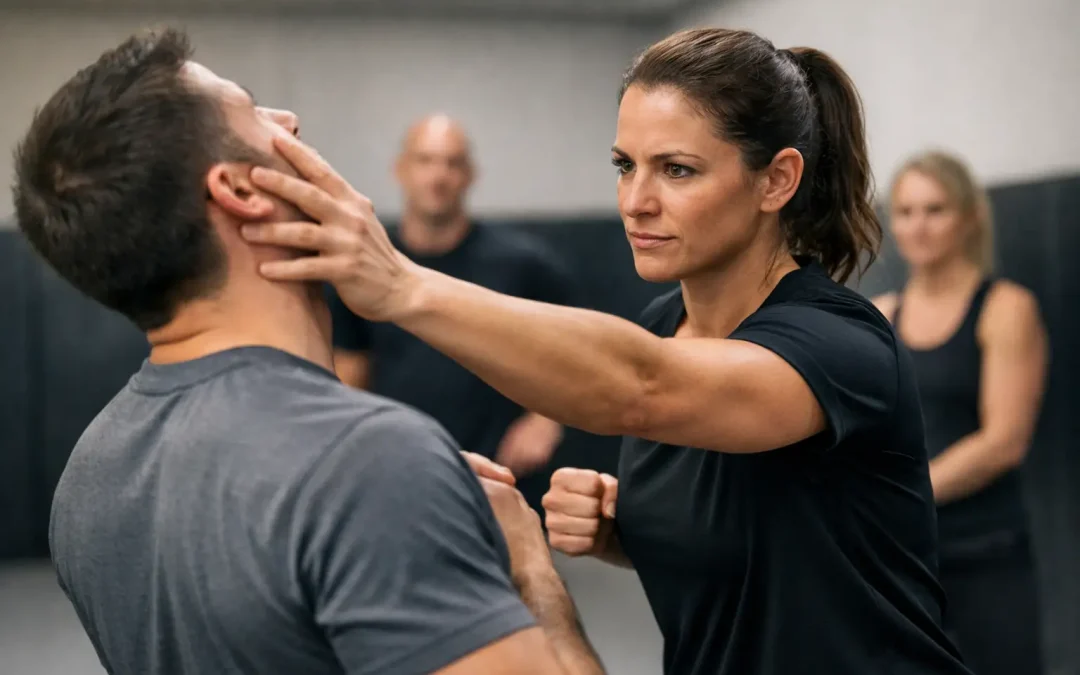
A self-defense instructor is not judged by how sharp their own technique looks. They are judged by what their students can do when a threat is sudden, close, confusing, and frightening. Train the trainer self defense is about building instructors who can teach usable action, not repeat choreography.
For companies, community groups, educators, and safety leaders, that distinction matters. A polished demonstration can create false confidence. A well-run training session develops awareness, decision-making, verbal boundaries, escape priorities, and simple physical responses that people can recall under pressure.
At Urban Street Defense, the standard is clear: no fancy moves, no routines for their own sake, and no pretending that real danger comes with a warning bell. Trainers must be able to make safety skills accessible while keeping the learning environment controlled, responsible, and practical.
What Train the Trainer Self Defense Must Deliver
A credible instructor program does more than teach participants a collection of strikes, releases, or defenses. It develops the judgment to know what to teach, when to teach it, and how to scale it for the people in front of them.
A trainer may work with office staff who commute after dark, university groups, women attending a short safety course, or a private team that wants practical skills without becoming martial artists. Their fitness levels, confidence, previous experience, and risk concerns will differ. The core principles should not.
The best self-defense training stays simple. It teaches people to recognize trouble early, create distance, use their voice, move toward safety, and respond decisively only when they cannot safely disengage. The instructor’s job is to make those priorities clear before technical detail starts taking over.
A train-the-trainer program should also teach the difference between self-defense and fighting. Fighting is often about staying engaged, winning an exchange, or proving something. Self-defense is about breaking contact, protecting yourself and others, and getting out. That shift changes how a trainer frames every drill.
Teach Principles, Not a Script
Real confrontations are not rehearsed. The environment may be crowded, wet, dark, cramped, or unfamiliar. A person may be carrying a bag, wearing work clothes, standing beside a car, or trying to protect a child. There is no reliable script.
That is why trainers need to teach adaptable principles rather than long sequences. A student should understand position, distance, balance, targets, timing, and escape routes. They should not need to remember twelve steps before taking action.
A useful instructor asks practical questions throughout a session. Where is the exit? What happens if the first response fails? Can the student move? Is there an object, wall, vehicle, or second person changing the situation? Does the response create a chance to leave?
Jeet Kune Do-inspired training is valuable here because it prioritizes directness, simplicity, and adaptation. But the point is not to copy a style label. The point is to help students use natural, efficient movement when they are under stress.
For example, a trainer should not present a wrist-grab escape as a guaranteed answer to every grab. Grip strength, angle, surprise, clothing, and the attacker’s movement all matter. Instead, the trainer can teach a simple objective: protect your balance, disrupt the grip, create space, and leave. The technique supports the objective, not the other way around.
Build Pressure Without Creating Chaos
Pressure testing is where many programs either become useful or fall apart. Training that is always slow, cooperative, and predictable may look clean, but it does not prepare a student for adrenaline, hesitation, resistance, or sensory overload.
At the same time, pressure is not an excuse for reckless training. Throwing beginners into aggressive drills before they understand boundaries and mechanics can overwhelm them, increase injury risk, and teach panic instead of control.
Good trainers build intensity in stages. They begin with clear movement and simple decisions. Then they add resistance, verbal stress, restricted space, awkward starting positions, and time pressure. The student learns to function when the drill becomes less tidy, while the instructor remains responsible for pacing, supervision, and safety.
A strong trainer knows when to stop a drill, lower the intensity, and coach the student through what happened. The goal is not to embarrass someone for freezing. It is to give them a repeatable path back to action.
That means correcting more than physical errors. If a student drops their voice, loses awareness of the exit, or continues engaging after they have created space, those are training points too. Self-defense is a complete response, not just a strike.
The Instructor’s Real Skill Is Communication
People learn under stress when instructions are clear, short, and purposeful. Trainers who over-explain often lose the room. Trainers who rely only on command-and-repeat may miss fear, confusion, or unsafe habits.
Use direct coaching language. Tell students what matters now: move, frame, protect your head, use your voice, get to the exit. Explain the reason in plain terms, then let them practice. Immediate feedback is more useful than a long lecture after the session ends.
Demonstrations should also be honest. If a move depends on perfect timing or a compliant partner, say so. If it is an option rather than a universal answer, teach it that way. Confidence comes from realistic expectations and repeated practice, not from promising certainty.
This is especially important in workplace and public workshops. Many participants may have no martial arts background and no interest in collecting techniques. They need an instructor who can make the material relevant to their daily routine: parking lots, elevators, ride-hailing pickup points, travel, late shifts, and unfamiliar public spaces.
Train the Trainer Self Defense for Different Groups
One lesson plan will not fit every audience. The foundation can stay consistent, but delivery must match the group’s needs, available time, and physical capabilities.
For a short corporate session, trainers may focus on awareness, boundary-setting, de-escalation, escape movement, and a few high-value physical responses. The aim is practical exposure and better decision-making, not turning a two-hour workshop into a black-belt test.
For a women-focused crash course, the instructor should avoid assumptions about confidence, fitness, or past experiences. Teach assertive options, acknowledge that threats can come from familiar people as well as strangers, and create an environment where participants can opt out of any drill without being singled out.
For ongoing group classes, instructors can build a deeper progression. Students have time to improve movement, develop conditioning, practice controlled sparring, and learn to make decisions against more active resistance. Even then, every session should stay connected to real safety outcomes.
Private groups may need a different emphasis. Parents may want home and travel safety. Managers may need workplace violence awareness and staff response principles. Security-facing teams may require role-specific boundaries. A capable trainer listens first, then designs the session around real exposure rather than a generic syllabus.
Risk Management Is Part of the Job
Teaching self-defense carries responsibility. Trainers must maintain clear boundaries, suitable contact levels, appropriate protective equipment, and a culture where participants report pain, discomfort, or concerns immediately.
They also need to avoid creating legal or ethical confusion. Training should emphasize reasonable action to protect oneself and escape danger, not punishment or retaliation. Encourage students to seek help, contact emergency services when needed, document incidents, and follow workplace reporting procedures where relevant.
Physical safety requires preparation. Before high-contact drills, assess the space, remove hazards, explain stop signals, and pair participants sensibly. Watch for fatigue, poor control, and participants who become too competitive. A drill that gets out of control is not realistic training. It is poor instruction.
Emotional safety matters too. Some scenarios can trigger strong reactions, particularly for people with previous experiences of harassment or violence. Trainers do not need to act as therapists, but they do need to lead with respect, choice, and professional awareness.
Measure What Students Can Actually Do
A trainer certification should not be based only on attendance or the ability to repeat terminology. Assessment should include whether a candidate can teach a simple skill clearly, manage a group, correct unsafe behavior, adapt a drill, and keep the objective focused on escape.
Watch how they respond when a student asks, “What if that does not work?” The right answer is rarely another complicated sequence. It is usually a return to principles: protect yourself, create disruption, move, and find safety.
Candidates should also demonstrate sound judgment in realistic teaching situations. Can they make a beginner feel capable without giving false assurance? Can they challenge an experienced participant without letting ego take over? Can they keep a scenario practical when the group starts treating it like a competition?
These are the skills that separate a technician from an instructor. A good technician can perform. A good trainer can help ordinary people act when it counts.
The strongest self-defense instructors leave students with more than techniques. They leave them more alert, more decisive, and more prepared to move toward safety. Teach that standard every time: simple action, clear thinking, and no wasted movement when the moment is real.