by Founder of USDC | 16th October 2026 | General Safety Topics
A crowded parking lot. A stranger standing too close. Someone following your pace after you leave the train. These moments do not ask whether you know a beautiful routine. They ask whether you can notice danger early, make a decision, and act.
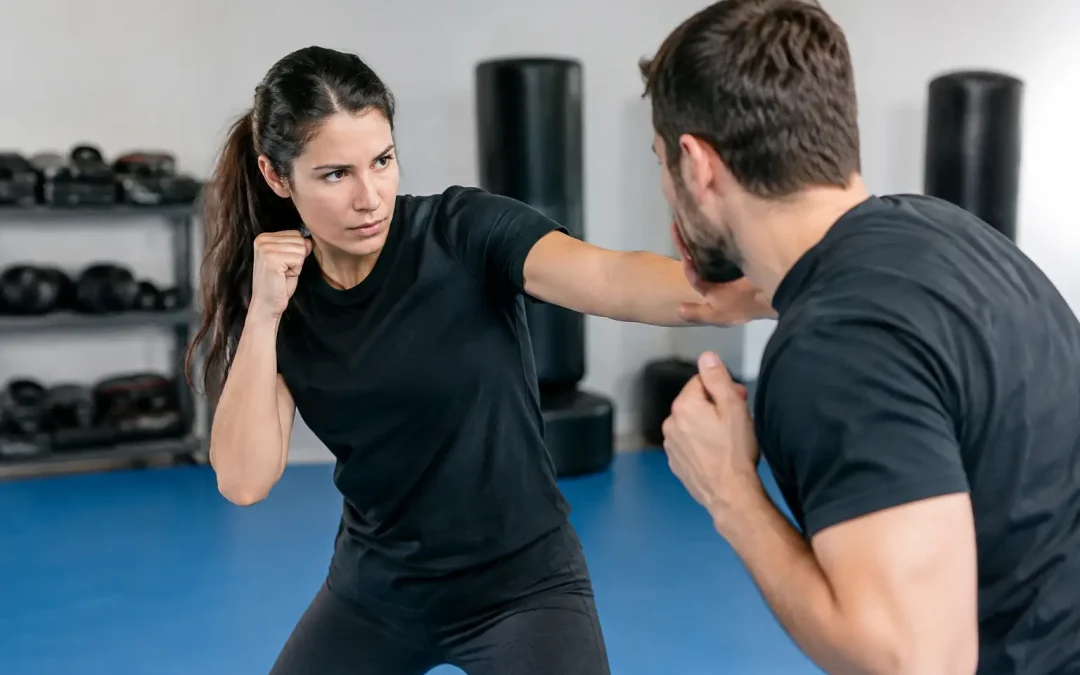
So, does self defense improve confidence? Yes – when the training prepares you for real pressure rather than giving you a false sense of security. The confidence that matters is not loud, careless, or confrontational. It is the quiet certainty that you can assess a situation, set boundaries, create space, and respond if you have no safer option.
Does Self Defense Improve Confidence in Real Life?
Practical self-defense can improve confidence because it replaces uncertainty with experience. Many people feel vulnerable not because they are weak, but because they have never practiced what to do when a situation becomes uncomfortable or dangerous. When your mind has no reference point, it often freezes, panics, or jumps straight to worst-case thinking.
Training gives you reference points. You learn how to stand with balance, use your voice, move away from danger, manage distance, and recognize when a situation is escalating. You also learn a hard truth: there is no magic move that works every time. Safety is about awareness, decisive action, and doing the simplest effective thing under pressure.
That changes how you carry yourself. You may walk with better posture. You may pay more attention to entrances, exits, and the people around you. You may become more comfortable saying no without apologizing for it. Those are confidence gains, but they are also safety habits.
The key is realism. A class built around slow, cooperative drills can feel empowering in the moment while doing little to prepare you for surprise, resistance, noise, fear, or fatigue. Confidence built on fantasy breaks fast. Confidence built through controlled pressure becomes more reliable.
Confidence Is Not the Same as Fearlessness
Good self-defense training does not teach you to chase danger. It teaches you to respect it without being ruled by it.
Fear is a normal response when something feels wrong. The goal is not to remove fear completely. The goal is to prevent fear from taking over your body and decision-making. A confident person may still feel their heart race, but they can use that energy to move, speak, protect themselves, and get away.
This is why practical training should include verbal boundaries, awareness, escape decisions, and physical responses. Not every confrontation requires force. In fact, avoiding a fight is usually the best outcome. But avoidance only works when you recognize a problem early and give yourself permission to leave before politeness turns into risk.
For working adults, this matters in ordinary places: elevators, parking areas, ride-share pickup points, nightlife districts, offices after hours, and unfamiliar travel locations. Confidence is not assuming nothing will happen. It is knowing you have options if something does.
What Actually Builds Confidence in Training?
Confidence does not come from collecting techniques. It comes from repeatedly proving to yourself that you can function when things are uncomfortable.
A useful self-defense program starts with simple movements that are easier to remember under stress. Complicated sequences can look impressive, but stress reduces fine motor control and clear thinking. Direct movements, balance, distance management, and strong basic strikes are more likely to remain available when your body is flooded with adrenaline.
Pressure also matters. You do not need to be thrown into a full-contact fight on day one. In fact, that approach can overwhelm beginners and teach little. But training should progress beyond static drills. A partner should move. They should resist appropriately. They should create uncertainty. You should have chances to make decisions rather than simply wait for a rehearsed attack.
That progression develops a valuable internal message: “I have felt stress before, and I can still act.” It may begin with controlled pad work, boundary-setting drills, and simple escape scenarios. Later, it can include realistic sparring or scenario-based work with clear safety rules. Each level makes the next unfamiliar situation feel more manageable.
At Urban Street Defense, the focus is on that practical progression: no ornamental forms, no waiting for a perfect opening, and no pretending that a real threat will pause so you can remember a sequence. The objective is simple – respond, create an opportunity to escape, and get safe.
The Confidence Benefits Go Beyond a Threat
People often join a self-defense class because of one concern: commuting alone, traveling, a recent incident, or a general feeling of vulnerability. They often notice other changes first.
Training can improve body awareness. You learn how you stand, where your weight sits, and how quickly you can move. You become less disconnected from your physical presence. For many beginners, especially those who have spent years behind a desk, this alone feels powerful.
It can also improve communication. Saying “Stop” clearly in a drill may feel awkward at first. So may holding eye contact, setting a boundary, or telling someone to step back. With practice, these actions become less foreign. That can carry into work, family life, and other everyday situations where clear boundaries matter.
There is a social benefit too. A well-run class should be challenging without being intimidating. Training alongside people who are learning, making mistakes, and improving can replace embarrassment with momentum. You do not need to arrive athletic, experienced, or fearless. You need to be willing to practice.
Where Self-Defense Confidence Can Go Wrong
Not all confidence is useful. Some training creates overconfidence by suggesting that a few lessons make a person untouchable. That is dangerous.
Size, strength, multiple attackers, weapons, confined spaces, surprise, and uneven ground all change the situation. Even highly trained people can be injured. A responsible instructor does not promise certainty or encourage students to “win” every confrontation. They teach risk management, fast decision-making, and escape as the priority.
There is also a difference between feeling confident after class and retaining skill months later. Like fitness, self-defense fades without practice. A one-day workshop can deliver useful awareness and foundational responses, but regular training develops timing, composure, and instinct. If your goal is lasting confidence, consistency matters more than intensity once in a while.
For some people, a past assault, harassment, or traumatic experience may make physical training emotionally difficult. That does not mean self-defense is the wrong choice. It means the learning environment must be respectful, controlled, and adaptable. A good instructor can scale contact, explain drills clearly, and let students build tolerance at a pace that challenges them without shutting them down.
How to Choose Training That Builds Real Confidence
Ask what happens after the first demonstration. Do students only repeat choreographed moves, or do they practice against changing pressure? Are instructors honest about escape and risk? Is the training built around natural, direct actions that beginners can learn and retain?
Look for an environment that teaches awareness alongside physical skills. You should learn how to identify pre-attack behavior, manage proximity, use your voice, and leave safely. Physical techniques matter, but they are only one part of personal safety.
Also consider whether the class fits your life. A training system you can attend consistently is more valuable than an impressive program you quit after two sessions. Private instruction, small groups, workplace programs, and women-focused crash courses can all be useful entry points depending on your schedule and comfort level.
The right class should leave you grounded, not reckless. You should feel more alert, more capable, and more aware of what you still need to practice.
Confidence is earned through action. Start with one practical session, keep showing up, and let your ability grow into the calm presence that helps you move through daily life with stronger boundaries and better choices.
by Founder of USDC | 14th October 2026 | General Safety Topics
A threat feels different when there is nowhere to step back. In an elevator, parked car, narrow hallway, restroom, stairwell, or packed train, the usual advice to “keep your distance” may already be impossible. To escape confined space attacks, you need a simple priority: create enough disruption to get through the nearest safe exit.
This is not the place for fancy combinations, perfect stances, or a fight you hope to win. Confined spaces remove room, visibility, balance, and time. Your response must be direct, aggressive when necessary, and focused on leaving.
Why confined spaces change the fight
In open space, you may see danger early, move away, use barriers, or call for help before physical contact begins. In a confined space, an attacker can close distance quickly, pin you against a surface, block a door, grab clothing, or use the environment to limit your movement.
The floor may be slippery. Your bag may be trapped. A wall, car seat, or elevator rail can stop your retreat. If you are carrying groceries, wearing work clothes, or seated with a seatbelt on, your options narrow even further.
That does not mean you are helpless. It means your goal must change. Do not think, “How do I beat this person?” Think, “Where is the exit, what is stopping me, and what can I do right now to move?”
The first rule: protect, disrupt, escape
A confined-space response works best when it follows a short sequence you can remember under stress: protect yourself, disrupt the attack, escape.
Protect your head, neck, and breathing space first. If someone is crowding, grabbing, or striking, keep your hands active between you and the threat where possible. Avoid reaching back for a complicated technique when you cannot see clearly or when your arms are trapped against a wall.
Next, disrupt. This can mean forceful verbal commands, sudden movement, using your body weight to make space, or immediate simple strikes to vulnerable targets when physical force is necessary to stop the assault. The purpose is not to trade blows. It is to interrupt the attacker long enough to break contact and move.
Then escape. Get through the door, out of the vehicle, toward people, light, staff, security, or a locked area. Keep moving. Do not stop outside the elevator or car to argue, retrieve property, or see whether the attacker will follow.
Use your voice before and during contact
Your voice is a tool. Use it early and loudly if you sense danger. Short commands work better than explanations: “Back up.” “Don’t touch me.” “Help!” “Call the police!”
Clear commands may draw attention, create witnesses, and show the other person you are not an easy target. In a building, yelling “Fire!” can cause confusion. Name the problem instead: “This man is attacking me!” or “Help, I’m being assaulted!” Specific words tell bystanders what action is needed.
If the attacker is testing boundaries rather than attacking outright, your voice may end the situation before it turns physical. If contact has already begun, shouting can still disrupt their focus and alert people nearby. It is not a substitute for action, but it can support your escape.
Escape confined space attacks in elevators and hallways
Elevators and hallways create a dangerous illusion: they look public, yet you may be alone for crucial seconds. Pay attention before the doors close. If someone’s behavior feels wrong, do not enter just because you are in a hurry. Wait for another elevator, step away, or return to a staffed area.
If danger starts inside an elevator, identify the controls immediately. Press the alarm and multiple floor buttons if you can do so without turning your back or losing balance. When the doors open, move out fast, even if it is not your floor. Your destination no longer matters.
In a narrow hallway, do not let yourself be walked backward into a dead end. Turn slightly rather than standing square and flat-footed. This gives you a stronger base and keeps your eyes on the available route. If a person blocks your path, use your voice, create a moment of disruption if they attack, and drive toward the exit instead of retreating deeper into the space.
Walls can be useful if you use them intentionally. They can help you stay upright, prevent someone from circling behind you, and give you a reference point when panic scrambles your sense of direction. But never assume a wall protects you. If you are pinned, the priority is to free your movement and get out.
In a car, leaving is the win
Cars create some of the tightest and most awkward self-defense positions. You may be seated, belted in, and unable to use one side of your body. Prevention matters heavily here: lock doors when you enter, check the area before getting in, and avoid sitting in a parked car distracted by your phone.
If someone tries to force their way into your vehicle, make noise, use the horn, and drive away if it is safe to do so. If the vehicle cannot move, get out as soon as you have an opening. A car can become a trap if you stay inside trying to solve a confrontation through a partly opened window or door.
If you are attacked while seated, protect your head and breathing, make space with decisive movement, and remove the seatbelt only when it helps you exit. This is one of those situations where it depends: unbuckling too early can reduce your stability during a moving-vehicle incident, but remaining buckled can stop you from escaping an attacker in a stationary car. Train for the context, not a fixed rule.
Do not fight for your belongings
A phone, wallet, laptop, watch, or bag can be replaced. Your ability to leave cannot. If an attacker wants property and giving it up creates a safe exit, let it go.
The exception is when the demand is clearly a method of controlling you, such as an attempt to force you into a vehicle, isolated room, or second location. Do not allow yourself to be moved to a more private place if you can prevent it. Make noise, resist the movement, create a chance to escape, and move toward people.
There is no clean script for every threat. The point is to recognize the difference between losing property and losing access to safety.
What pressure-tested training should build
Knowing that confined spaces are dangerous is not the same as being ready for one. Under adrenaline, people often freeze, grab weakly, forget what they planned, or use too much force on the wrong problem. Training should reduce that gap.
Useful training starts with common positions: backed against a wall, seated in a chair, trapped near a doorway, crowded in a corner, or grabbed at close range. It should teach you to keep awareness, regain posture, use simple natural movements, and escape after contact. It should also include verbal pressure, decision-making, and realistic resistance – not cooperative choreography.
At Urban Street Defense, the standard is simple: no routines, just action. A technique that only works when a partner pauses is not a reliable answer to a real assault. You need practice that accounts for fear, imbalance, limited space, and the fact that an attacker will not stand still.
Build habits that give you options
Your best defense begins before someone puts hands on you. Keep your phone accessible without walking with your attention buried in it. Notice exits when entering parking garages, stairwells, and unfamiliar buildings. Trust discomfort early. You do not need proof that someone is dangerous before creating distance.
When possible, stand near an exit in elevators and public transit. Avoid letting unknown people position themselves between you and the door. Tell someone where you are going when meeting a new person or traveling late. These are small decisions, but confined-space safety is often decided before the attack begins.
If an assault occurs, act with purpose. Protect yourself. Make space. Get out. Then get help, report what happened, and seek medical attention if needed. The strongest response is not a perfect fight. It is reaching safety with the ability to keep living your life on your terms.
by Founder of USDC | 12th October 2026 | General Safety Topics
A self defense class selection guide should start with one hard question: will this training still work when you are scared, off-balance, tired, and caught by surprise? A class can look impressive from the sidelines and still leave students unprepared for the speed, confusion, and pressure of a real confrontation.
The right class does not promise superhero skills. It gives you simple actions, better awareness, and the ability to make decisions under stress. Your goal is not to win a fight or collect belts. Your goal is to create an opening, protect yourself, escape, and get help.
What a Self Defense Class Must Prepare You For
Real danger is rarely clean, fair, or scheduled. It may begin in a parking area, elevator, workplace, public transit stop, or social setting. You may have limited space, poor footing, restricted movement, a bag in one hand, or no warning at all.
That is why training should go beyond rehearsed attacks and compliant partners. Look for instruction that addresses awareness, verbal boundaries, distance management, escape routes, and physical responses when avoidance has failed. A useful class teaches you when to leave, when to de-escalate, and when immediate action is necessary.
Technique matters, but context matters more. A complicated sequence may work beautifully in a calm demonstration. Under pressure, most people need direct movements they can recall without stopping to think. Simplicity is not basic training. Simplicity is what remains available when adrenaline takes over.
7 Reality Checks Before You Join
1. Watch how students train under pressure
Ask to observe a class before you commit. Do students only take turns performing set moves, or do they work through resistance, movement, noise, uncertainty, and realistic timing? You do not need to see people being reckless or injured. You should see controlled pressure that gradually teaches students to function when a partner does not cooperate.
Pressure-tested training exposes gaps early. It shows whether a technique still makes sense when someone pulls away, pushes forward, grabs harder, or refuses to stand still. Sparring, scenario drills, and resistance should be scaled to the student. Beginners need a safe entry point. More experienced students need enough challenge to avoid false confidence.
2. Check whether the moves are simple enough to remember
If a class depends on ten-step combinations, perfect positioning, or a cooperative attacker, be cautious. Fine motor skills and memory can deteriorate under fear. Training should favor natural, direct actions that work from awkward positions and do not require perfect timing.
This does not mean every answer is a punch. Practical self-defense can include creating distance, breaking a grip, using your voice, protecting your head, moving toward an exit, or getting back to your feet. The question is whether the method is efficient and adaptable, not whether it looks dramatic.
3. Ask what happens after the technique fails
A good instructor does not pretend the first response always works. Grips slip. Strikes miss. Space closes. An attacker may be larger, stronger, or acting unpredictably. Training must teach recovery, follow-up decisions, and escape rather than freezing when Plan A does not go perfectly.
Listen for instructors who explain trade-offs honestly. Running is usually better than fighting, but escape may not be immediately available. Ground skills are useful, but staying on the ground in a public-space attack can create additional risks. There are no magic answers, only better choices for the situation in front of you.
4. Look for instructors who teach judgment, not aggression
Self-defense is about personal safety, not proving toughness. The right instructor makes it clear that force has consequences and should be used only when necessary to protect yourself or another person from an immediate threat.
You should also hear practical discussion about verbal boundaries, recognizing predatory behavior, managing distance, and leaving early. A class that treats every disagreement as a fight is not teaching mature self-protection. It is teaching poor judgment.
5. Make sure the class fits your body and your life
You do not need to be athletic, young, or experienced to begin. A quality program should give beginners clear progressions while still challenging people who have trained before. The instructor should be able to adjust drills for fitness level, injury history, mobility, and confidence without lowering the standard of practical effectiveness.
Schedule matters too. The best class is not the one with the most dramatic marketing. It is the one you can attend consistently. Weekly group training may suit someone who wants regular practice and community. Private coaching may be better if you need flexible times, focused attention, or help working through a specific concern. A short crash course can give useful foundations, but it cannot replace repeated practice.
6. Test the culture before you pay for a package
A serious training environment can be demanding without being intimidating. You should feel challenged, not humiliated. Students should train with control, respect boundaries, and understand that safety equipment and clear rules make harder practice possible.
Watch how the instructor responds when someone struggles. Do they offer useful coaching, or do they use embarrassment as motivation? Look at the class mix as well. Adults with different backgrounds should be able to learn together without ego taking over the room.
At Urban Street Defense, the standard is reality-based training with support behind it: no ceremonial routines, no waiting for a perfect pause, and no pressure to perform for appearances. That combination matters. People improve faster when they can train hard, ask questions, and make mistakes safely.
7. Ask direct questions about the curriculum
Before enrolling, ask what the first few sessions cover and how skills progress after that. A clear program should explain how it teaches awareness, verbal defense, common grabs, close-range attacks, standing recovery, and pressure-based drills. It should also explain what students are not being taught and why.
Be careful with sweeping claims such as “works against anyone” or “learn everything in one day.” Good training respects the unpredictability of violence. It gives you useful tools, then builds your ability to apply them across changing situations.
Red Flags That Should Make You Walk Away
Walk away from classes that encourage students to train through dangerous injuries, glorify street fights, or promise guaranteed outcomes. Be skeptical if the instructor refuses to let you observe, cannot explain how drills become more realistic, or relies entirely on titles and lineage instead of clear teaching.
Another warning sign is a program built only around choreography. Forms can develop coordination and discipline, and sport training can build timing and fitness. Those benefits are real. But if your purpose is personal safety, neither should be mistaken for realistic defense training unless the class also addresses surprise, resistance, escape, and decision-making under pressure.
Choose Training You Will Actually Use
The right class should make you more alert, more capable, and less likely to freeze. It should not make you reckless or convinced that danger is easy to control. Confidence built on honest practice is quiet. You notice exits. You set boundaries earlier. You move with purpose.
Choose an instructor who respects the seriousness of violence without making fear the center of your life. Train the basics until they are instinctive, keep your judgment sharp, and remember the standard that matters most: when something goes wrong fast, you need actions that are simple enough to use.
by Founder of USDC | 10th October 2026 | General Safety Topics
A threat rarely arrives with a warning bell. It can start in a parking garage after work, beside your car, on a crowded train platform, or at the entrance to your own building. Urban defense is not about winning a fight or performing impressive techniques. It is about recognizing danger early, making fast decisions, creating space, and getting yourself to safety.
That distinction matters. Real violence is untidy, loud, confusing, and often over in seconds. Your heart rate rises. Your hands may shake. Fine motor skills can disappear. A plan based on complicated moves, perfect timing, or a cooperative attacker can fail at the exact moment you need it most.
Urban Defense Starts Before Physical Contact
The strongest self-defense decision is often made before anyone throws a strike. Awareness is not paranoia. It is the habit of noticing what is happening around you so you have more choices if something feels wrong.
When you are walking from the office, arriving home late, or waiting for a ride, keep your attention available. Put the phone away long enough to scan your surroundings. Notice exits, lighting, other people nearby, and anything that limits your movement. If someone is closing distance in a way that makes you uncomfortable, do not wait for proof that their intentions are bad. Change direction, cross the street, enter a business, call someone, or move toward people.
This is not about judging strangers by appearance. It is about responding to behavior. Someone repeatedly matching your pace, blocking your path, ignoring your verbal boundary, or trying to isolate you deserves your attention. Trust the discomfort. Being polite is never more important than being safe.
For professionals, this applies at work too. An office, elevator, client site, or company event can feel familiar until it does not. Know how to leave a conversation, where security or reception is located, and who you can contact quickly. Safety is a team responsibility, not an individual burden.
Why Simple Urban Defense Works Under Pressure
Under stress, you do not rise to the level of your intentions. You fall back on what you have practiced. That is why effective urban defense training favors simple, direct actions built around natural movement.
Complicated sequences look good in controlled demonstrations. They are less reliable when your footing is poor, your vision is limited, your clothing restricts movement, or the other person refuses to cooperate. There is no pause button in a real confrontation. The goal is not technical perfection. The goal is to interrupt the threat, make room to move, and escape.
A practical system teaches you to manage distance, protect your balance, use clear verbal commands, and respond from awkward positions. It should account for common realities: narrow spaces, surprise grabs, a seated position, a wall behind you, or an attacker who is larger and stronger. It should also teach that physical action is not the first answer to every problem.
De-escalation, escape, and calling for help are victories. A physical response is for the moment when avoidance has failed and immediate action is necessary to protect yourself or another person from harm. The objective is safety, not punishment.
The pressure test matters
Knowing a move is not the same as being able to use it. If training always happens slowly, with a compliant partner, your body may not recognize the same movement when adrenaline hits.
Pressure-oriented training closes that gap. It introduces resistance, movement, verbal stress, uncertainty, and realistic decision-making at a level appropriate to the student. You learn to keep going when the first response does not work perfectly. You learn to recover your balance, protect yourself, and make the next decision instead of freezing.
This does not mean every class should be a brawl. Good training is progressive. Beginners need a safe place to build foundational movement and confidence. As skills improve, drills can become more demanding. The right environment is challenging without being reckless, supportive without pretending danger is easy.
The Mental Skills That Keep You Moving
Fear is not failure. It is information. The problem starts when fear locks your body and stops you from acting. Reality-based self-defense trains the mind as seriously as the body.
First, use your voice. A firm command such as “Back up,” “Stop,” or “Don’t touch me” can draw attention, establish a boundary, and give you a moment to move. Say it loudly enough to be heard. Do not negotiate endlessly with someone who is ignoring clear boundaries.
Second, give yourself permission to leave early. Many people stay in unsafe situations because they do not want to be rude, dramatic, or wrong. You do not need to explain why you are leaving. If a person, place, or interaction feels off, create distance.
Third, avoid fixation. In a confrontation, people sometimes focus only on the person directly in front of them. Keep moving toward an exit or safer area when possible. Look for obstacles, additional people, and routes out. Your surroundings can help you or trap you depending on whether you notice them.
Finally, understand that there is no guaranteed script. Every incident is different. The best response depends on distance, environment, number of people involved, your physical condition, and whether an escape route exists. Training should build adaptable principles, not false certainty.
What Practical Training Should Look Like
If you are choosing a class, look past belts, uniforms, and dramatic promises. Ask what happens in training. Do students practice realistic scenarios? Is there controlled resistance? Are verbal boundaries and awareness included? Does the instructor explain when to disengage and leave?
A useful program should also respect your time. You should not need years of ceremonial routines before learning how to stand, move, protect your head, break contact, and get away. Foundational skills can be introduced quickly, then improved through repeated practice.
At the same time, be skeptical of anyone who says a single workshop makes you invincible. A short course can give you valuable awareness and basic responses. Continued training develops timing, calmness, physical conditioning, and better decision-making. It depends on your goals, schedule, and current experience, but repetition is what turns information into instinct.
Urban Street Defense uses a Jeet Kune Do-inspired approach because simplicity and adaptability matter when the situation is chaotic. No ornamental forms. No choreography designed for applause. The work is practical: understand the threat, respond decisively, and get out.
Training is for more than one type of person
Self-defense is not reserved for athletes or experienced martial artists. A good instructor can adapt training for beginners, smaller participants, working professionals, women’s groups, private teams, and people returning after a long break from exercise.
Corporate training has a particular role. Employees may commute late, travel for meetings, work alone, deal with aggressive members of the public, or attend off-site events. A practical session can give teams a shared language for awareness, boundaries, reporting concerns, and supporting colleagues. It should never create fear. It should create capability.
Private instruction can be especially helpful when someone wants focused coaching, has a specific concern, or prefers to start outside a larger class. Group training, on the other hand, adds variety, energy, and the challenge of working with different body types and movement styles. Neither option is automatically better. The best choice is the one you will attend consistently.
Build a Personal Safety Habit
A safer routine does not require you to live on edge. It requires a few deliberate choices repeated often. Keep your phone charged before traveling. Tell someone when a plan changes late at night. Park or wait in visible areas when you can. Avoid being boxed into isolated corners. Have keys or access cards ready before reaching your door, rather than searching for them with your head down.
Then train your body and mind. Practice speaking with authority. Practice moving with balance. Practice making space and leaving. The first time you think about a boundary should not be when somebody has already crossed it.
Urban defense is not about becoming aggressive. It is about becoming harder to surprise, harder to control, and quicker to act when action is necessary. Start with awareness. Build simple skills. Train under pressure with people who take your safety seriously. Better. Faster. Stronger.
by Founder of USDC | 8th October 2026 | General Safety Topics
A confrontation rarely starts with a punch. It starts with pressure: someone stepping too close, blocking your path, demanding an answer, insulting you, or refusing to accept “no.” The five conflict prevention skills below help you recognize that pressure early and act before your options get smaller.
Prevention is not weakness. It is practical self-defense. If you can create distance, set a boundary, attract attention, and leave safely, you have avoided the worst outcome. But prevention is not magic. Some people want control, conflict, or violence. The goal is to reduce risk without assuming every person will be reasonable.
Why Conflict Prevention Skills Matter
Movies teach people to focus on the final moment: the strike, the takedown, the dramatic escape. Real personal safety starts much earlier. It starts when you notice an uncomfortable situation and decide that being polite is less important than being safe.
In a parking garage, at a workplace event, on public transport, outside a bar, or during a disagreement with someone you know, hesitation can give another person time to close distance and control the situation. Good prevention skills are simple, direct, and usable while your heart rate rises.
They also work best together. Awareness without action can leave you frozen. Words without positioning can leave you trapped. Distance without a clear exit may only delay the problem. Build the full response: notice, decide, communicate, move, and leave.
The Five Conflict Prevention Skills
1. Read the Environment Before It Turns Bad
Your first job is not to diagnose someone’s intentions. You cannot always know whether a person is drunk, angry, distracted, predatory, or simply having a bad day. Your job is to notice behavior that increases risk.
Watch for someone who repeatedly invades your space, mirrors your movement, blocks a doorway, follows after you change direction, demands immediate attention, or keeps escalating after you disengage. Notice the setting too. Poor lighting, isolated areas, crowded exits, alcohol, and groups of agitated people can all change the decision you should make.
This does not mean living in fear or treating every stranger as a threat. It means staying switched on. Keep your phone available rather than buried in a bag. Know where the exits are. When something feels off, move toward people, light, staff, security, or a public area early. Early movement is easier than fighting for an exit later.
2. Control Distance and Protect Your Exit
Distance buys time. Time gives you choices.
If someone becomes confrontational, do not stand chest-to-chest to prove confidence. Angle your body slightly, keep your hands visible around chest level, and take a step back or sideways. This stance is non-aggressive, but it also puts your hands in a position to protect yourself if the situation suddenly changes.
Avoid letting yourself be pinned against a wall, vehicle, table, elevator, or closed door. Do not allow a person to stand between you and the path out. If they move forward, you move away and toward your exit. If you are with friends or coworkers, do not let the group spread out so far that someone is left alone with the problem.
There is a trade-off. In a crowded train or narrow hallway, you may not have much room to move. In that case, use your voice sooner, turn toward witnesses, and state what you need clearly: “Give me space.” “Do not touch me.” “I need to get through.”
3. Use Clear, Short Boundary Language
Under stress, long explanations fail. People start negotiating, apologizing, or trying to soften a message so much that it no longer sounds like a boundary. Keep your words short and repeatable.
Use a firm voice. Not a scream at the first sign of tension, but loud enough for the person and nearby people to hear. Name the behavior and give a direct instruction: “Stop following me.” “Step back.” “Do not touch me.” “Move away from my car.”
Avoid insults, threats, or challenges such as “What are you looking at?” and “You want a problem?” Those phrases can turn a tense interaction into a contest of pride. You are not trying to win an argument. You are trying to break contact safely.
If the person keeps pushing, do not keep changing your message. Repeat it once, then act on it by moving toward safety, calling for help, or getting others involved. Repetition shows you are serious. Endless debate signals that your boundary is negotiable.
4. Manage Your Own Adrenaline
Fear, anger, embarrassment, and surprise can make good people make bad decisions. You may freeze. You may talk too fast. You may raise your voice because the other person raised theirs. You may focus on being right when you should be getting away.
A simple reset helps: plant your feet, take one controlled breath, look for your exit, and use one clear sentence. You do not need to feel calm to act effectively. You need a basic process that still works when you do not feel calm.
This is where realistic training matters. Reading safety advice is useful, but it cannot fully prepare you for noise, confusion, close distance, and a person who does not cooperate. Scenario-based practice teaches you to speak, move, and make decisions while pressure is present. The purpose is not to make you fearless. It is to stop fear from making your choices for you.
Be honest about your personal triggers. Some people freeze when confronted by authority. Others become reactive when insulted. If you know what pulls you off balance, you can prepare a response before it happens. A short phrase such as “I’m leaving now” can prevent you from getting drawn into a pointless exchange.
5. Leave Decisively and Get Help Early
The safest conflict is the one you leave behind. Once you have an opening, use it. Do not stay to explain. Do not wait for an apology. Do not return to collect a minor item if doing so puts you back within reach of the person.
Move toward people and visibility. Enter a store, approach security, stand near a family, speak to venue staff, or call someone who can stay on the phone with you while you travel. If there is an immediate threat, contact emergency services. Give clear details: your location, what the person looks like, what they are doing, and where they went.
If the person is known to you, leaving can be more complicated. Workplace conflict, harassment by an acquaintance, and domestic abuse may require documentation, support from management or trusted family, formal reporting, and a safety plan. Do not rely on one conversation to fix an ongoing pattern of intimidation. Get support early and keep records where it is safe to do so.
When Prevention Fails
Conflict prevention reduces risk. It does not guarantee safety. Someone may grab, strike, corner, or attack without warning. At that point, your priorities change: protect yourself, create space, escape, and get help.
This is why practical self-defense should not be limited to scripts or theory. You need to understand how distance feels when someone is moving into you, how to protect your head and balance, and how to respond when a boundary is ignored. No fancy moves – just actions you can perform under pressure.
Urban Street Defense trains these decisions as well as physical responses. The objective is not to look impressive. It is to recognize danger sooner, act with purpose, and give yourself the best chance of getting home safely.
Your next safe decision may be small: changing seats, ending a conversation, stepping toward a crowd, or saying “stop” loud enough for others to hear. Make that decision early. Space, awareness, and decisive action are worth more than pride.