by Founder of USDC | 17th September 2026 | General Safety Topics
A useful JKD class review should not focus on whether a class looks impressive. It should answer a harder question: will the training help you act when someone crowds you, grabs you, threatens you, or catches you off guard?
Jeet Kune Do has a powerful reputation because of Bruce Lee’s emphasis on simplicity, directness, and adaptability. But the name alone does not guarantee practical training. One JKD class may be built around cooperative drills and traditional martial arts habits. Another may teach students to manage distance, hit with intent, escape holds, and keep functioning when adrenaline takes over.
If your goal is personal safety rather than belts, forms, or tournament points, this is what a JKD class needs to deliver.
What a Realistic JKD Class Should Feel Like
A practical class should feel focused from the first session. You should spend more time moving, reacting, striking, escaping, and making decisions than standing in lines memorizing long sequences.
That does not mean training must be chaotic. Beginners need structure. They need to learn how to stand, move, protect their head, create space, and deliver simple strikes safely. The difference is that every drill should have a clear purpose. You are not collecting techniques. You are building responses you can access under stress.
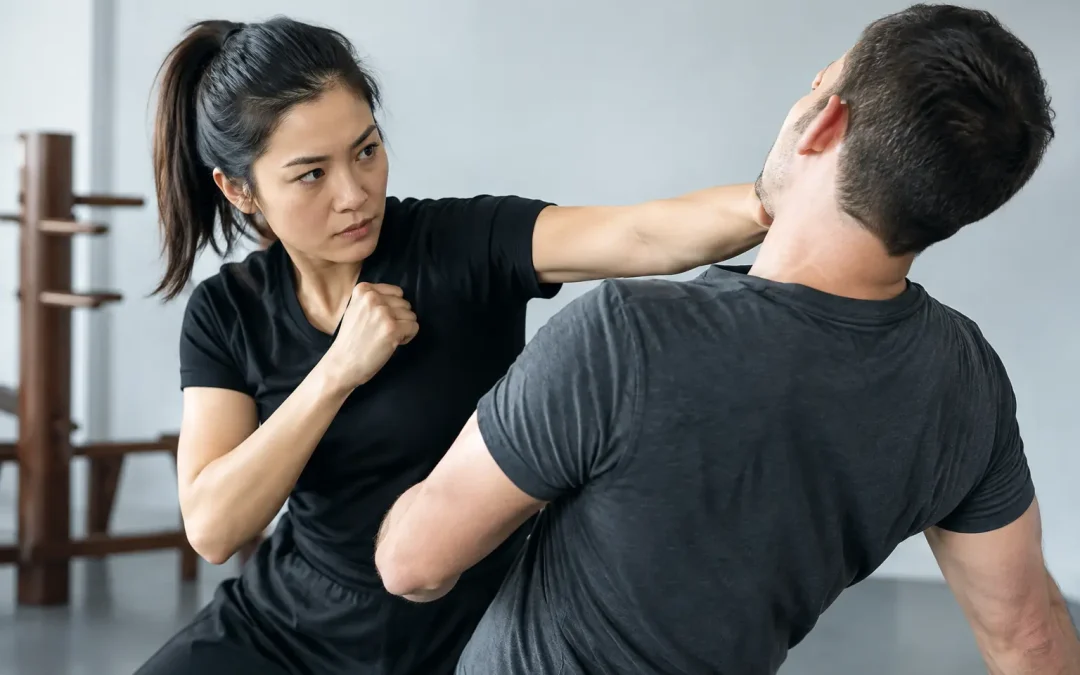
Good JKD-inspired self-defense training often begins with natural movements: palm strikes, elbows, knees, low kicks, frames, footwork, and escapes from common grabs. These tools are not glamorous. That is exactly why they matter. Under pressure, complicated techniques break down fast.
A serious instructor also explains the context. A response for an aggressive stranger at close range is different from a response to someone trying to pull you into a vehicle. A workplace confrontation, a parking-lot encounter, and an attempted robbery each require different decisions. Sometimes the right move is to strike and run. Sometimes it is to create distance, use your voice, move toward people, or give up property to protect your life.
The Best JKD Class Review Starts With Pressure
The biggest difference between martial arts practice and self-defense preparation is pressure.
A technique can work perfectly when your training partner pauses, offers the same attack every time, and waits for your response. Real danger does not arrive that way. Your vision narrows. Your heart rate rises. Your hands may shake. The person in front of you may be bigger, louder, faster, or already within reach.
That is why pressure testing matters. It does not mean beginners should be thrown into full-contact sparring on day one. It means the training should gradually become less predictable. Drills should include movement, resistance, verbal aggression, timing problems, and realistic distances.
Look for a class where instructors scale intensity intelligently. A new student may first learn an escape slowly, then perform it against light resistance, then use it inside a short scenario. An experienced student may add protective gear, controlled sparring, fatigue, and multiple decision points. The goal is not to prove who is toughest. The goal is to make useful action more instinctive.
A class that never challenges you may feel comfortable, but comfort is not the same as readiness.
Sparring Is Useful, but It Is Not the Whole Answer
Sparring teaches valuable skills: timing, distance, composure, and the reality that people move and hit back. For many students, it is where confidence starts becoming real.
Still, sparring alone is not self-defense. Most fights outside a gym do not begin with two people squared up at a respectful distance. They may start with a shove, a grab, a surprise strike, a threat, or an attempt to trap you against a wall or inside a tight space.
The strongest JKD classes use sparring as one tool alongside scenario work, close-range training, verbal boundary setting, and escape-based drills. If a school treats sport sparring as the only measure of effectiveness, it may leave gaps. If it avoids pressure completely, it creates a different problem.
Signs the Instruction Is Built for Beginners
You do not need prior martial arts experience to begin. In fact, beginners often progress quickly when instruction is direct and the class avoids unnecessary complexity.
A capable instructor does not bury students under theory. They teach what to do first. Cover your head. Move your feet. Make space. Strike vulnerable targets if you must. Escape. Get to safety. Report what happened.
Clear coaching matters because self-defense can be emotionally loaded. Some students arrive after a frightening experience. Others are concerned about commuting, traveling, working late, or protecting family members. A good training environment respects those concerns without turning every lesson into fear-based theater.
Expect corrections that are specific and usable. Rather than hearing “be more aggressive,” you should hear practical direction: “Move off the center line.” “Keep your hands between you and them.” “Use your voice before they get close.” “Do not stay to win an argument after you have an exit.”
Limited class sizes can make a major difference here. You need repetitions, feedback, and supervised resistance. Watching an instructor perform a technique from the back of a crowded room is not enough.
What to Watch Out For in a JKD Class
Not every school using the JKD label is teaching the same thing. The name has a broad history and many branches. That is not automatically a problem, but it means you should judge the training in front of you rather than relying on the sign outside.
Be cautious if every technique depends on perfect timing, a compliant partner, or a precise sequence of moves. Real attacks are messy. A method should still give you options if the first strike misses, the grip changes, or you lose your balance.
Also question training that promises certainty. No class can guarantee that you will never be harmed. Size, weapons, numbers, terrain, surprise, and luck all matter. Honest self-defense training teaches risk management, not fantasy.
Another warning sign is an obsession with status over skill. Rank can provide structure, and tradition can have value for people who enjoy it. But if your personal goal is functional safety, your progress should be measured by better awareness, stronger movement, improved decision-making, and the ability to perform under controlled stress.
Is JKD Right for Your Goals?
JKD-inspired training is a strong fit for adults who want an efficient, adaptable approach to self-defense. It can be especially useful for busy professionals who do not want years of forms before learning how to handle common threats.
It may also suit people who have trained before but feel their previous experience was too rigid or too focused on competition. A boxer may gain close-range escape skills and scenario awareness. A traditional martial artist may benefit from more resistance and fewer fixed patterns. A complete beginner may appreciate starting with simple actions that make sense immediately.
But the fit depends on the school. Ask how the class handles grabs, surprise attacks, verbal threats, confined spaces, and multiple attackers. Ask whether students practice with resistance. Ask how beginners are introduced to contact. The answers will tell you more than a long list of techniques.
For women-focused programs, private groups, and workplace teams, the best instruction also recognizes the setting. Personal safety is not one-size-fits-all. A corporate team may need situational awareness and boundary-setting alongside physical responses. A private group may want more time on travel safety, common assault scenarios, or building confidence in a supportive setting.
What You Should Take Away After Training
After a good class, you should not leave believing you are invincible. You should leave with a clearer sense of what danger looks like, what choices you have, and what your body can do when it counts.
You should feel more capable of setting boundaries early. More aware of distance and exits. Better able to use your voice. More prepared to protect your head, create space, strike with purpose when necessary, and get away.
That is the standard Urban Street Defense works toward: no fancy moves, no routines for show, and no false confidence. Just practical training built around simple action under pressure.
The most valuable class is the one that makes you harder to surprise and faster to act. Start with training that respects the reality of violence, then keep showing up until the basics feel like yours.
by Founder of USDC | 16th September 2026 | General Safety Topics
The moment something feels wrong is not the time to freeze, debate your instincts, or search your memory for a complicated technique. Women’s safety depends on decisions made early, simple actions delivered with commitment, and training that works when adrenaline takes over.
Real danger is rarely neat. It may begin with someone standing too close, following you from a store, refusing to accept “no,” blocking your path, grabbing an arm, or escalating an argument in a parking lot. The goal is not to win a fight. The goal is to recognize trouble, create an opening, and get to safety.
Women’s Safety Starts Before Physical Contact
Personal safety is not about living in fear or treating every stranger as a threat. It is about staying switched on in places where attention can drift: walking from work, entering a ride-share, using an elevator, leaving a gym, or returning to your car after dark.
Awareness gives you time. Time to change direction, enter a busy business, call someone, move toward security, or refuse an interaction before it becomes harder to leave. Keep your head up. Notice who is around you, where the exits are, and what changes in the environment do not feel right.
Your phone can help, but it can also make you less aware. Looking down while walking or scrolling while waiting alone sends a simple message: you are distracted. Put the phone away when moving through isolated spaces. If you need to make a call, do it while remaining alert to your surroundings.
Trust discomfort without needing to justify it. Someone does not have to look obviously dangerous for you to create distance. A person who ignores boundaries, keeps closing the gap, demands personal information, or pressures you to help them with something may be testing whether you will comply.
Use Your Voice Before You Use Your Hands
Many people hesitate because they do not want to seem rude, dramatic, or unfriendly. That hesitation can give an aggressive person more control over the interaction. Clear verbal boundaries are not rude. They are protective.
Use a firm voice that people nearby can hear: “Stop.” “Back up.” “Don’t touch me.” “I said no.” Short commands work better than long explanations. You are not trying to persuade someone who has already chosen to ignore your comfort. You are drawing attention, setting a boundary, and preparing to move.
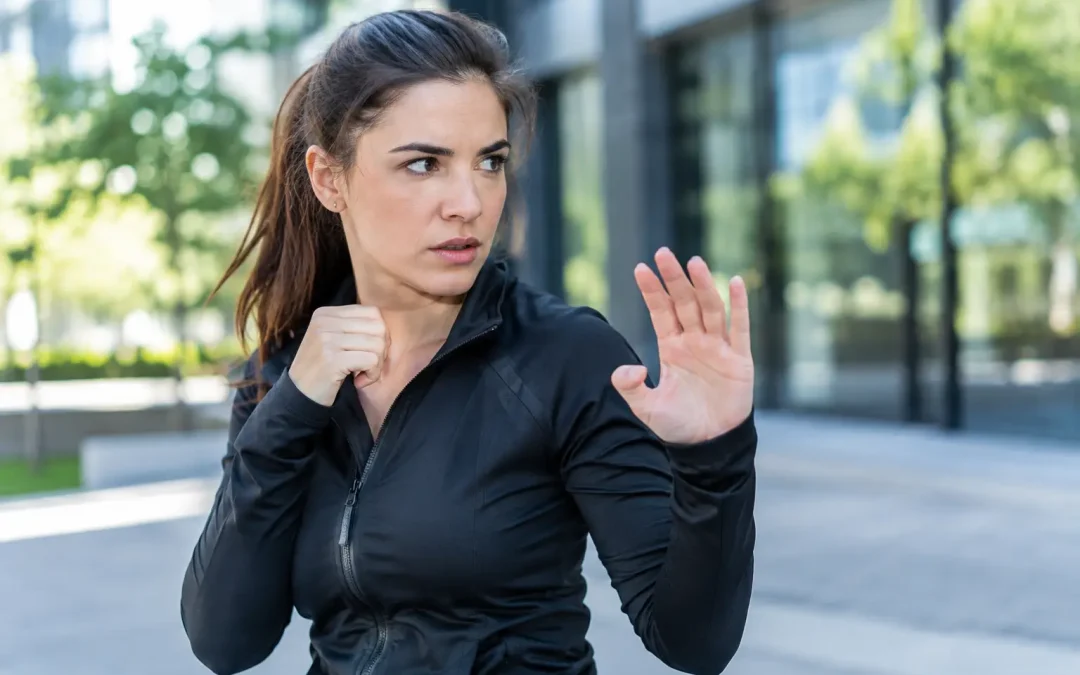
Body position matters too. Stand at an angle rather than squarely facing someone, with your hands up around chest level as if you are talking. This is a non-threatening position that also protects your head and puts your hands between you and the other person. Keep enough distance to move. If a person continues advancing, move off line rather than backing straight into a wall, vehicle, or corner.
Not every unsafe situation calls for confrontation. If you can leave without saying anything, leave. If someone is intoxicated, angry, or unpredictable, do not try to win an argument. Your pride is never worth more than your safety.
What Practical Self-Defense Should Teach
A useful self-defense program does not promise that one move solves every problem. It teaches a sequence of priorities: avoid, escape, disrupt, and get help. Physical techniques are a last line of defense, but they must be simple enough to use when fear affects balance, judgment, coordination, and memory.
Good training focuses on natural actions. Strong palm strikes, elbow strikes, knee strikes, low kicks, pushing off, breaking grips, protecting the head, and getting back to your feet are more relevant than memorizing long routines. The best response depends on distance, position, size difference, clothing, surroundings, and whether an exit is open. There is no magic move.
Pressure matters. A technique that looks clean during slow practice can fail when someone resists, grabs hard, shoves you off balance, or crowds your space. Training should gradually introduce realistic movement, verbal pressure, resistance, and decision-making. You need experience responding while your heart rate rises, not just repeating choreography with a cooperative partner.
This does not mean every class should be brutal. Beginners need a supportive environment where they can learn safely and build confidence. But safety training should eventually test whether a response can work under stress. No fancy moves. No pauses while an attacker waits. Just direct actions that help create an exit.
Train for the Situations You Actually Face
Women’s safety training should reflect everyday urban risks, not movie scenes. A useful class covers common situations such as wrist grabs, bear hugs, hair grabs, being pinned against a wall, unwanted touching, attempted abduction, and attacks from close range. It should also address the moments before an assault: assertive communication, boundary setting, movement, and recognizing pre-attack behavior.
Consider where you spend your time. A commuter may need strategies for parking structures, public transit, and ride-share pickup points. A college student may need to manage parties, unfamiliar homes, and social pressure. A professional may need to address harassment, late office departures, or meetings with clients. Someone who travels often may need stronger habits around hotels, luggage, transportation, and unfamiliar neighborhoods.
The details change, but the principle remains the same: train for context. If your training never addresses your real environment, it may give you confidence without capability.
Build Habits That Reduce Opportunity
Safety is not one big decision. It is a series of small habits that make you harder to isolate, surprise, or control. Confirm transportation before you leave a venue. Check that the car and driver match what you booked. Tell a trusted person where you are going when plans involve unfamiliar people or places. Park where visibility is good and have your keys ready before you reach the vehicle.
At home, avoid opening the door automatically. Verify unexpected visitors. Be careful about sharing routines, addresses, travel plans, or real-time locations publicly. In social settings, keep control of your drink and do not feel obligated to stay because you arrived with someone else.
These habits are not guarantees. Responsibility for violence always belongs to the person choosing to commit it. Still, practical preparation can reduce opportunity and give you more options when something feels off.
Confidence Is Built Through Repetition
Confidence does not come from carrying a safety device you have never practiced with or watching a few videos online. It comes from repetition. You learn how your body reacts under pressure, how loudly you can use your voice, how quickly you can move after a shove, and what it feels like to break contact and escape.
Train consistently enough that your responses become familiar. Start with foundational skills, then add realistic scenarios as your ability grows. Practice with different partners when possible. A response that works on one person may need adjustment against someone taller, heavier, stronger, or more aggressive.
You should also understand the legal limits where you live. Self-defense is about using reasonable force to stop an immediate threat and escape, not pursuing someone or punishing them afterward. Get clear on local laws, prioritize getting away, and contact emergency services as soon as it is safe.
Choose Training That Respects Reality
Look for instruction that lets you ask hard questions. What happens if the first strike misses? What if the attacker does not let go? What if you fall? What if there is more than one person? A credible instructor will not sell certainty. They will teach adaptable principles, encourage awareness, and help you develop responses that fit your size, ability, and lifestyle.
Urban Street Defense trains people for that reality: simple, direct actions practiced against the pressure and unpredictability that make real situations different from controlled demonstrations. The aim is not to look impressive. The aim is to leave.
Start where you are. Walk with more awareness tonight. Practice using a firm voice. Learn how to protect yourself physically with qualified instruction. The safest response is often the one you have practiced enough to use without hesitation.
by Founder of USDC | 15th September 2026 | General Safety Topics
A self-defense skill that only works when everyone knows the next move is not a self-defense skill. It is a routine. The adaptive training methods trends worth paying attention to are moving away from fixed sequences and toward one hard question: can you make a useful decision when the situation changes without warning?
For people navigating crowded transit, parking areas, workplaces, elevators, and late-night streets, that question matters more than a perfect stance or a long list of techniques. Real danger is messy. Distance changes. Your footing is poor. Someone may grab, shove, threaten, block your path, or use deception before becoming physical. Training must prepare you to recognize the problem, act fast, create space, and get safe.
Why Adaptive Training Is Replacing Fixed Drills
Traditional drills have a place. Repetition teaches mechanics, timing, balance, and basic movement. A beginner needs a simple starting point before adding uncertainty. But repetition becomes a trap when students only practice against compliant partners, at a predictable pace, from one expected angle.
Adaptive training changes one or two variables at a time. The partner may resist more. The starting position may change. You may begin seated, carrying a bag, backed against a wall, distracted by conversation, or forced to move through a narrow space. The objective stays clear: protect yourself, break contact, and leave.
This is not about making every class chaotic. Throwing beginners into high-intensity sparring on day one can overwhelm them and teach poor habits. Good training applies pressure in stages. First, learn a direct response. Then add movement. Then add resistance, verbal stress, surprise, and decision-making. Pressure should reveal gaps without burying the student.
That balance is one of the biggest shifts in modern self-defense instruction. Training is becoming less about collecting techniques and more about building adaptable responses from a small number of natural, high-percentage actions.
Adaptive Training Methods Trends to Watch
Scenario training with real decisions
A scenario is not theater. It is a controlled way to practice choices. Instead of being told, “Your partner throws this punch,” you may face a person who can crowd you, grab your wrist, demand your phone, invade your space, or suddenly disengage. You must read behavior, set a boundary, move, use your voice, and decide whether physical action is necessary.
The value is not in recreating every possible attack. Nobody can memorize a response for every threat. The value is learning principles that travel across situations: manage distance, protect your head, control the line between you and the threat, use simple strikes when needed, create an exit, and do not freeze when the script changes.
Good scenario work also includes the moments before and after contact. Awareness, positioning, verbal boundary-setting, and escape routes are part of personal safety. So is knowing when to leave rather than proving a point.
Variable resistance instead of cooperative partners
A partner who gives you the same grip at the same speed teaches you the shape of a technique. A partner who adjusts their grip, pulls back, crowds forward, or resists your escape teaches you whether that technique has a chance under pressure.
Variable resistance is becoming a standard for serious practical training because it exposes false confidence early. If a movement needs perfect timing, a perfect angle, and a partner who pauses politely, it is too fragile for most real-world encounters.
Resistance must be managed responsibly. The goal is not to injure classmates or turn every session into a fight. Protective equipment, clear rules, controlled intensity, and experienced coaching allow students to work honestly while reducing unnecessary risk. The best sessions are demanding, not reckless.
Stress inoculation without macho nonsense
Stress changes the body. Fine motor control drops. Tunnel vision can appear. Breathing gets shallow. A person may become rigid, rush forward, or freeze. Training that ignores this reality can look impressive and fail when adrenaline arrives.
Stress inoculation means practicing while your heart rate is elevated, your attention is divided, and your partner is not cooperating. It can include verbal pressure, time limits, positional disadvantage, pad work after exertion, or controlled sparring. These methods help students experience their own reactions before an actual emergency.
There is a limit. More intensity is not automatically better. A session that leaves someone panicked, injured, or ashamed is poor instruction. The right level depends on experience, fitness, past trauma, and the training objective. For some people, a women-focused crash course may start with clear boundary skills and escape mechanics. For others, private coaching may be the safer path toward controlled contact training.
Feedback that measures function, not style
Another major trend is better feedback. Students no longer need to guess whether a technique “felt good.” Coaches can look at whether the student created distance, maintained balance, protected vulnerable targets, escaped a hold, made a sound decision, and recovered after a mistake.
Video can help when used carefully. Watching a short round often reveals habits that students miss in the moment: hands dropping, stepping backward in a straight line, turning away, losing awareness of exits, or freezing after the first failed attempt. Wearable data and reaction-time tools can offer additional information, but they are not a substitute for contact and coaching.
Technology is useful only when it serves the objective. A polished app cannot teach you what it feels like when another person is pushing into your space. Online learning is excellent for foundations, concepts, and review. It should support practical work, not replace it.
Constraint-led learning
Constraint-led training gives students a problem rather than a rehearsed answer. For example, one round may allow the attacker to grab but not strike. Another may require the defender to keep one hand occupied with a bag. A third may begin near a wall with limited room to move.
The constraints force discovery. Students learn which movements remain available when ideal options disappear. They also learn that no response works every time. If an escape fails, they need a follow-up action, not a pause while they search for the next move in memory.
This approach fits the core principle of practical self-defense: simplicity under pressure. Train a few direct tools deeply. Learn when they fail. Learn how to recover. No fancy moves. No dependence on a cooperative attacker.
What This Means for Corporate and Group Safety Training
Organizations are also asking more from safety training. A one-hour lecture on awareness may satisfy a schedule, but it rarely changes behavior. Employees need practical, appropriate ways to identify risk, communicate boundaries, protect personal space, and respond if an incident becomes physical.
Adaptive group training works best when it reflects the environment. A team that travels between client sites has different concerns from a staff group that closes a retail location at night. A corporate program may focus heavily on prevention, de-escalation, and escape, while a smaller private group may spend more time on hands-on defense and pressure drills.
The trade-off is clear: realistic training requires skilled instruction, careful safety controls, and enough time for people to practice. It cannot be rushed into a slideshow. But when training is relevant and active, people retain more because they have performed the decisions, not just heard about them.
How to Choose an Adaptive Self-Defense Program
Ask what happens after the first clean technique fails. Ask whether partners resist, whether training includes verbal and environmental factors, and whether intensity progresses instead of being forced on everyone equally. Watch for instructors who explain the purpose behind a drill, not just the steps.
Be cautious of programs built around long forms, fixed choreography, complicated disarms, or promises that one move solves every threat. A useful program should make you more aware, more decisive, and more capable of getting away. It should not sell fear or encourage unnecessary confrontation.
At Urban Street Defense, the standard is practical: train for the moment when conditions are wrong, not the moment when everything is arranged for success. That means simple movements, direct action, and controlled pressure that develops confidence through experience.
Your goal is not to win a performance. It is to notice trouble earlier, respond without freezing, and get home safely. Choose training that lets you practice that reality before reality tests you.
by Founder of USDC | 14th September 2026 | General Safety Topics
A crowded train platform. A parking garage. The line outside a café. Public harassment often begins with behavior that is easy to second-guess: someone standing too close, following after you change direction, making sexual comments, blocking your path, or refusing to leave you alone after you say no.
The problem is not whether the behavior looks dramatic enough for other people to notice. The problem is that someone is ignoring your boundaries. Your first job is not to win an argument or prove you are tough. It is to recognize the warning, create options, and get yourself to safety.
Public Harassment Is a Boundary Violation
Public harassment can be verbal, physical, sexual, threatening, or persistent. It may involve comments about your body, invasive questions, unwanted touching, intimidation, stalking behavior, or someone demanding your attention after you have made it clear you do not want contact.
It does not always start with a direct threat. That is why many people freeze. The brain tries to make sense of conflicting signals: “Maybe I misunderstood.” “I do not want to make a scene.” “What if this person gets angry?” Those thoughts are normal, but waiting for complete certainty can cost valuable time.
Trust the pattern, not one isolated detail. A stranger who asks for directions is not automatically a danger. A stranger who keeps closing distance, follows you when you move, ignores a clear refusal, and becomes hostile when denied attention is showing a pattern. Treat that pattern seriously.
You do not owe politeness to someone who is making you feel unsafe. You do not need permission from bystanders to leave. Safety comes before social comfort.
The First 10 Seconds Matter Most
When a situation feels wrong, act early. Early action gives you room to move and reduces the chance that you will be trapped, grabbed, or isolated. Your response should be simple enough to use when adrenaline is high.
Start with these five actions:
- Create distance by stepping away, changing direction, or moving toward a staffed, visible area.
- Use a clear voice: “Stop.” “Do not touch me.” “Back up.” “I said no.”
- Put an obstacle between you and the person when possible, such as a car, table, gate, counter, or group of people.
- Get specific help by pointing to someone and giving a direct instruction: “You in the blue shirt, call security.”
- Leave as soon as a safe route is available. Do not remain to explain, negotiate, or get the last word.
A loud, direct command can interrupt an aggressor’s momentum and alert people nearby. It also removes ambiguity. “Please stop bothering me” may be appropriate in a lower-risk situation. If someone is closing in, touching you, blocking your exit, or following you, stronger language is better: “Back up!” or “Do not touch me!”
Your voice is not magic. Some people will not stop because you asked. But using your voice while moving toward safety can attract attention, establish boundaries, and prepare you mentally to take the next action.
Do Not Let Them Control the Location
Many dangerous encounters get worse when the target is moved from a public area to a quieter one. The person may ask you to walk somewhere, offer to help, claim there is a problem with your vehicle, or try to draw you into an isolated conversation.
Do not go with them. Do not enter a car, stairwell, hallway, restroom, elevator, or secluded corner because they insist. Move toward people, light, staff, security cameras, and exits. If you are in a store, hotel, transit station, office building, or event venue, go directly to the counter or security point and state what is happening.
If you are being followed, do not lead the person to your home, workplace, or vehicle if you can avoid it. Go into a busy business, approach security, or contact emergency services. If you are driving and believe another vehicle is following you, keep moving to a public, well-lit location rather than pulling into your driveway.
This is not paranoia. It is position management. Where you stand, where you move, and what sits between you and the other person can matter as much as what you say.
When Verbal Harassment Turns Physical
The moment someone grabs, shoves, restrains, corners, or attempts to force you to move, the situation has changed. Your priority is now immediate escape.
Do not rely on complicated techniques that require perfect timing, strength, or a cooperative partner. Under pressure, fine motor skills drop and your thinking narrows. Simple, direct movement works better: protect your head, keep your balance, strike only as needed to create space, break contact, and move toward safety.
There is no single response that fits every assault. Your size, physical ability, surroundings, number of aggressors, and available exits all matter. Sometimes running is the best option. Sometimes you need to shout, use nearby objects as barriers, or fight long enough to break free. The goal is not to stay and dominate the encounter. The goal is to escape.
This is why realistic self-defense training matters. Forms and choreographed sequences can look impressive, but public harassment does not arrive on cue. You need practice recognizing distance, moving under stress, speaking with authority, protecting yourself from common attacks, and making decisions while someone is pressuring you.
Bystanders Can Help Without Becoming Heroes
If you see someone being harassed, do not assume another person will intervene. Look for safe, practical ways to help. You can stand near the targeted person, ask them a normal question to create an exit, alert staff, or document details from a safe distance if appropriate.
Direct intervention can work when it is safe, but it is not the only option. A simple “Are you okay?” can give someone the opening they need to move away. Better still, make the question actionable: “Come stand with us,” or “Let’s go tell security.”
If there is immediate danger, contact emergency services. Do not escalate a physical confrontation unless it is necessary to protect yourself or another person from imminent harm. The best assistance is often the assistance that gets everyone away safely.
Prepare Before You Need It
Personal safety is built through habits, not fear. Know where the exits are when you enter a new place. Keep your phone accessible rather than buried in a bag. Tell someone when you are meeting a new person or traveling alone. Pay attention when a situation causes that internal warning signal.
For workplaces, public harassment awareness should not stop at a poster or annual policy reminder. Employees need practical options for parking areas, late shifts, client meetings, travel, public events, and unwanted contact near the office. A clear reporting process matters, but so does the confidence to act in the moment.
Training should pressure-test decisions. Can you give a firm command while backing away? Can you identify an exit while someone is demanding your attention? Can you break free from a grab without freezing? These are learnable skills, but they need realistic repetition.
At Urban Street Defense, the focus is not fancy moves or ceremonial routines. It is simple action that holds up when your heart rate rises and the situation becomes unpredictable.
After You Get Away
Once you are safe, take the incident seriously. Contact security, management, law enforcement, or a trusted person based on what happened and the level of danger. Write down the time, location, description of the person, what they said or did, and any possible witnesses while the details are fresh.
If there was touching, injury, stalking, sexual harassment, or a credible threat, preserve any relevant messages, photos, video, or clothing and seek appropriate support. Reporting is a personal decision in some situations, and the right path depends on local laws and your safety. But documenting what happened gives you more choices later.
Do not criticize yourself for freezing, complying, or missing a warning sign. Survival responses are automatic. The next useful question is not “Why did I not do more?” It is “What can I practice now so I have more options next time?”
You cannot control who chooses to cross a boundary in public. You can build the awareness, voice, movement, and decision-making that help you respond faster. Better. Faster. Stronger.
by Founder of USDC | 13th September 2026 | General Safety Topics
A crude message from a manager. Repeated comments about someone’s body. A client who will not stop touching an employee after being told no. Sexual harassment in Malaysian workplace settings is not a misunderstanding to be smoothed over at the next meeting. It is a safety issue, a dignity issue, and a leadership test.
The strongest response is not silence, wishful thinking, or a vague reminder to “be professional.” It is clear action: recognize the behavior, protect the person affected, preserve facts, report through a defined process, and stop retaliation before it starts.
What sexual harassment actually looks like
Sexual harassment is not limited to physical assault or an explicit proposition. It can be verbal, nonverbal, written, digital, physical, or visual conduct of a sexual nature that is unwanted and creates humiliation, fear, hostility, or pressure.
It may look like persistent requests for dates after a refusal, sexual jokes in a team chat, comments about clothing or body shape, unwanted hugs, sexually suggestive memes, staring, showing explicit content, or threats connected to promotions, shifts, pay, or job security. A senior employee does not get a free pass because they claim they were joking. A colleague does not need to make physical contact for the conduct to be harmful.
Context matters. One comment may require correction and monitoring; a pattern, power imbalance, physical contact, threat, or coercion demands faster and more serious intervention. The key question is not whether the person responsible intended harm. The question is whether the conduct was unwanted and whether it affected another person’s safety, dignity, or ability to work.
Harassment can also come from outside the organization. Customers, vendors, contractors, delivery personnel, and guests can target staff. Employers cannot control every outsider’s behavior, but they can control whether workers are left unsupported when it happens.
What to do if you are being harassed
Your first job is your immediate safety. You do not owe anyone a debate, a polite explanation, or a second chance when you feel threatened. If it is safe, use direct language: “Stop. Do not touch me.” “That comment is inappropriate.” “Do not contact me outside work.” Short, clear words create a boundary and may help establish what happened.
But direct confrontation is not required. If the person has authority over you, has acted aggressively, is blocking your movement, or you fear escalation, create distance instead. Move toward other people, leave the room, contact a trusted colleague, security officer, supervisor, or family member, and avoid being alone with that person where possible.
Then document what you can while details are fresh. Record the date, time, location, people present, exact words or actions, and any response you gave. Save messages, emails, screenshots, call logs, access records, or relevant photographs. Keep copies somewhere you can access if your work account or phone is taken away. Do not alter evidence or circulate private material unnecessarily.
Report through the organization’s designated channel, usually HR, a manager not involved in the matter, an ethics contact, or a formal grievance process. Make the report in writing if possible. State what happened, when it happened, who was involved, whether there were witnesses, what evidence exists, and what support or safety measures you need.
Ask practical questions: Who will handle the complaint? What are the next steps? How will confidentiality be managed? How will the company prevent retaliation? When will you receive an update? A report should not disappear into an inbox with no timeline and no accountable person.
If internal reporting is unsafe, compromised, or ignored, seek independent advice on available options. Malaysia has legal and institutional avenues concerning sexual harassment, including mechanisms under the Anti-Sexual Harassment Act 2022. Employment-related obligations and remedies can also depend on the facts, your employment status, and the forum involved. This article is not legal advice, but waiting for perfect certainty should not stop someone from seeking help.
When the risk becomes physical
Sexual harassment can turn into stalking, cornering, forced contact, assault, or threats. At that point, the goal is not to prove a point. The goal is to get away safely.
Use distance, movement, a loud clear command, nearby people, and immediate help. If someone grabs, restrains, or attacks you, defend yourself only to create an opportunity to escape and get to safety. Call emergency services or police when there is an immediate threat, and seek medical care where needed. Report the incident promptly and preserve any physical evidence.
Practical self-defense training can help people recognize pre-attack behavior, manage distance, break contact, and move under pressure. It is not a substitute for prevention, reporting systems, or employer accountability. It is one layer of readiness when someone ignores boundaries. Urban Street Defense teaches this reality-based approach: no fancy moves, just actions designed to help people create space and leave danger.
How employers should respond to sexual harassment in Malaysian workplaces
A policy in an employee handbook is not protection by itself. Employees need to know exactly where to report, what happens after they report, and what support is available. If the procedure is hard to find, written in vague language, or controlled only by the alleged harasser’s direct manager, it will fail when it matters.
Start with a clear, accessible policy that defines prohibited conduct and covers in-person, remote, off-site, travel, client-facing, and work-chat situations. It should state that harassment by any employee, manager, client, vendor, or visitor is unacceptable. It should also clearly prohibit retaliation against a person who reports concerns, participates in an investigation, or supports a colleague.
When a complaint arrives, the first response should be protection, not disbelief. Check for immediate safety risks. Consider temporary measures that do not punish the person reporting, such as adjusted reporting lines, schedule changes requested by the affected employee, no-contact instructions, remote-work arrangements, or access to a different workspace. These decisions need care. Moving only the complainant can deepen the harm and signal that speaking up carries a cost.
Investigate promptly and fairly. Speak separately with the people involved, identify witnesses, preserve relevant records, and avoid gossip. Do not promise absolute confidentiality, because a fair investigation may require sharing necessary information. Instead, explain that information will be restricted to those who need it to handle the matter.
Managers need training beyond a yearly slide presentation. They must know how to receive a report without minimizing it, asking intrusive questions, or demanding that an employee confront the alleged harasser. “Are you sure?” “Why were you alone with them?” and “Can you just work it out?” are not neutral questions. They can shut down reporting and expose the business to greater risk.
Employers should also meet applicable Malaysian employment requirements, including obligations related to sexual-harassment complaints and workplace notices. Legal compliance is the floor. A workplace people trust requires visible follow-through, consistent consequences, and leaders who intervene before misconduct becomes a crisis.
Build a workplace that acts early
Prevention is built in ordinary moments. Team leaders should stop sexual jokes instead of laughing along. Supervisors should question patterns such as one worker avoiding a particular shift, client, or manager. HR teams should review whether reports cluster around a department, event, site, or individual. Silence is not proof that nothing is happening. Often, it is proof that people do not expect to be protected.
For corporate teams, safety training should include reporting practice, boundary-setting, bystander action, de-escalation, and physical personal-safety awareness. Employees should rehearse what to say, where to go, and who to call. Under stress, people do not rise to a policy document. They fall back on what they have practiced.
No employee should have to choose between earning a living and feeling safe at work. Speak clearly. Record facts. Act early. A workplace becomes safer when everyone understands that unwanted conduct will be met with a real response, not an excuse.
by Founder of USDC | 12th September 2026 | General Safety Topics
A bigger, stronger attacker has physical advantages. Pretending otherwise is dangerous. But can women overpower attackers? Sometimes, yes. More often, the goal is not to win a prolonged fight. It is to disrupt the attack, create a gap, break contact, and get to safety.
That is not a lesser goal. It is the real goal.
An attacker does not get to choose the conditions perfectly. Surprise, movement, noise, resistance, positioning, terrain, and decisive action all change what happens next. Practical self-defense teaches you to use those variables immediately, before an attacker can settle into control.
Can Women Overpower Attackers? The Honest Answer
Strength and body weight matter in a physical confrontation. A trained woman may be able to overpower an untrained attacker of similar size, or even a larger person in a short, chaotic exchange. But self-defense cannot be built on the assumption that you will outmuscle someone who may be heavier, stronger, intoxicated, armed, or determined to hurt you.
That is why effective training focuses on usable advantages rather than fantasy outcomes. You need skills that work when your heart rate spikes, your space is limited, and the situation is ugly.
The better question is: can a woman make an attacker lose control long enough to escape? Absolutely. A committed response can interrupt an attacker’s plan. It can damage their ability to see, breathe, move, balance, or continue holding on. It can attract attention. It can give you the seconds that matter.
Self-defense is not a contest scored on points. There is no prize for staying engaged. If you get away, call for help, and reach a safer place, you have done what you needed to do.
Why Size Is Not the Whole Story
Attackers rely on more than strength. They often rely on shock. They expect fear, hesitation, politeness, and compliance. A person who freezes or tries to negotiate after physical contact has begun may give an attacker time to establish a grip, force a direction, or isolate them from help.
That is why the first response matters so much. A loud verbal boundary before contact may stop someone testing limits. Strong movement away from a threat may prevent the fight entirely. If physical contact is unavoidable, explosive resistance can make the attacker reassess quickly.
This does not mean every person will react the same way, and it does not mean resistance is risk-free. Circumstances matter. If an attacker demands property and leaving is possible, property can be replaced. If they attempt to force you into a vehicle, a secluded area, or a second location, the danger can escalate sharply. That is the moment to resist, create chaos, and fight for distance.
Your environment matters too. A crowded train platform, parking structure, elevator, office corridor, or apartment entrance each creates different hazards and opportunities. Walls can trap you, but they can also prevent an attacker from circling behind you. A bag may be a barrier. A parked car may block movement. Nearby people may become witnesses once you make enough noise to break the silence.
What Practical Self-Defense Actually Trains
No fancy moves. No long combinations that require perfect timing. No choreography that falls apart once someone grabs, shoves, or panics.
Practical self-defense begins with awareness and decision-making. You learn to recognize suspicious behavior, manage distance, use your voice, and move toward exits or people. These skills are not glamorous, but they prevent many confrontations from becoming physical.
Then comes physical response. Good training uses simple actions based on natural movement: protecting your head, breaking a grip, striking vulnerable targets, maintaining balance, making space, and escaping. The techniques must be direct enough to remember under pressure and adaptable enough to work from poor positions.
A useful class also addresses common situations rather than teaching moves in isolation. What do you do when someone blocks your path? Grabs your wrist? Pins you against a wall? Pulls you from behind? Tries to force you into a car? The answer is never one magic technique. You need principles that let you respond when the situation is moving fast.
Pressure testing is where many programs fall short. A technique that works on a cooperative partner may fail when someone resists, crowds your space, shouts, or keeps moving. Training must gradually introduce realistic pressure so your body and mind learn to function when calm is no longer available.
The Priorities That Give You a Better Chance
Your first priority is prevention. Stay aware without living in fear. Notice who is around you, avoid unnecessary isolation, keep your phone accessible, and trust discomfort early. If someone makes you uneasy, create distance before you need to explain why.
Your second priority is position. Distance gives you time. Angles make you harder to grab. Keeping your hands between yourself and another person provides a protective barrier while still looking non-aggressive. Avoid letting a suspicious person close enough to control your body, bag, or movement.
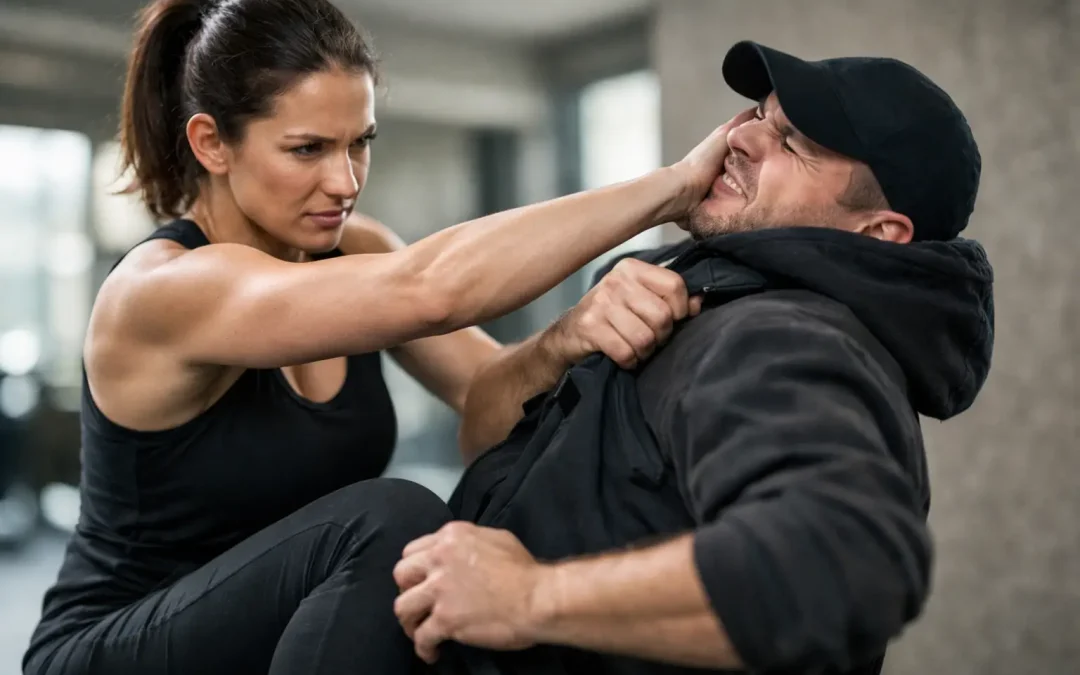
Your third priority is decisive action. When a threat turns physical, half-committed movements are unlikely to create the space you need. Use your voice. Move with purpose. Strike only to stop the immediate threat and escape. Continue moving toward safety rather than waiting to see whether the attacker will recover.
Finally, understand that escape is not always a straight run. You may need to push through a doorway, move around obstacles, get into a business, return to a crowd, lock yourself in a room, or call out to a specific person for help. “Help” can be ignored. “You in the blue shirt, call emergency services” gives bystanders a clear job.
Confidence Is Built Through Repetition, Not Motivation
Many women are told to be confident, but confidence without practice can disappear the moment someone grabs you. Real confidence comes from knowing you have tested simple responses against resistance.
That does not require becoming a competitive fighter. It requires regular exposure to controlled discomfort. You should practice making noise, setting verbal boundaries, moving under pressure, escaping holds, and responding after a surprise. You should learn what it feels like when an adrenaline surge makes your hands shake and your memory narrow.
A supportive training environment matters. Beginners need room to make mistakes, ask direct questions, and build intensity safely. At the same time, training cannot stay soft forever. If every drill pauses after one perfect move, it teaches false confidence. The attacker will not pause for you.
Look for instruction that explains the purpose behind each action. Why are you moving this way? What happens if the first attempt fails? Where do you go next? When training answers those questions, students learn to adapt rather than memorize routines.
Avoid These Dangerous Self-Defense Myths
The biggest myth is that technique removes all risk. It does not. Even experienced fighters can be injured, surprised, or overwhelmed. Self-defense improves your odds. It does not offer a guarantee.
Another myth is that you need years of martial arts before you can protect yourself. A beginner can learn valuable skills quickly when training is focused: awareness, boundary setting, basic striking, grip escapes, movement, and escape decisions. Deeper ability takes time, but the first practical gains should not.
There is also the myth that self-defense means staying to prove you can win. It does not. If you can leave before contact, leave. If you can run after creating distance, run. If you can lock a door, call for help, and stay behind it, do that. Survival is practical, not performative.
Train for the Moment You Hope Never Comes
The question is not whether women are capable of fighting back. Women are capable of learning, responding, resisting, and escaping. The question is whether those actions have been practiced enough to appear when stress takes over.
At Urban Street Defense, the focus is simple: train responses that are direct, adaptable, and built for pressure. Your size may affect your options, but it does not erase them. Learn to recognize danger early, act without hesitation when necessary, and make your safety the only outcome that matters.