
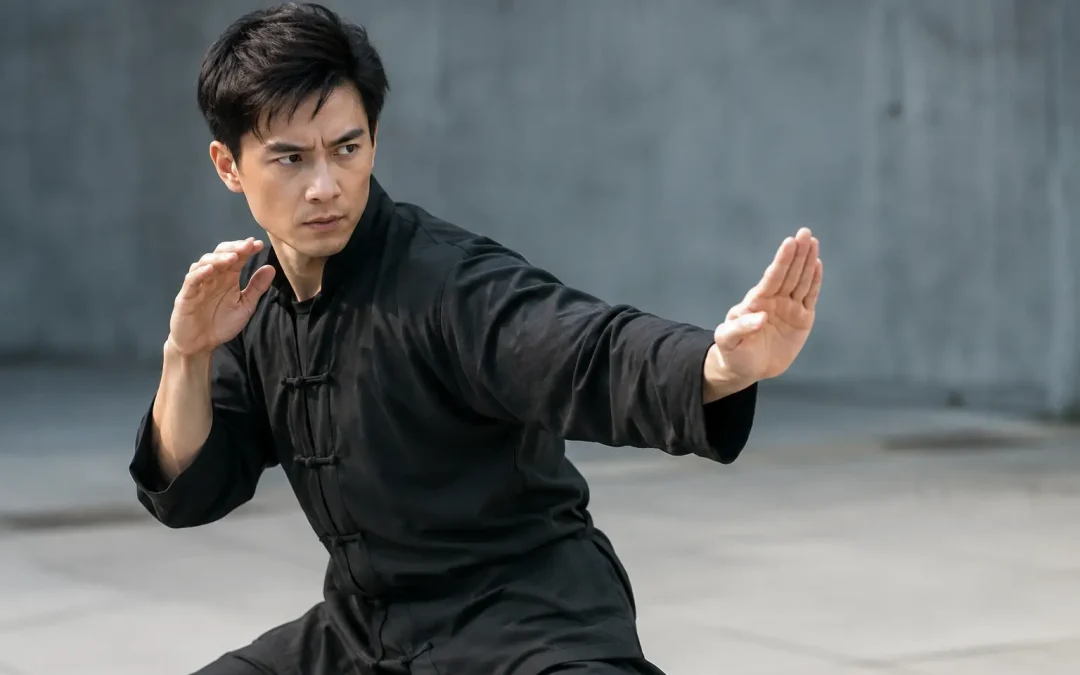
A threat does not give you time to remember a long sequence, find the perfect stance, or wait for a referee. It may happen in a parking area, an elevator, a commute, or a workplace confrontation that turns physical without warning. That is why Jeet Kune Do principles matter: they cut away what looks impressive and focus on what gives you the best chance to act, create space, and get safe.
Jeet Kune Do is often associated with Bruce Lee, but its value is not in copying his movements or collecting famous quotes. Its value is a way of thinking about training. Keep what works. Remove what does not. Adapt to the person, the environment, and the moment in front of you.
For real self-defense, that mindset is more useful than a fixed syllabus of flashy techniques. No fancy moves. No routines that collapse the moment someone resists. Just practical decisions built for pressure.
The Core Jeet Kune Do Principles
The principles are simple to say and demanding to develop. Simplicity, directness, adaptability, and economy of motion are not slogans. They are filters. Every movement, drill, and response should pass through them.
Simplicity beats complexity
Under stress, your body does not become more coordinated. Your heart rate rises, fine motor control drops, your vision narrows, and your thinking can become slow or scattered. A complicated defense that works only when both people cooperate is not a dependable answer to a real attack.
Simplicity means using natural, repeatable actions. Protect your head. Manage distance. Strike or disrupt when necessary. Break contact. Move toward safety. These actions can be trained until they become more automatic, even when you are startled or tired.
Simple does not mean easy. A direct palm strike, elbow, knee, forearm cover, escape from a grab, or verbal boundary needs correct timing, body position, and repetition. But each has a clear purpose. You are not performing. You are solving an immediate problem.
Directness saves time
In self-defense, time is not neutral. The longer an attacker controls the distance, traps you against a wall, grabs your clothing, or takes you to the ground, the fewer options you may have.
Directness means choosing the shortest practical path to interrupt the threat. If someone is closing in, do not add unnecessary motion before protecting yourself. If an exit is open, leaving is more direct than proving you can win an exchange. If a loud command draws attention and creates space, use it.
This is where people misunderstand self-defense. Directness is not about charging forward or trying to dominate every situation. It is about acting decisively when action is required. Sometimes the most effective response is a physical counter. Sometimes it is movement, awareness, de-escalation, or getting behind a barrier. It depends on the danger, the space, and whether you can safely leave.
Economy of motion preserves your advantage
Big, looping movements take longer, reveal your intention, and can pull you off balance. Jeet Kune Do favors movements that do enough, without doing too much.
That matters when the environment is cramped. In a crowded train, beside a car, in a narrow hallway, or while carrying a bag, you may not have room for high kicks or wide swings. Close-range tools and protective positioning become more realistic. A compact response can also help you recover faster if the first attempt does not work exactly as planned.
Economy is not about being passive. It is about avoiding waste. Wasted movement costs time. Wasted energy slows you down. Wasted attention can stop you from seeing a second person, an obstacle, or your nearest exit.
Adaptability is the real test
A method is only useful if it can change when the situation changes. Attackers do not follow scripts. They may be larger, aggressive, intoxicated, armed, accompanied by others, or simply unpredictable. The ground may be wet. The lighting may be poor. You may be wearing office clothes, carrying a child, or dealing with an injury.
Adaptability means you do not become attached to one technique. If a strike misses, you regain position. If a grip release fails, you protect yourself, disrupt balance, and look for another route out. If escape is possible, you take it. If there are multiple threats, you avoid getting surrounded and move toward people, light, security, or an exit.
This is why realistic training matters. You need more than a memorized answer. You need the ability to recognize pressure, make a fast choice, and continue moving when the first plan fails.
Jeet Kune Do Principles Are Not an Excuse to Be Reckless
Real self-defense is not a fight you seek out. It is an emergency response when avoidance and de-escalation have failed. The objective is not to punish someone, win a contest, or stay long enough to demonstrate skill. The objective is to get home safely.
That distinction changes how you train. You learn awareness before conflict: noticing unusual behavior, avoiding isolated routes where possible, keeping your phone and keys accessible, and trusting the feeling that something is wrong. You learn to use your voice early and clearly. A firm “Back up” or “Don’t touch me” can set a boundary, attract attention, and prepare your body to move.
You also learn the trade-off between engagement and escape. Running may be the best choice if there is a clear path. It may not be possible if you are trapped, grabbed, protecting another person, or knocked down. Practical training prepares you for both realities without pretending there is one universal answer.
Use only the force needed to stop the immediate danger and create an opportunity to leave. Once you are safe, contact the appropriate emergency services, seek medical attention if needed, and document what happened. Responsible self-defense includes what you do after the physical moment ends.
Pressure Testing Turns Ideas Into Reactions
You can understand every Jeet Kune Do principle and still freeze when someone moves at you fast. Knowledge is not the same as usable skill.
Pressure testing closes that gap. It starts in a controlled way: verbal boundary drills, surprise cues, distance-management exercises, pad work, grip escapes with progressive resistance, and scenario training. As confidence and safety allow, the intensity increases. The goal is not to create chaos for its own sake. The goal is to expose weak assumptions before a real threat does.
Good pressure-oriented training teaches you to function while tired, startled, and uncomfortable. You learn that a clean technique on a cooperative partner may look different against resistance. You learn to keep your hands up, breathe, regain balance, and make the next decision instead of stopping because the first one was imperfect.
This is also where sparring has value, with the right expectations. Sparring does not recreate every street situation, and sport rules can create habits that do not transfer directly to self-defense. But controlled resistance can improve timing, composure, distance, and your ability to handle someone who is actively trying to stop you. It is one tool, not the entire answer.
What Beginners Should Train First
You do not need years of martial arts experience before you can build useful safety habits. Start with a stable, mobile stance and a protective hand position. Learn how to manage distance, move off line, use your voice, and recognize when you are too close to react comfortably.
Then train a small set of high-percentage responses against common problems: unwanted grabs, close-range aggression, being pressed backward, and attempts to control your upper body. Work on getting up safely from the ground and creating space before trying to stand. Add fitness that supports movement, balance, and recovery, because fatigue makes every decision harder.
Most of all, train consistently. One intense workshop can show you what is possible, but repetition builds instinct. Private coaching can help if you want focused work on a specific concern, while group training gives you exposure to different body types, energy levels, and reactions. The right format depends on your schedule, comfort level, and goals.
At Urban Street Defense, the focus is not on collecting forms or waiting for perfect conditions. It is on practical, scenario-based training that helps ordinary people respond when life gets messy.
Build a Response You Can Use
The strongest lesson behind Jeet Kune Do principles is not that one style has every answer. It is that your training should remain honest. If it only works slowly, with a willing partner, in open space, and after a detailed explanation, it needs to be tested harder.
Train for awareness. Train for decisive action. Train to escape, not to impress. A safer future is built through small, repeatable habits practiced before you need them – until protecting yourself feels less like a theory and more like a response.