
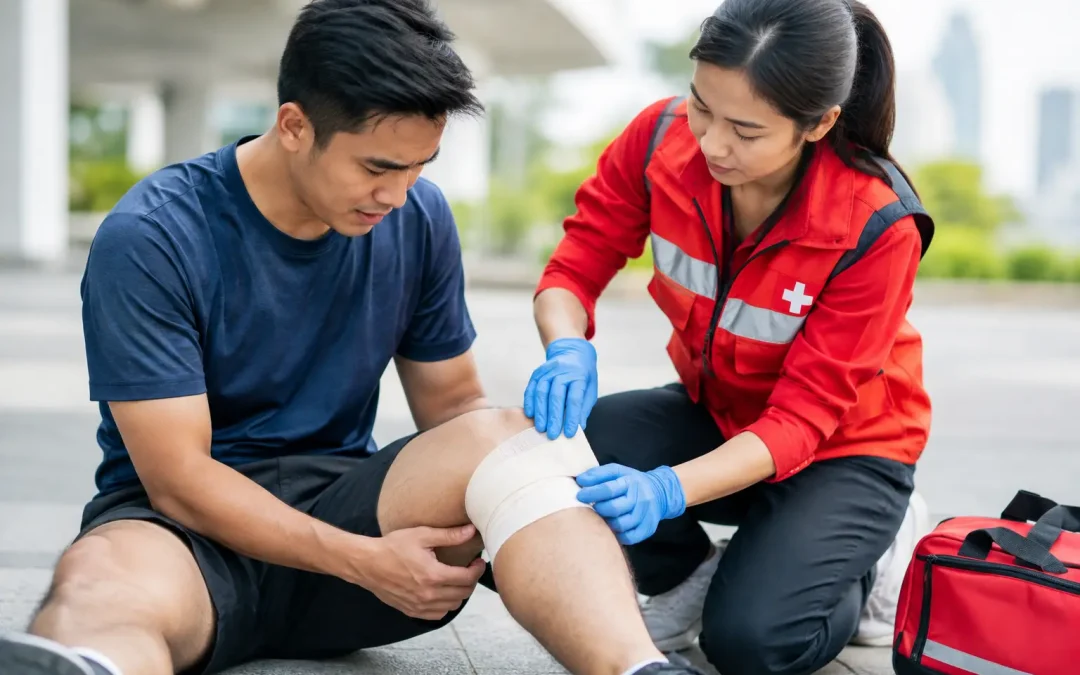
A crash on the way home. A colleague who suddenly collapses. A child choking during dinner. First aid in Malaysia is not about looking calm or remembering a long checklist. It is about making the next right move while emergency help is on the way.
The first minutes are unforgiving. Panic, crowds, traffic, and uncertainty can turn a manageable incident into a worse one. Practical first aid gives you a simple operating system: make the area safe, call for help, deal with immediate threats to life, and stay with the person until trained responders take over.
First Aid in Malaysia Starts With Scene Safety
Do not rush blindly into an emergency. A victim may be in danger, but so might you. Look for moving traffic, fire, exposed electrical wires, broken glass, an aggressive person, or any other active threat. If you become injured, you cannot help anyone.
This is where personal safety and first aid meet. If violence is still happening, create distance, move toward people and light, and call for help. Do not turn medical aid into a second victim situation. Once the threat has stopped or the area is safe, assess the injured person.
Speak clearly: “Can you hear me?” Check whether they are conscious and breathing normally. If they can respond, keep them still and reassure them. If they are unresponsive, get someone to call 999 and ask another person to find an automated external defibrillator, or AED, if one is nearby.
Be specific when asking bystanders for help. “You in the blue shirt, call 999.” “You, bring the AED.” Vague requests often produce no action because everyone assumes someone else has taken charge.
The Priorities That Matter Most
You do not need to diagnose every injury. Your job is to identify the problems that can kill quickly: an unsafe scene, no normal breathing, severe bleeding, or a blocked airway. Work in that order.
If They Are Not Breathing Normally
If an adult is unresponsive and not breathing normally, start CPR immediately. Occasional gasps are not normal breathing. Place the heel of one hand in the center of the chest, put your other hand on top, lock your arms, and push hard and fast. Aim for 100 to 120 compressions a minute and allow the chest to rise fully between compressions.
Continue until emergency responders arrive, the person begins breathing normally, or you are physically unable to continue. If an AED is available, switch it on and follow its voice prompts. AEDs are designed to guide ordinary people. Do not wait for someone “more qualified” if nobody else is acting.
Training matters here. Reading instructions after a collapse is better than doing nothing, but hands-on practice builds the confidence to act without freezing.
If There Is Severe Bleeding
Heavy bleeding can become life-threatening fast. Apply firm, direct pressure to the wound with gauze, a clean cloth, or clothing if that is all you have. Keep the pressure steady. Do not keep lifting the cloth to check whether it has stopped. If blood soaks through, add more material on top and continue pressing.
Call 999 for severe, spurting, or uncontrolled bleeding. If you have been trained to use a tourniquet and the bleeding is from a limb, use it when direct pressure cannot control the bleed. Note the time it was applied and do not remove it yourself.
Forget movie logic. Do not put coffee, toothpaste, powders, or random substances into a wound. Control the bleeding. Keep the person warm. Watch their breathing and level of consciousness.
If Someone Is Choking
A person who can cough or speak may still be moving air. Encourage them to keep coughing and monitor them closely. Do not strike their back while they are coughing effectively.
If they cannot speak, breathe, or cough, act. Give firm back blows between the shoulder blades, then abdominal thrusts for an adult or child where appropriate. Repeat until the blockage clears or they become unresponsive. If they collapse, call 999, begin CPR, and check the mouth for a visible object before giving breaths if you are trained to do so. Never blindly sweep a finger into the mouth.
If There Is a Burn, Fall, or Road Crash
For a heat burn, cool the affected area under cool running water for 20 minutes as soon as possible. Remove rings, watches, or tight items before swelling starts, but do not pull away clothing stuck to the skin. Cover the burn loosely with a clean, non-fluffy dressing or clean plastic wrap. Ice, butter, oils, and toothpaste do not belong on burns.
After a serious fall or a road crash, avoid moving the person unless there is immediate danger such as fire or traffic. Head, neck, and spinal injuries are not always obvious. Keep them still, support the head in a comfortable neutral position if you can, and monitor their breathing until help arrives.
What a Useful First Aid Kit Looks Like
A first aid kit should help you control a problem, not become a box of expired items nobody understands. Keep one at home, in the car, and in workplaces or training spaces where people gather. Check it twice a year.
A practical kit should include:
- Disposable gloves, sterile gauze, dressings, adhesive bandages, and medical tape
- Trauma shears, a CPR face shield, and a thermal blanket
- Antiseptic wipes and saline for minor wound cleaning
- A written emergency contact list and any personal medical information relevant to your household or team
The kit is only one part of readiness. Gloves do not replace judgment. If you have gloves, use them when blood is present. If you do not, use a barrier where possible and wash thoroughly afterward. Never delay urgent care while searching for the perfect item.
First Aid Is Not a Substitute for Medical Care
Some injuries look minor before they become serious. Seek urgent medical assessment for chest pain, signs of stroke, difficulty breathing, loss of consciousness, seizures, deep wounds, suspected fractures, major burns, severe allergic reactions, or any injury caused by violence.
With a possible stroke, remember sudden facial drooping, arm weakness, and speech difficulty. Note when symptoms began and call 999. With suspected poisoning, keep the container or substance information available, but do not force vomiting unless instructed by a qualified medical professional.
For workplace leaders, first aid is also a systems issue. Staff need to know where kits and AEDs are located, who calls emergency services, how visitors are accounted for, and who meets responders at the entrance. A policy sitting in a folder does not help during a collapse. Rehearsed roles do.
Pressure Changes What You Can Do
Knowledge feels simple when you are sitting down. It feels different when somebody is bleeding, a crowd is shouting, or your hands are shaking. That is why practical training should include decision-making under pressure, not just a certificate and a photo opportunity.
The same principle applies to personal safety. You may need to recognize danger, get away, call for help, and then provide aid once it is safe. Urban Street Defense teaches people to respond decisively to real-world threats, because hesitation has consequences. But physical self-defense and medical response are separate skills. Train both.
Take a recognized first aid and CPR course. Practice the fundamentals often enough that you can recall them on a bad day, not just immediately after class. Tell your family, coworkers, or training partners where the nearest AED is. A few minutes of preparation can give someone else their next birthday, their next commute, or their next chance to go home.
When an emergency happens, you do not need perfect words or perfect technique. You need a safe scene, a clear call for help, and the willingness to take useful action.