by Founder of USDC | 21st September 2026 | General Safety Topics
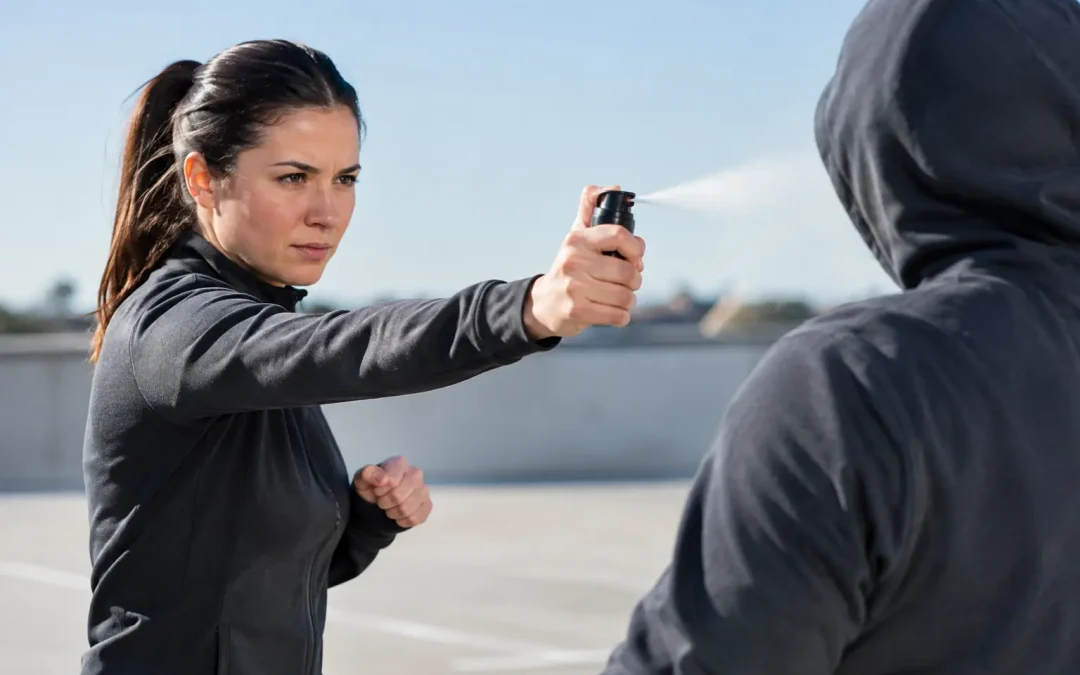
A canister in your bag can feel reassuring. Then the elevator door opens, someone crowds your space, your heart rate spikes, and the moment is already moving faster than your plan. That is where pepper spray versus training becomes the wrong question if you treat either option as a guaranteed answer.
Pepper spray can be a useful personal-safety tool. Practical self-defense training can give you skills no item can provide. But neither one makes you invincible. The stronger approach is to understand what each does well, where each can fail, and how to make decisions under pressure before you are forced to make them in a crisis.
Pepper Spray Versus Training: The Real Difference
Pepper spray is a tool. Training is a capability.
A tool may create distance, interrupt an assault, and give you an opening to escape. Its value is immediate and simple: you do not need size, strength, or years of martial arts experience to carry it. For many people, that matters. A working professional walking from a parking structure, a commuter getting home late, or a traveler in an unfamiliar area may want an option that is compact and easy to access.
But a tool only works when you can get to it, deploy it correctly, and use it at the right moment. Stress can make simple actions difficult. Hands shake. Fine motor control drops. Your bag may be out of reach. You may be pinned, grabbed, distracted, or unable to see clearly. Wind, confined spaces, and close proximity can also create problems. Spray can affect the person carrying it, nearby bystanders, or everyone in a small room.
Training works differently. It does not depend on having one object in one place at one exact moment. It develops awareness, posture, verbal boundaries, movement, decision-making, and simple physical responses. More importantly, it teaches you to act while your body is under stress, not just while you are calm and imagining a threat from the comfort of home.
That does not mean training makes pepper spray unnecessary. It means training gives you a better chance of using any tool with judgment.
Why Confidence From Carrying a Tool Can Be Misleading
The danger is not pepper spray itself. The danger is false confidence.
Many people buy a safety device, put it in a handbag or glove box, and assume they are prepared. They have never checked whether it is legal where they live, whether it is expired, whether they can access it quickly, or whether they can operate it under pressure. They have also never considered what happens if the first attempt does not stop the threat.
Real danger rarely arrives with a warning and plenty of space. It can begin as someone following too closely, blocking your path, refusing to respect a clear no, grabbing your arm, or invading your personal space near a doorway. By the time you recognize the threat, you may need more than a tool. You may need to move, create distance, protect yourself, shout for help, and leave without freezing.
That is why reality-based training does not start with dramatic disarms or complicated sequences. It starts with the moments people actually face: reading behavior, managing distance, setting boundaries, responding to sudden contact, and getting away.
Training Builds the Response Before You Need It
Watching a self-defense video is not training. Memorizing a sequence is not training. Knowing the name of a technique is not training.
Training means practicing a response until it becomes more available under pressure. You learn that an attacker may not stand still. You learn that your own balance, breathing, and decision-making can change when adrenaline hits. You learn to keep your actions simple because complex plans often disappear when fear takes over.
Good training also removes dangerous assumptions. You may be smaller than the aggressor. You may be tired, carrying work materials, wearing restrictive clothing, or dealing with uneven ground. You may have only seconds to react. A practical program prepares for those realities rather than asking you to perform a perfect technique against a cooperative partner.
At Urban Street Defense, that means focusing on direct, adaptable responses instead of ceremonial forms or sport-based routines. The goal is not to look impressive. The goal is to break contact, create a chance to escape, and get home safely.
When Pepper Spray Makes Sense
Pepper spray may be worth carrying when it is legal in your area, you understand the local restrictions, and you are willing to treat it as one layer of a wider safety plan. It can be especially useful when you have enough distance to identify a threat before physical contact begins.
It may help interrupt an attack and buy a few critical seconds. Those seconds are valuable only if you know what they are for: leave, find safety, contact emergency services, and avoid re-engaging. Personal protection is not about winning an argument or proving you can handle someone. It is about getting out.
Responsible ownership matters. Keep the device accessible rather than buried under everyday items. Check its condition and expiration date. Learn its operation according to the manufacturer’s instructions. Most of all, understand the legal rules where you live, work, and travel. Laws on possession and use vary, and a safety tool should never become a legal or physical liability.
When Training Matters More Than a Canister
Training becomes essential when the threat is already close. If someone has grabbed you, blocked your movement, cornered you, or caught you off guard, there may be no clean opportunity to access pepper spray. The same is true in crowded public spaces, vehicles, elevators, or areas where spraying may affect you or others.
This is where body position, balance, voice, awareness, and simple escape-focused movement matter. You need options that work whether you have a tool or not.
Training is also what helps before violence starts. A strong verbal boundary, a better position near an exit, an earlier decision to leave, or the awareness to spot escalating behavior can prevent a situation from becoming physical. These skills are not glamorous. They are highly useful.
For corporate teams, this point is often missed. Workplace safety is not only about responding to an obvious physical attack. Employees benefit from learning situational awareness, boundary setting, travel safety habits, and how to respond when a confrontation becomes unpredictable. A good program gives people practical choices without turning them into fighters.
Do Not Train for a Perfect Scenario
There is no single answer that works in every confrontation. A tool can fail. A technique can fail. A person can freeze. That is why practical self-defense should train adaptable principles, not rehearsed fantasy scenes.
The most useful principles are simple: stay aware, trust early warning signs, create distance when you can, use your voice, protect yourself when contact happens, and escape at the first real opportunity. Under pressure, simple actions are more likely to survive.
Pressure-tested practice matters because it shows where your assumptions break down. You may discover that a move you understood in slow motion is difficult when someone resists. That is not failure. That is valuable feedback. It gives you a chance to build a more honest, effective response in a controlled environment.
The Best Answer Is Layered Preparedness
You do not have to choose between carrying pepper spray and learning self-defense. If pepper spray is lawful and appropriate for you, carry it responsibly. Then build the skills that support it.
Think of personal safety as layers. Your first layer is awareness: noticing risk early and avoiding bad positions when possible. Your next layer is communication: setting clear boundaries and drawing attention when needed. Movement and escape come next. Physical self-defense is for the moment you cannot avoid. A lawful tool can be another layer, not the entire plan.
This approach is more realistic because it accounts for uncertainty. Some days you will not have your bag. Some places will make a spray tool impractical. Some threats will begin too close. Your own body, judgment, and ability to act are the only things you carry everywhere.
Start with what works under pressure, not what looks good in a demonstration. A safety tool may give you an opening. Training helps you recognize it, use it, and leave before the situation takes more from you than it should.
by Founder of USDC | 20th September 2026 | General Safety Topics
A threat does not wait for a bow, a referee, or a perfect fighting stance. It happens in a parking lot, an elevator, outside a bar, or during a commute, often before you have processed what is happening. So, is JKD effective? It can be highly effective for self-defense when it is trained as Bruce Lee intended: simple, direct, adaptable, and tested under pressure.
That last part matters. Jeet Kune Do is not a magic formula, and no martial art can guarantee safety. A system is only as useful as the way it is taught, practiced, and applied. If training is built around cooperative drills, flashy combinations, and memorized responses, it can create false confidence. If it builds awareness, fast decision-making, functional striking, escape skills, and the ability to keep moving under stress, JKD has a strong place in real-world self-defense.
Is JKD Effective Outside the Training Room?
JKD was never meant to be a museum piece. Its core idea is practical: use what works, discard what does not, and adapt to the person and the situation in front of you. That is a useful mindset when personal safety is the goal.
Real violence is messy. There may be no warning. The ground may be wet. You may be carrying a bag, wearing work clothes, protecting a friend, or trapped in a narrow space. An attacker may be larger, aggressive, intoxicated, or armed. A method that depends on long routines, fine motor skills, or a compliant partner can break down quickly.
JKD favors economy. Rather than collecting dozens of techniques, it focuses on tools that can be delivered quickly and adjusted as conditions change. Direct attacks, protective positioning, footwork, interception, close-range control, and immediate escape all fit this approach. The objective is not to win a beautiful fight. It is to create an opening, break contact, and get to safety.
That makes JKD especially relevant for adults who do not have hours each day to train. A working professional needs skills that are clear enough to remember under stress and practical enough to develop through consistent training. Simplicity is not a shortcut. It is a survival advantage.
What Makes JKD Useful for Self-Defense
JKD effectiveness comes from principles, not from a fixed list of moves. A trained person learns to recognize distance, timing, body position, and intent. They learn when to move away, when to use a barrier, when to speak firmly, and when physical action is unavoidable.
The first principle is directness. Under pressure, extra movement costs time. A direct response can interrupt an attack before it builds momentum. This does not mean charging forward blindly. It means choosing the shortest useful action for the moment, whether that is moving off line, using a palm strike, creating space with a push, or driving toward an exit.
The second principle is adaptability. There is no single answer to every grab, punch, shove, or attempted restraint. An attacker may resist, change position, or bring friends into the situation. JKD training should teach students to respond to what is actually happening, not force a preset technique that is no longer available.
The third is interception. Waiting to absorb an attack and then responding is a poor plan when danger is close. JKD encourages recognizing the moment an attack is developing and acting decisively when action is necessary. Sometimes that means moving away before contact. Sometimes it means disrupting the attacker’s forward movement long enough to escape.
The fourth is efficiency. Street self-defense is not about trading punches. It is about using your strongest available options while protecting yourself and leaving as soon as you can. A short, forceful action followed by movement is often safer than staying engaged to prove a point.
The Hard Truth: JKD Is Not Effective if Training Is Soft
Calling a class JKD does not automatically make it realistic. Some programs focus heavily on lineage, theory, or rehearsed drills. Those elements may have value for martial arts study, but they are not enough for personal protection.
A person can perform a clean technique ten times against a partner who stands still and still freeze when someone shouts, rushes forward, grabs hard, or swings wildly. Stress changes breathing, balance, vision, timing, and judgment. Effective self-defense training must account for that.
Pressure does not mean students need to be injured or thrown into reckless full-contact fights. It means training should progressively include resistance, surprise, movement, verbal pressure, awkward positions, and decision-making. Students need to feel what it is like when a drill does not go according to plan. That is where instinct starts replacing hesitation.
Good JKD-based self-defense training also acknowledges that physical techniques are only one layer of protection. Awareness, boundary setting, positioning near exits, reading pre-attack behavior, and leaving early are often more valuable than any strike. The best fight is the one you spot early enough to avoid.
JKD Versus Sport Fighting
Sport martial arts and combat sports build real attributes. Boxing can develop timing and punching. Wrestling can develop balance and control. Brazilian jiu-jitsu can teach composure and positional awareness. Muay Thai can build durable striking and clinch skills. These are valuable tools.
But sport has rules, weight classes, controlled settings, and a defined start. Real violence may involve concrete, confined spaces, multiple attackers, improvised weapons, or legal consequences after the incident. A self-defense approach must account for those realities.
JKD can borrow useful material from many disciplines without becoming trapped by their rule sets. That is one of its strengths. The risk is that some schools borrow too much and lose focus, turning training into a random collection of techniques. Effective JKD has a clear filter: does this improve your ability to avoid danger, stop immediate harm, and escape?
What Should a Practical JKD Class Include?
If you are evaluating a program, watch what students actually do. Are they practicing only in lines, or are they learning to deal with movement and resistance? Are instructors correcting distance, awareness, and escape routes, or only the appearance of a technique?
A credible program should train simple striking and protective movement, but it should also cover common urban problems: unwanted grabs, close-range aggression, being pinned against a wall, sudden punches, and the need to move through crowded spaces. It should teach students to use their voice, create boundaries, and recognize when escape is the correct answer.
Classes should be scalable. Beginners need a safe introduction to stance, balance, awareness, and basic tools. More experienced students need increasing pressure, realistic sparring, scenario work, and honest feedback. Neither group benefits from fantasy techniques or macho promises.
At Urban Street Defense, the focus is not on ceremonial forms or collecting ranks. It is on building usable responses through direct instruction, scenario-based practice, and pressure-oriented training. The aim is simple: help ordinary people react faster, move with purpose, and get home safely.
Is JKD Effective for Everyone?
JKD can be adapted for different ages, body types, and fitness levels because it does not demand that everyone move the same way. A smaller person should not be taught to overpower a larger attacker. Someone with limited mobility may need different options than a fit athlete. Effective instruction works with the student’s real capabilities while improving them over time.
Still, JKD is not a substitute for judgment. It cannot erase the danger of weapons, groups, or a determined attacker. It cannot make every situation safe. Training should make this clear, because honest preparation is more valuable than false confidence.
The goal is not fear. It is readiness. You may never need to use a physical skill, and that is a good outcome. But knowing how to notice danger, set a boundary, move decisively, and act when there is no other choice changes how you carry yourself.
JKD is effective when it stays true to its purpose: no fancy moves, no routines for show, and no waiting for a perfect moment. Train the basics under pressure, keep your decisions simple, and make getting away the priority. Better. Faster. Stronger.
by Founder of USDC | 19th September 2026 | General Safety Topics
A wet floor beside the pantry. A damaged extension cord under a desk. A delivery driver entering through an unsecured loading bay. Most workplace incidents do not begin as dramatic emergencies. They begin as small hazards that someone noticed, assumed another person would handle, and walked past. Real OSH awareness at Malaysian workplaces changes that pattern. It gives people the confidence and discipline to spot risk early, speak up fast, and take the right action.
For employers, HR teams, managers, and workers, occupational safety and health cannot be a file that comes out only during an audit. It has to show up in daily decisions: how people lift, travel, use equipment, report near misses, deal with aggressive behavior, and respond when something feels wrong. No routines for show. No safety posters that nobody reads. Just clear habits that prevent harm.
What OSH Awareness Actually Means
OSH awareness is not simply knowing that safety rules exist. It means understanding the risks connected to your actual work, recognizing when conditions change, and knowing what to do before an injury, illness, or security incident occurs.
That distinction matters. A warehouse worker, office executive, technician, retail employee, and field salesperson do not face the same exposure. A generic briefing may satisfy a calendar requirement, but it rarely prepares a person for the pressure of a real moment. Effective awareness is specific to the environment, the task, and the people involved.
At a practical level, employees should be able to answer three questions without hesitation: What can hurt me or someone else here? What is the safe action right now? Who do I tell if the risk cannot be fixed immediately?
When teams cannot answer those questions, they are relying on luck. Luck is not a safety system.
Why Workplace Safety Awareness Fails
Many organizations already have policies, induction materials, warning signs, and incident forms. Yet unsafe behavior still happens because people are rushed, distracted, overconfident, or worried about slowing work down. A worker may know the rule but choose the shortcut when a deadline is tight. A junior employee may see a problem but stay silent because they do not want to challenge a supervisor.
This is why awareness training has to go beyond compliance language. People need to practice judgment. They need permission to stop unsafe work. They need managers who respond constructively when a hazard is raised, rather than treating reports as complaints or delays.
There is also a difference between physical safety and personal security, but both belong in a mature workplace safety culture. Slips, strains, fire hazards, and equipment misuse need proper controls. So do risks involving isolated work, late-night commuting, unauthorized visitors, harassment, and threatening behavior. A team that is alert to one type of risk is more likely to act decisively when another appears.
Build OSH Awareness Into the Working Day
Safety improves when it becomes simple enough to repeat. Long presentations have their place for technical or legal topics, but they should not be the only method. Workers remember what they see, discuss, and practice in situations that resemble their real work.
Start each shift, meeting, or site visit with a brief risk check. What is different today? Is there new equipment, a wet-weather condition, a staffing gap, a visitor, a delivery, or a job that requires extra attention? These short conversations keep hazards visible before they become normal.
Managers should also make near-miss reporting easy. A near miss is not a failed report because nobody was injured. It is valuable evidence that a control may be weak. If an employee trips over loose cables but catches themselves, the organization has been given a warning at low cost. Fixing it is far better than waiting for a fall.
A useful report does not need complicated language. It should identify:
- what happened or nearly happened;
- where and when it occurred;
- the immediate risk involved;
- what was done to make the area safer; and
- who needs to follow up.
The response matters as much as the report. Thank the person, control the immediate danger, investigate the cause, and communicate what changed. When workers see that reporting leads to action, participation rises.
Train for Decisions, Not Just Recall
People under stress do not perform like they do in a classroom. They fall back on habits. That is why scenario-based learning is so effective for workplace safety and personal protection.
Instead of asking employees to memorize a policy sentence, give them a realistic situation. A colleague collapses in a corridor. A stranger tries to follow an employee through an access door. A customer becomes verbally aggressive. A worker sees damaged protective equipment minutes before a task begins. Then ask: what do you notice, what do you do first, and who do you contact?
The right response will depend on the setting and the organization’s procedures. Some situations require evacuation. Others require stopping work, seeking help, using access controls, or creating distance from a threatening person. The point is not to turn staff into security guards or emergency responders. It is to help them make safe, early decisions rather than freeze, panic, or take unnecessary risks.
The Manager’s Role Is Non-Negotiable
Employees watch what leaders do more closely than what leaders say. If a manager ignores blocked walkways, pressures staff to skip checks, or laughs off a near miss, the safety message is clear: production comes first, until someone gets hurt.
Strong leaders set a different standard. They correct hazards immediately where possible. They ask for input from the people doing the job. They investigate patterns instead of blaming the last person involved. They make it clear that raising a concern is professional conduct, not weakness.
This does not mean every minor issue needs a major meeting. Proportion matters. A loose mat can be secured at once. Repeated fatigue complaints, unsafe driving expectations, or recurring conflict with the public may require a deeper review. Good OSH management is practical enough to solve small problems quickly and disciplined enough to address bigger ones properly.
Personal Safety Belongs in the Conversation
For teams working late, traveling between sites, handling cash, meeting clients, or operating in public-facing roles, workplace safety extends beyond the building. Employees may face risks during parking, rides, deliveries, site access, or difficult interactions with strangers.
Personal-safety training should be realistic. It should teach awareness, boundary setting, verbal de-escalation, escape priorities, and simple actions that work under pressure. Fancy techniques and choreographed sequences are not the answer when someone is frightened, confined, or caught off guard.
Urban Street Defense brings this reality-based approach into corporate training, helping teams build practical responses for unexpected threats. The goal is not to create fighters. The goal is to help people recognize danger, create space, get to safety, and support one another when a situation turns serious.
For some organizations, personal safety may be a core requirement because staff travel or work alone. For others, it may be a valuable addition to wider OSH awareness. The right level depends on the work, location, hours, and risk profile. But ignoring the issue because it sits outside traditional equipment safety leaves a gap.
Make Safety Visible, Measurable, and Real
A workplace does not become safer because it has more posters. It becomes safer when people can see that hazards are reported, controls are maintained, and leaders follow through.
Review the basics regularly: Are incident and near-miss reports increasing because people feel safe speaking up? Are the same issues appearing again? Are corrective actions actually completed? Do new employees understand emergency procedures and who to contact? Can workers explain the safety risks of their own roles without reading from a handbook?
Numbers help, but they do not tell the entire story. A low incident rate may reflect good controls, or it may reflect underreporting. Pair data with conversations, walk-throughs, observation, and practical drills. Listen to the person closest to the task. They often know where the real risk sits.
Safety awareness is built one decision at a time. Notice the hazard. Speak up. Stop the unsafe act. Help the person beside you get home safely. That is the standard worth practicing every day.
by Founder of USDC | 18th September 2026 | General Safety Topics
A self-defense class should prepare you for the moment your body wants to freeze: an aggressive grab, a threatening approach in a parking area, an unwanted confrontation on a commute. The best self defense class formats are not all the same because people have different schedules, safety concerns, confidence levels, and training goals. What matters is choosing a format that moves you from knowing what to do to responding when pressure hits.
No fancy moves. No collecting techniques you cannot use. Choose training that builds simple, direct actions you can recall when an unexpected threat gives you no time to think.
What Makes a Self-Defense Class Format Effective?
The format matters, but the training method matters more. A large class can be useful if students get supervised repetitions, realistic scenarios, and feedback. A private session can be a waste of time if it becomes a performance of complicated moves against a cooperative partner.
Look for instruction built around awareness, verbal boundary setting, escape, striking, movement, and decision-making under stress. Students should practice from awkward positions and common urban situations, not just from a neat starting stance. There should be progressive resistance too. You do not begin with full-force sparring, but you should eventually test whether your response still works when someone moves, pushes back, or creates pressure.
A good class also teaches judgment. Self-defense is not about winning a fight. It is about recognizing danger early, creating an opportunity to leave, and acting decisively if physical force is unavoidable.
Best Self Defense Class Formats by Goal
There is no single best format for every person. The right choice depends on whether you need a strong foundation, a fast introduction, individual coaching, or a program that protects an entire team.
Ongoing Group Classes: Best for Building Instinct
Regular group classes are the strongest option for people who want skills that hold up over time. You train consistently, repeat core movements, work with different partners, and become more comfortable managing distance and pressure. That repetition is what turns a technique into an instinctive response.
Group training also exposes you to different body types, speeds, and energy levels. A response that feels easy with one familiar partner may feel completely different against someone taller, stronger, faster, or more aggressive. Training with a range of people helps remove false confidence.
The trade-off is attention. Even in a well-run small class, an instructor must divide time among students. Beginners who feel nervous about physical contact may need a few sessions before they settle in. Still, for adults who can commit to regular practice, this is usually the best value and the best path toward lasting capability.
Private Coaching: Best for Specific Needs and Fast Progress
One-to-one self-defense coaching is built around you. It works especially well for people with a specific concern, such as commuting alone, recovering confidence after an incident, preparing for travel, or managing a physical limitation. It can also help experienced students correct gaps that are hard to spot in a group setting.
Private instruction moves at your pace. More time can be spent on stance, movement, awareness habits, and the situations most relevant to your life. You also receive immediate correction instead of waiting for an instructor to rotate back to you.
However, private coaching should not become overly comfortable. Real threats do not arrive in a predictable pattern from one familiar person. The best private programs eventually include scenario work, controlled resistance, and opportunities to train with others. Use private sessions to build a solid base, then pressure-test that base.
Private Group Training: Best for Families and Trusted Circles
A private class for friends, family members, or a small social group creates a practical and supportive setting. People often learn faster when they can ask direct questions without feeling exposed in front of strangers. It can be particularly useful for a family with teenagers, a group of roommates, or friends who regularly travel or socialize together.
This format allows training to focus on shared routines. That may include arriving safely at vehicles, handling an unwanted encounter while out together, or responding when one person in the group is targeted. It also creates accountability. When the class ends, participants can keep practicing awareness and safety habits together.
The limitation is variety. A close group may have similar sizes, fitness levels, and habits. A skilled instructor should adjust drills so students do not only learn to handle the people they already know.
Women-Focused Crash Courses: Best for an Immediate Safety Reset
A women-focused self-defense crash course can deliver urgent, useful skills in a short period. It is a strong entry point for someone who has never trained, wants a safer way to begin, or needs practical preparation before a move, trip, or major lifestyle change.
The right crash course covers more than strikes. It should address boundary setting, recognizing pre-attack behavior, breaking common holds, using simple targets, escaping, and getting to safety. The environment should be supportive without pretending that danger is polite or predictable.
A short course has a clear limit: one session cannot build the timing, conditioning, and emotional control that come from ongoing practice. Treat it as a starting point, not a finish line. Learn the immediate tools, then keep training if you want those tools available under pressure.
Corporate Self-Defense Training: Best for Workplace Readiness
Organizations have a duty to think beyond fire drills and cybersecurity slides. Employees may face harassment, aggressive visitors, travel risks, late-night commutes, or difficult situations around parking areas and public-facing workplaces. Corporate self-defense training gives teams a practical framework for recognizing risk and taking action.
For employers, the best sessions are tailored to the workplace. A team that deals with customers needs different scenarios than employees who travel between sites or finish shifts after dark. Training should include prevention, communication, physical safety principles, and clear escalation or reporting procedures relevant to the organization.
Corporate workshops are highly accessible, especially for busy teams, but they are usually time-limited. They are most effective when followed by refresher sessions, optional deeper training, and a workplace culture that takes personal safety seriously. For organizations in Malaysia, an HRDCorp-claimable program may also make practical safety training easier to implement.
Public Workshops: Best for Trying Reality-Based Training
A public workshop is a low-barrier way to experience practical self-defense without committing to a long program immediately. It can help you understand what reality-based training feels like: direct movements, active drills, scenario awareness, and a focus on escape rather than choreography.
Workshops are also useful for people who want to train with a friend or test whether an instructor’s approach matches their needs. You should leave with a few clear actions you can remember, not a long sequence that disappears by the next week.
Because time is short, workshops cannot replace regular training. Use them to get moving, identify your weak points, and decide what format should come next.
Online Self-Learning: Best for Flexible Foundations
Online learning is valuable when schedules, distance, or confidence make in-person classes difficult at first. It can introduce core principles, awareness habits, body mechanics, and simple drills you can practice safely. For people in Kuala Lumpur, Petaling Jaya, or Ipoh who cannot attend every session, it can also support their in-person development between classes.
But video cannot measure your distance, correct your posture in real time, or recreate the adrenaline of resistance. Online training works best as a foundation or supplement, not as the only preparation for physical confrontation. Watch, practice, and then get coached in person whenever possible.
How to Choose the Right Format
Start with the problem you are trying to solve. If you want long-term confidence and physical readiness, choose ongoing group training. If you have a personal concern or need focused attention, begin with private coaching. If your family, friends, or team share a safety need, train together in a private group. If time is tight, a workshop or crash course is better than doing nothing, provided you continue building from it.
Then assess the quality of the instruction. Ask whether beginners practice against movement and controlled resistance. Ask how the class handles common situations such as grabs, pushes, close-range attacks, and attempts to control your movement. Ask whether the instructor teaches avoidance and escape alongside physical action.
Be cautious of programs built around long forms, fixed routines, rank chasing, or techniques that require perfect timing from a cooperative attacker. There is nothing wrong with martial arts as sport, culture, or fitness. But if your goal is personal protection, your training must prepare you for confusion, imbalance, stress, and an opponent who does not follow the script.
Urban Street Defense uses reality-based, Jeet Kune Do-inspired principles because simple actions are easier to learn, adapt, and apply when conditions turn messy. The goal is not to look skilled. The goal is to get home safely.
Choose the format that gets you training now, then keep moving toward more realistic practice. Confidence does not come from watching a technique once. It comes from knowing you can act when the moment is real.
by Founder of USDC | 17th September 2026 | General Safety Topics
A useful JKD class review should not focus on whether a class looks impressive. It should answer a harder question: will the training help you act when someone crowds you, grabs you, threatens you, or catches you off guard?
Jeet Kune Do has a powerful reputation because of Bruce Lee’s emphasis on simplicity, directness, and adaptability. But the name alone does not guarantee practical training. One JKD class may be built around cooperative drills and traditional martial arts habits. Another may teach students to manage distance, hit with intent, escape holds, and keep functioning when adrenaline takes over.
If your goal is personal safety rather than belts, forms, or tournament points, this is what a JKD class needs to deliver.
What a Realistic JKD Class Should Feel Like
A practical class should feel focused from the first session. You should spend more time moving, reacting, striking, escaping, and making decisions than standing in lines memorizing long sequences.
That does not mean training must be chaotic. Beginners need structure. They need to learn how to stand, move, protect their head, create space, and deliver simple strikes safely. The difference is that every drill should have a clear purpose. You are not collecting techniques. You are building responses you can access under stress.
Good JKD-inspired self-defense training often begins with natural movements: palm strikes, elbows, knees, low kicks, frames, footwork, and escapes from common grabs. These tools are not glamorous. That is exactly why they matter. Under pressure, complicated techniques break down fast.
A serious instructor also explains the context. A response for an aggressive stranger at close range is different from a response to someone trying to pull you into a vehicle. A workplace confrontation, a parking-lot encounter, and an attempted robbery each require different decisions. Sometimes the right move is to strike and run. Sometimes it is to create distance, use your voice, move toward people, or give up property to protect your life.
The Best JKD Class Review Starts With Pressure
The biggest difference between martial arts practice and self-defense preparation is pressure.
A technique can work perfectly when your training partner pauses, offers the same attack every time, and waits for your response. Real danger does not arrive that way. Your vision narrows. Your heart rate rises. Your hands may shake. The person in front of you may be bigger, louder, faster, or already within reach.
That is why pressure testing matters. It does not mean beginners should be thrown into full-contact sparring on day one. It means the training should gradually become less predictable. Drills should include movement, resistance, verbal aggression, timing problems, and realistic distances.
Look for a class where instructors scale intensity intelligently. A new student may first learn an escape slowly, then perform it against light resistance, then use it inside a short scenario. An experienced student may add protective gear, controlled sparring, fatigue, and multiple decision points. The goal is not to prove who is toughest. The goal is to make useful action more instinctive.
A class that never challenges you may feel comfortable, but comfort is not the same as readiness.
Sparring Is Useful, but It Is Not the Whole Answer
Sparring teaches valuable skills: timing, distance, composure, and the reality that people move and hit back. For many students, it is where confidence starts becoming real.
Still, sparring alone is not self-defense. Most fights outside a gym do not begin with two people squared up at a respectful distance. They may start with a shove, a grab, a surprise strike, a threat, or an attempt to trap you against a wall or inside a tight space.
The strongest JKD classes use sparring as one tool alongside scenario work, close-range training, verbal boundary setting, and escape-based drills. If a school treats sport sparring as the only measure of effectiveness, it may leave gaps. If it avoids pressure completely, it creates a different problem.
Signs the Instruction Is Built for Beginners
You do not need prior martial arts experience to begin. In fact, beginners often progress quickly when instruction is direct and the class avoids unnecessary complexity.
A capable instructor does not bury students under theory. They teach what to do first. Cover your head. Move your feet. Make space. Strike vulnerable targets if you must. Escape. Get to safety. Report what happened.
Clear coaching matters because self-defense can be emotionally loaded. Some students arrive after a frightening experience. Others are concerned about commuting, traveling, working late, or protecting family members. A good training environment respects those concerns without turning every lesson into fear-based theater.
Expect corrections that are specific and usable. Rather than hearing “be more aggressive,” you should hear practical direction: “Move off the center line.” “Keep your hands between you and them.” “Use your voice before they get close.” “Do not stay to win an argument after you have an exit.”
Limited class sizes can make a major difference here. You need repetitions, feedback, and supervised resistance. Watching an instructor perform a technique from the back of a crowded room is not enough.
What to Watch Out For in a JKD Class
Not every school using the JKD label is teaching the same thing. The name has a broad history and many branches. That is not automatically a problem, but it means you should judge the training in front of you rather than relying on the sign outside.
Be cautious if every technique depends on perfect timing, a compliant partner, or a precise sequence of moves. Real attacks are messy. A method should still give you options if the first strike misses, the grip changes, or you lose your balance.
Also question training that promises certainty. No class can guarantee that you will never be harmed. Size, weapons, numbers, terrain, surprise, and luck all matter. Honest self-defense training teaches risk management, not fantasy.
Another warning sign is an obsession with status over skill. Rank can provide structure, and tradition can have value for people who enjoy it. But if your personal goal is functional safety, your progress should be measured by better awareness, stronger movement, improved decision-making, and the ability to perform under controlled stress.
Is JKD Right for Your Goals?
JKD-inspired training is a strong fit for adults who want an efficient, adaptable approach to self-defense. It can be especially useful for busy professionals who do not want years of forms before learning how to handle common threats.
It may also suit people who have trained before but feel their previous experience was too rigid or too focused on competition. A boxer may gain close-range escape skills and scenario awareness. A traditional martial artist may benefit from more resistance and fewer fixed patterns. A complete beginner may appreciate starting with simple actions that make sense immediately.
But the fit depends on the school. Ask how the class handles grabs, surprise attacks, verbal threats, confined spaces, and multiple attackers. Ask whether students practice with resistance. Ask how beginners are introduced to contact. The answers will tell you more than a long list of techniques.
For women-focused programs, private groups, and workplace teams, the best instruction also recognizes the setting. Personal safety is not one-size-fits-all. A corporate team may need situational awareness and boundary-setting alongside physical responses. A private group may want more time on travel safety, common assault scenarios, or building confidence in a supportive setting.
What You Should Take Away After Training
After a good class, you should not leave believing you are invincible. You should leave with a clearer sense of what danger looks like, what choices you have, and what your body can do when it counts.
You should feel more capable of setting boundaries early. More aware of distance and exits. Better able to use your voice. More prepared to protect your head, create space, strike with purpose when necessary, and get away.
That is the standard Urban Street Defense works toward: no fancy moves, no routines for show, and no false confidence. Just practical training built around simple action under pressure.
The most valuable class is the one that makes you harder to surprise and faster to act. Start with training that respects the reality of violence, then keep showing up until the basics feel like yours.