
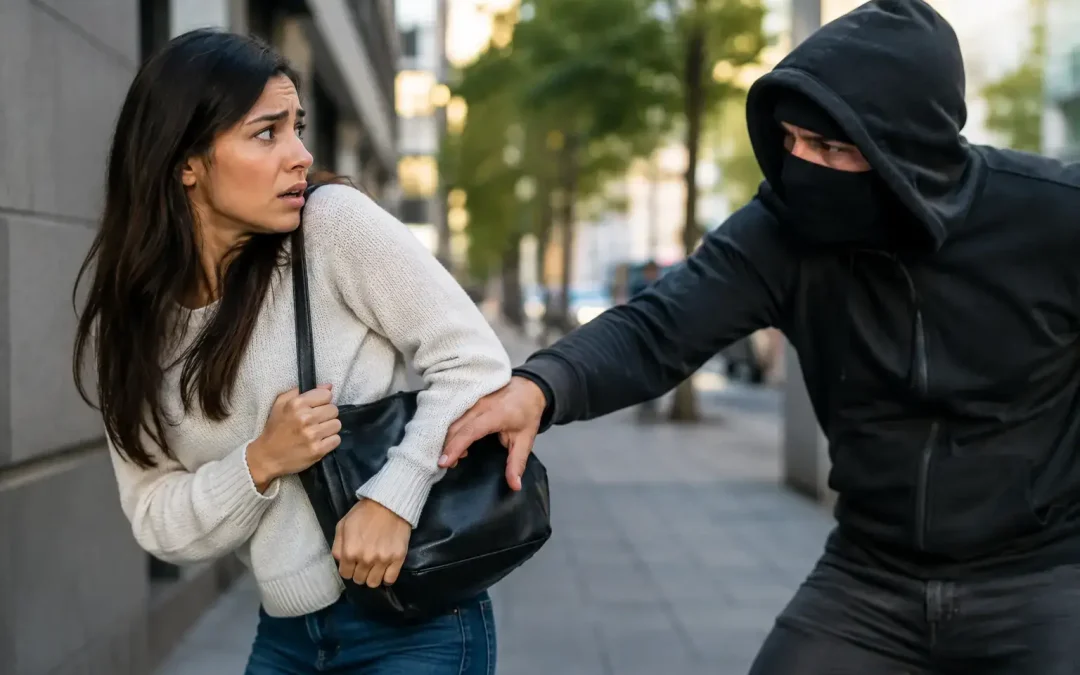
A mugging is not a test of courage, toughness, or martial arts knowledge. It is a fast, unstable situation where one bad decision can raise the risk for everyone involved. Knowing how to react during mugging starts with one hard truth: your phone, wallet, watch, and bag are replaceable. You are not.
The goal is simple. Get away alive. That may mean handing over property. It may mean creating distance and running. If physical contact is unavoidable, it means doing only what gives you the best chance to break free and escape. No fancy moves. No pride. No arguing over possessions.
How to React During Mugging: Set Your Priorities
Under stress, people often freeze, bargain, or try to process every detail at once. That is normal. Your body may flood with adrenaline, your hearing may narrow, and simple choices may suddenly feel difficult. Training helps, but a clear priority order also helps.
Your decisions should follow four rules:
- Stay alive and reduce immediate harm.
- Create distance from the attacker whenever possible.
- Give up property rather than fight for it.
- Escape, get to safety, and call for help.
That order matters. A mugger may want money, a phone, or a bag. Do not turn a property crime into a physical fight simply because you feel angry, embarrassed, or pressured to prove yourself. Real self-defense is not about winning an encounter. It is about getting home.
First, Read the Threat Without Making It Worse
If someone approaches aggressively, demands property, blocks your path, or shows a weapon, keep your movements calm and visible. Do not make sudden reaches into a pocket, bag, or waistband without telling them what you are doing. A simple statement such as, “My wallet is in my pocket. I’m going to take it out slowly,” can reduce uncertainty.
Keep your hands where they can be seen, but do not stand rigidly. Maintain enough space to move if an opening appears. Avoid staring someone down, challenging them, or making sarcastic comments. You do not need to look submissive, but you do need to avoid adding ego to an already dangerous moment.
Your voice should be clear and controlled. Short sentences work better than long explanations. If they demand an item, hand it over. Throwing a wallet or phone slightly away from you can sometimes create a moment of distraction and distance, but only if doing so does not provoke the attacker or make them think you are resisting. Every situation is different.
If They Have a Weapon, Do Not Bet Your Life on a Move
A knife, gun, or even an object that might be a weapon changes the calculation immediately. Distance is your friend, but sudden movement can be dangerous when someone is already close and agitated. There is no universal disarm that works on every weapon, every person, and every street.
If the attacker wants property, comply as calmly as you can. Keep observing without making it obvious. Notice their direction of travel, clothing, voice, vehicle, and whether there are other attackers. Do not chase them after they leave. Do not try to retrieve your belongings.
People sometimes ask whether they should run from an armed attacker. It depends on distance, cover, exits, the attacker’s attention, and whether you can move before they can react. If you already have a clear path to safety and the attacker is not controlling you at close range, escape may be the right choice. If they are close, focused on you, and demanding a phone, sudden movement may increase the danger. There is no rule more valuable than this: choose the option that most reduces immediate risk.
Do Not Let the Attacker Move You to a Second Location
A demand for money or a phone is one thing. Being forced into a car, alley, stairwell, back room, or isolated area is different. The danger can rise sharply when an offender tries to move you somewhere private and controlled.
If you are being moved against your will, look for opportunities to get attention, create distance, and break away. Use your voice directly: “Help! Call 911!” Specific commands are more effective than vague shouting because they tell bystanders what to do. Move toward open businesses, groups of people, security personnel, traffic, or bright public areas whenever you can.
This is where functional training matters. Under pressure, complicated sequences disappear. What remains is balance, awareness, movement, and the ability to act decisively when an escape window appears. Urban Street Defense trains those realities, not choreographed routines that require perfect timing and cooperation.
If Physical Contact Starts, Focus on Escape
Sometimes compliance does not end the threat. An attacker may grab, shove, restrain, or strike you. At that point, the objective is still not to dominate them. It is to protect yourself long enough to get free.
Keep moving if you can. Do not allow yourself to be pinned in a corner, against a vehicle, or on the ground. Protect your head and neck, keep your footing, and use your body weight to make space. If there is an opening, take it. Run toward people and safety, not just away from the attacker.
A real confrontation is messy. You may be scared, off-balance, carrying a bag, wearing work clothes, or dealing with more than one person. That is why simple actions are more reliable than complex techniques. Training should build the ability to respond under stress with direct, practical movement – then leave.
Do not stay to punish someone, recover your belongings, or teach a lesson. The moment you can disengage, disengage.
Use Your Environment Before You Need It
Your reaction during a mugging is influenced by what happened before it. Awareness is not paranoia. It is noticing enough to avoid walking into a problem blind.
When commuting, leaving work late, using an ATM, or walking from a parking area, keep your head up and reduce distractions. Put the phone away when moving through isolated spaces. If something feels wrong, change direction early, enter a store, cross the street, or call someone while heading toward people. Early action is usually safer than waiting for proof that a person is dangerous.
Small habits can also reduce the loss if a theft happens. Carry only what you need, keep emergency contacts accessible, and know how to lock or track your phone remotely. Do not rely on a visible safety device as your only plan. Tools can help, but awareness, distance, and decisive movement matter more.
What to Do Right After You Escape
Once you are safe, move inside a business, secure building, police station, or crowded public place. Call emergency services or local police. If you are injured, seek medical care even if the injury seems minor. Adrenaline can hide pain, dizziness, or shock.
Do not immediately return to search for the attacker or investigate the area. Preserve what you remember instead. Write down the time, location, direction the attacker went, descriptions, words used, vehicle details, and anything taken. Contact your bank and mobile provider promptly if cards, identification, or your phone were stolen.
You may also feel shaken, angry, numb, or ashamed. None of those reactions mean you failed. A mugging is the attacker’s choice, not your fault. Talk to someone you trust, and seek professional support if fear, sleep problems, or anxiety continue.
The best response is rarely dramatic. It is calm enough to make the next safe decision, direct enough to act when an opening appears, and disciplined enough to leave property behind. Train for reality, trust simple priorities, and give yourself permission to do whatever gets you home safe.