by Founder of USDC | 25th August 2026 | General Safety Topics
A clean technique can look convincing when your partner stands still, waits their turn, and gives you space. Real violence does not work like that. It is sudden, loud, close, confusing, and often over before you have time to think. What is pressure testing? It is training that adds realistic stress so you can find out whether a self-defense response still works when your heart rate rises and your plan starts to fall apart.
Pressure testing is not about proving who is toughest in the room. It is about exposing gaps safely, building usable reactions, and learning to make better decisions when conditions are bad. No fancy moves. No rehearsed victory. Just action that holds up when pressure hits.
What Is Pressure Testing and Why Does It Matter?
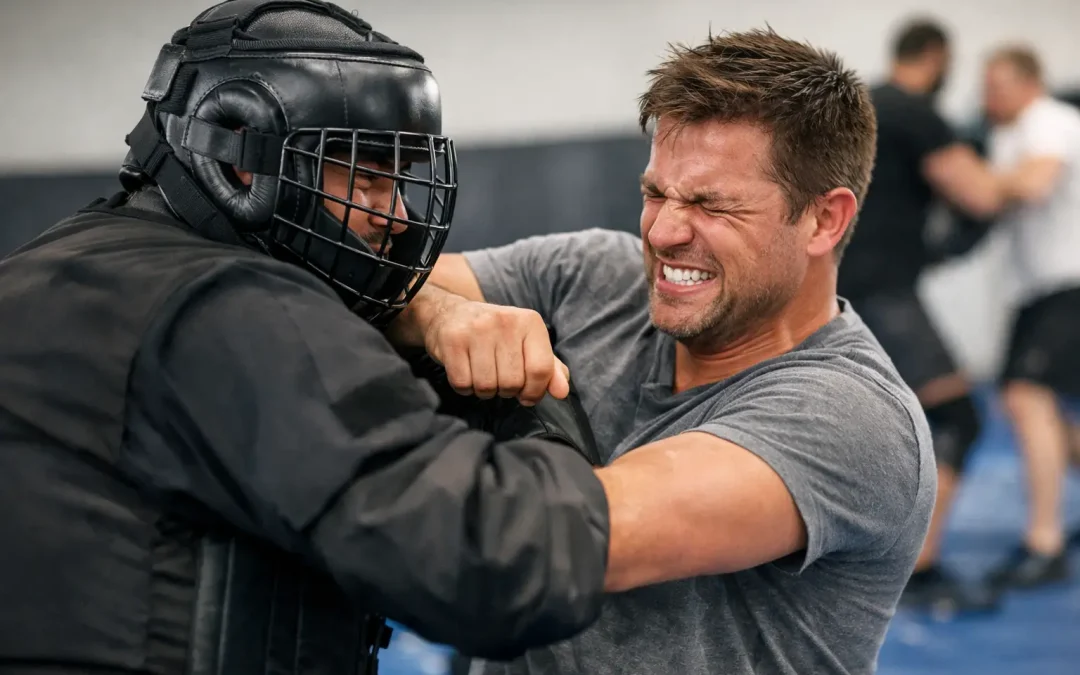
Pressure testing puts a technique, tactic, or decision under controlled resistance. Your training partner may move unpredictably, resist your escape, talk aggressively, crowd your space, or force you to react from an awkward position. The intensity is adjusted to your experience, fitness, and the goal of the drill.
The key word is controlled. Realistic training does not mean reckless training. It means creating enough uncertainty that you cannot simply perform a memorized sequence. You must recognize the problem, protect yourself, create space, act decisively, and leave.
This matters because stress changes behavior. Fine motor skills get worse. Your vision can narrow. You may freeze, rush, hesitate, or forget techniques you could perform perfectly five minutes earlier. A complicated response that needs ideal timing, perfect balance, and a cooperative opponent is a poor bet for personal safety.
Pressure testing helps strip your response down to what is simple, direct, and repeatable. It shows you whether your stance collapses when pushed, whether you can speak firmly under intimidation, whether you notice exits, and whether you can move after contact begins. Those are the questions that matter outside the gym.
Pressure Is More Than Hard Sparring
Many people hear the term and picture two people trading punches at full speed. Sparring can be useful, but pressure testing is broader than sparring. A real self-defense problem may start with someone blocking your path, grabbing your wrist, crowding you in an elevator, confronting you at your car, or escalating after an argument.
A good pressure-tested drill can include verbal boundary setting, awareness, movement, escape routes, physical contact, and the decision to disengage. It can also include scenarios where the correct answer is to leave early rather than fight.
For example, a beginner may start with a partner stepping into their space and using a loud, confrontational voice. The student practices setting a clear boundary, moving to a safer angle, and getting away. Later, the drill may add a grab, protective gear, resistance, and limited striking or escape options. The objective stays the same: get safe, not win points.
Sport training and self-defense training can overlap, but their priorities are not identical. A sport match has rules, a referee, a known start time, and usually one opponent. Street violence may have none of those. Pressure testing should reflect the actual problem you are preparing to handle.
What Good Pressure Testing Looks Like
Good pressure testing has purpose. It is not an excuse for instructors or advanced students to overwhelm beginners. Every drill should answer a practical question: Can you make space from a grab? Can you protect your head while moving? Can you get up safely? Can you recognize when talking is no longer working?
The pressure should also be progressive. Throwing an untrained person into a high-intensity scenario on day one can create panic without teaching useful skills. Start with simple movement and clear roles. Add resistance, speed, noise, surprise, and fatigue as the student develops control.
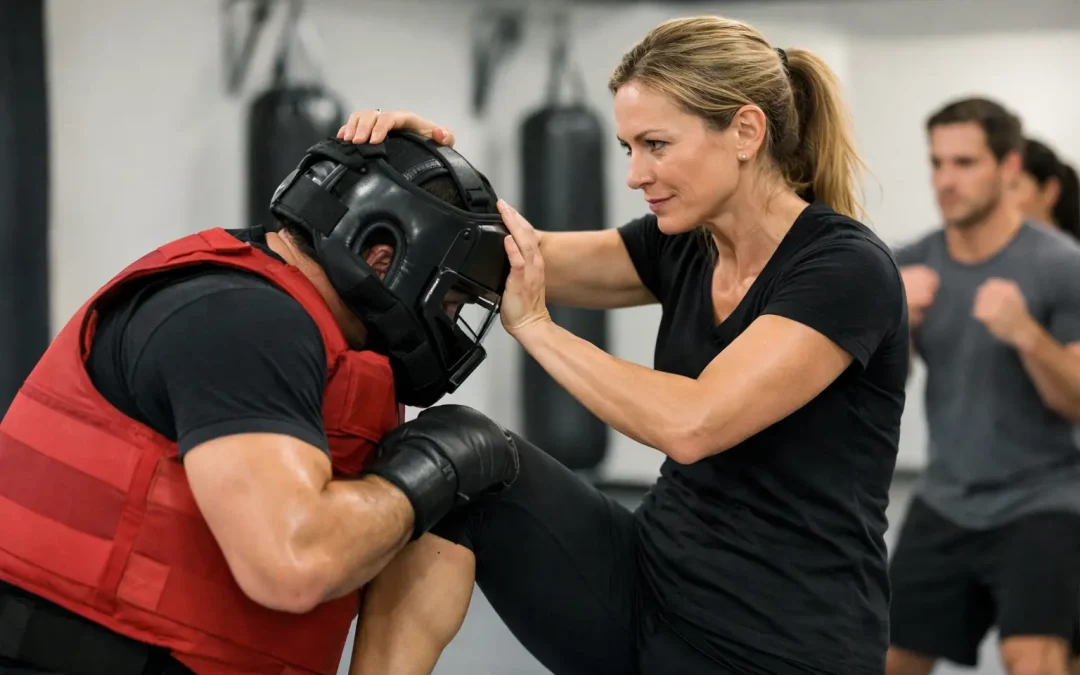
Equipment matters when contact increases. Gloves, mouthguards, head protection, pads, and appropriate rules help people train with enough intensity to learn without collecting unnecessary injuries. The aim is honest feedback, not damage.
A quality instructor watches closely and changes the drill when needed. Some students need more repetition before intensity. Others need to slow down and regain structure because they are relying on wild swings or tunnel vision. Pressure should reveal behavior, then training should improve it.
Resistance must be realistic
A partner who lets you complete every technique teaches you nothing about resistance. At the same time, a partner who turns every drill into a competition can stop learning entirely. Realistic resistance means the partner makes the task difficult in ways that fit the scenario.
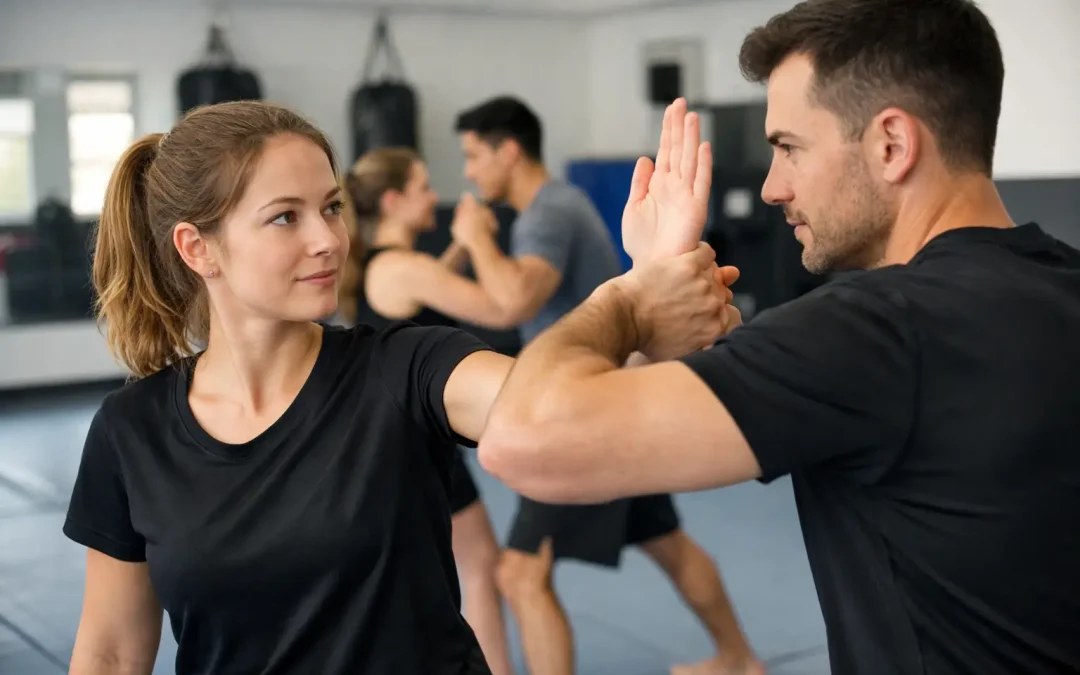
If you are practicing an escape from a wrist grab, the partner should grip with intent, adjust when you move, and make you work for the exit. They should not transform the drill into a surprise takedown unless that is part of the agreed lesson. Clarity keeps training useful and safe.
Decision-making belongs in the drill
Physical skill is only one part of personal safety. Pressure testing should make you think about distance, obstacles, bystanders, exits, and whether you can leave before the situation turns physical.
Sometimes the strongest response is a loud command and immediate movement toward safety. Sometimes you need to use force to break contact long enough to escape. The circumstances matter. Training should build judgment, not a habit of fighting every problem.
Recovery is part of the lesson
You will make mistakes under pressure. Everyone does. You may lose balance, miss a strike, freeze for a second, or use the wrong response. The value is in what happens next.
Can you cover up, regain your position, keep moving, and continue toward escape? Can you review the drill without excuses and identify one correction for the next round? Pressure testing builds resilience when students learn to recover instead of treating every error as failure.
Common Myths About Pressure Testing
The first myth is that pressure testing means full-contact fighting every class. It does not. Intensity is a tool, not the entire program. A beginner can experience pressure through timing, verbal confrontation, limited space, and controlled resistance before heavy contact is appropriate.
The second myth is that pain proves realism. Pain can teach a lesson, but it is not the goal. A training environment that injures people, humiliates them, or ignores consent will eventually reduce attendance and damage learning. You need challenge with standards.
The third myth is that one successful drill proves a technique will always work. It does not. Size, strength, environment, surprise, weapons, multiple attackers, and your own stress level change the situation. Pressure testing does not offer guarantees. It helps you choose higher-percentage actions and recognize when a tactic is failing.
The final myth is that only experienced fighters need this training. Beginners may benefit most because they quickly learn the difference between knowing a move and being able to use it. The process should be scaled, coached, and repeated. Confidence should come from tested ability, not wishful thinking.
How Pressure Testing Builds Real Confidence
False confidence says, “I know what I would do.” Real confidence says, “I have faced resistance before, I know what stress feels like, and I can still take the next useful action.” That is a major difference.
Repeated exposure to manageable pressure helps reduce the shock of confrontation. You become more familiar with close range, loud voices, resistance, and physical effort. You learn that you can breathe, move, protect yourself, and make decisions even when the situation feels uncomfortable.
It also creates humility. You discover that distance disappears quickly, that balance is easy to lose, and that simple techniques need practice. That humility is valuable because it encourages awareness, avoidance, and early action. The best self-defense encounter is still the one you leave before violence begins.
At Urban Street Defense, pressure is introduced with purpose: to help students develop instinctive responses without pretending that real danger follows a script. The training is built around practical movement, direct action, and the ability to adapt when the first plan does not work.
A Better Standard for Self-Defense Training
When you assess a self-defense class, do not only ask what techniques are taught. Ask how those techniques are tested. Are students working against realistic resistance? Do drills include movement, stress, verbal boundaries, and escape? Is the training adjusted for beginners while still progressing toward honest intensity?
Also ask whether the class values safety and control. Effective training should challenge you, not feed someone else’s ego. You should leave with clearer lessons, better awareness, and skills you can build on.
Personal safety is not about collecting moves. It is about being able to act when your body wants to freeze and your environment gives you no perfect answer. Train simply. Train honestly. Then keep showing up until your response becomes harder to shake.
by Founder of USDC | 24th August 2026 | General Safety Topics
A safety briefing can fill a room, collect signatures, and still leave people frozen when a situation turns hostile. That is the hard truth behind corporate safety program results: attendance is not readiness. A program earns its value when employees can spot danger early, make sound decisions under stress, and take immediate action without waiting for perfect conditions.
For employers, this is not about turning staff into fighters or creating fear around the workplace. It is about giving people practical options when commuting, traveling, working late, meeting the public, or dealing with an escalating confrontation. The right training builds awareness first, confidence second, and physical response only where it is necessary.
What Corporate Safety Program Results Should Actually Show
The easiest numbers to report are completion rates, satisfaction scores, and the number of training hours delivered. They matter, but they do not tell the full story. A team can enjoy a workshop and still fail to apply a single skill when pressure arrives.
Strong results show up in behavior. Employees become more alert to their surroundings in parking areas, elevators, ride-share pickups, and unfamiliar venues. They know how to set boundaries clearly, move toward safer spaces, get attention from others, and report concerns earlier. Managers see more useful incident reporting because staff understand what to look for and believe their observations will be taken seriously.
The final measure is decision-making. Can a participant explain the difference between an awkward interaction and a developing threat? Can they create distance rather than argue? Can they leave without feeling that they must win a confrontation? These are practical outcomes that reduce exposure before a situation becomes physical.
Lagging indicators are not enough
Organizations often judge safety by what did not happen: no reported assaults, no lost-time injuries, no major incident. That can be reassuring, but it can also hide a problem. Threats may go unreported. Employees may change their routines quietly because they do not feel safe. A near miss may be treated as bad luck instead of useful information.
Use lagging indicators, but pair them with leading indicators. Track whether staff report hazards and suspicious behavior, whether managers respond consistently, and whether employees can recall the actions taught in training. Look for changes in confidence, but do not mistake confidence alone for capability.
Why Awareness-Only Training Falls Short
Awareness is the first layer of personal safety, not the whole system. Telling people to stay alert, trust their instincts, or avoid dark places gives broad advice. It does not prepare them for the moment someone blocks their path, invades their space, grabs an arm, or refuses to accept a clear no.
Under stress, people do not rise to the level of a polished presentation. They fall back on what they have practiced. If training has been entirely theoretical, the response is likely to be hesitation, confusion, or a technique too complicated to remember.
That is why realistic corporate training must stay simple. A participant should practice verbal boundary setting, body positioning, escape routes, and basic movement under controlled pressure. The goal is not choreography. The goal is an instinctive response that works while the heart rate rises and the mind is busy.
There is a trade-off. Training that feels more realistic can make some participants uncomfortable, especially if it is delivered without care or clear boundaries. The answer is not to remove all pressure. It is to scale it properly. Start with accessible drills, explain the purpose, allow opt-out choices where appropriate, and increase intensity only when participants are ready.
Measure the Skills That Matter
A useful evaluation begins before the session. Ask employees where they feel exposed: commuting after dark, handling angry customers, traveling alone, working off-site, or entering isolated parking areas. Risks differ between a customer-facing team, a sales force, and an office-based department. One generic lecture will not fit every group.
After training, assess whether people can apply core actions in short scenarios. Keep the test practical, respectful, and focused on safety rather than athletic ability. For example, participants may need to identify an exit, use a firm verbal command, maintain distance, and move toward help. In a more advanced session, they might practice safely breaking contact and leaving an immediate threat area.
Four measures give HR and learning teams a clearer view of progress:
- Recall: Can employees name the key actions without prompts a few weeks later?
- Recognition: Can they identify early warning signs in realistic workplace and travel scenarios?
- Response: Can they use simple verbal and physical safety actions under manageable pressure?
- Reporting: Do they know exactly who to contact and what information to provide after an incident or near miss?
These measures should not become a pass-or-fail obstacle course. Their purpose is to expose gaps while there is time to fix them. If most participants struggle with a scenario, the training design needs work. Blaming the employees misses the point.
Turn a One-Time Workshop Into Lasting Readiness
A single workshop can create momentum, especially for teams that have never received practical personal-safety instruction. It cannot carry the entire safety culture. Skills fade when they are not revisited, and policies disappear from memory when nobody talks about them.
The strongest programs use a short initial course followed by brief refreshers. A 15-minute scenario discussion during a team meeting can reinforce a major lesson. A quarterly practical session can revisit movement, verbal responses, and reporting procedures. New hires should receive the same foundation rather than relying on secondhand advice from colleagues.
Managers play a major role. If a manager dismisses a concern as overreacting, staff learn to stay quiet. If a manager responds quickly, documents the issue, and checks whether the employee needs support, the program becomes real. Corporate safety is not only a training-provider responsibility. It is a leadership behavior.
Clear procedures matter too. Employees need to know what happens after they raise a concern, who escorts someone to a vehicle when needed, how travel check-ins work, and when security or emergency services should be contacted. Physical skills are one part of the response. Communication and follow-through keep the system from breaking down.
Build Training Around Real Exposure
The most effective safety programs do not copy sport martial arts classes or rely on ceremonial forms. A corporate team does not need belts, complicated combinations, or impressive-looking moves. It needs actions that are easy to learn, easy to recall, and useful in tight spaces, work clothes, and everyday shoes.
At Urban Street Defense, corporate sessions are built around scenario-based learning and simple, direct responses. That approach suits beginners because it does not demand years of technical training before participants gain useful skills. It also gives experienced martial artists a reality check: what works in a controlled class may not be the best choice in a crowded lobby, a car park, or a tense customer interaction.
Context matters. A frontline retail team may need stronger skills for verbal de-escalation and calling for support. Employees who travel between sites may need more focus on situational awareness and vehicle approach safety. Women-focused groups may want to address boundary violations, unwanted contact, and escape from common grabs. Private instruction can help leaders or at-risk employees work through specific concerns discreetly.
The question is not whether every employee needs the same level of physical training. They do not. The question is whether every employee has a practical safety baseline and whether higher-risk roles receive training that matches their exposure.
The Result That Matters Most
Good corporate safety program results are not measured by how tough a team looks after a workshop. They are measured by whether people feel prepared to act early, leave safely, support one another, and speak up before a warning sign becomes an incident.
Give employees something they can use on the walk to their car, during a difficult conversation, and in the first seconds of an unexpected threat. No fancy moves – just clear thinking, direct action, and practice that holds up when it counts.
by Founder of USDC | 23rd August 2026 | General Safety Topics
A threat does not arrive with a warning bell, a referee, or time to remember a complicated sequence. It can happen beside your car, in a parking structure, on the walk home, at work, or during travel. That is why self defense classes Kuala Lumpur residents choose should train more than techniques. They should train awareness, decision-making, movement, and the ability to act when adrenaline hits.
Real self-defense is not about looking impressive. It is about creating a chance to get away safely. The right training makes your responses simpler, faster, and more reliable under pressure.
What Self Defense Classes in Kuala Lumpur Should Teach
A useful class starts with reality. Most people do not need a collection of ceremonial forms or a long list of moves designed for a cooperative partner. They need to recognize danger early, set boundaries clearly, move to a safer position, and respond decisively if physical contact becomes unavoidable.
That requires training against common urban situations: an aggressive approach, unwanted grabbing, being crowded against a wall, an attempted restraint, or an attack that begins at close range. Distance matters. Position matters. Your ability to keep moving matters. So does the judgment to leave before a situation becomes physical.
Good instruction also makes room for an uncomfortable truth: there is no guaranteed technique. Size, fitness, environment, surprise, multiple attackers, and weapons can change everything. A responsible program does not sell false certainty. It gives you practical options, builds better habits, and teaches you to prioritize escape over winning.
Look for classes that emphasize four essentials:
- Awareness of surroundings, behavior, exits, and warning signs
- Clear verbal boundaries and the confidence to use them
- Simple physical responses that work from natural positions
- Pressure-based practice that reveals what you can do under stress
The last point separates knowing a move from being able to use it. A technique practiced slowly with a willing partner can feel effective. Add speed, resistance, noise, surprise, and fatigue, and the experience changes. Training must eventually reflect that reality in a controlled, responsible way.
Why Reality-Based Training Matters
Street violence is messy. You may be carrying a work bag, wearing office clothes, dealing with poor lighting, protecting a friend, or trying to reach your vehicle. You may freeze for a moment. You may not have room to kick. You may be off balance before you even understand what is happening.
Reality-based self-defense training prepares for those imperfect conditions. It favors direct actions over complicated patterns and repeated practice over theory alone. The goal is not to memorize dozens of answers. It is to build a small set of dependable responses and the instinct to use them.
Jeet Kune Do-inspired training follows this mindset well: simplicity, directness, adaptability, and effectiveness. There is no need to force every problem into one style or one perfect technique. Use what fits the moment. If a response fails, adjust. If an exit opens, take it.
This approach is especially useful for beginners. You do not need years of martial arts experience before learning how to stand with better balance, protect your space, strike with purpose, break contact, and move away. Experience helps, but practical foundations can begin in the first session.
At Urban Street Defense, the focus is on functional action rather than choreography. Students work through situations that demand attention, movement, and decisive responses. The environment is supportive, but the purpose is serious: build skills you can access when you are stressed, tired, and surprised.
What to Expect From Your First Class
Your first class should not be an ego test. It should be a place to learn the basics safely and honestly. A capable instructor will explain the purpose of each drill, scale intensity to the group, and correct movements before pushing speed or resistance.
Expect to work on posture, distance, footwork, protective positioning, and simple striking mechanics. You may practice escaping common grips or handling an aggressive approach. The point is not to prove toughness on day one. It is to understand how your body reacts and begin replacing hesitation with usable action.
Wear comfortable clothes you can move in. Leave jewelry and anything loose at home. Bring water, arrive ready to pay attention, and tell the instructor about injuries or physical limitations. Training can be adapted, but instructors need accurate information to do that well.
You should also expect some discomfort. Not injury or reckless contact, but the mental discomfort of being challenged, pressured, and asked to react. That is part of the value. Confidence is not pretending danger cannot happen. Confidence is knowing you have practiced what to do next.
Group, Private, and Corporate Training: Which Fits?
The best format depends on your goal, schedule, and starting point. Group classes offer repetition, partner variety, and a community that keeps you accountable. They are a strong choice if you want ongoing development and regular pressure-based practice.
Private instruction gives you more flexibility and focused coaching. It can suit professionals with limited time, beginners who want extra confidence before joining a group, or people working toward a specific safety concern. Private-group sessions can also work well for families, friends, or small teams who want to train together.
For employers, corporate self-defense training addresses a different need. Staff may commute late, travel for work, meet clients off-site, or work in public-facing roles. A well-run workplace session should be practical, inclusive, and relevant to the actual environment. It should cover awareness, de-escalation, personal boundaries, and simple protective actions without turning the program into a fitness contest.
Women-focused crash courses can offer a direct entry point for people who want concentrated, practical instruction. They are not a replacement for continued practice, because skills improve through repetition. But a focused course can provide immediate tools, stronger awareness, and a clear plan for what to do when a situation feels wrong.
How to Judge a Self-Defense School Before You Commit
Ask direct questions. Does the school explain how drills connect to real situations? Is there controlled resistance, or do partners always cooperate? Are students taught to escape and de-escalate, or only to fight? Can beginners train safely? Are classes built around useful movement rather than rank, ritual, or performance?
Watch how instructors speak about violence. Be cautious of anyone promising that one move will stop every attacker or teaching students to chase confrontation. Effective training respects the risks. It teaches avoidance first, action when necessary, and escape whenever possible.
Class size matters too. In a crowded room, you may get less feedback and fewer opportunities to practice properly. Smaller groups often give instructors more room to correct technique, manage intensity, and make sure students are not merely going through motions.
Finally, choose a program you can attend consistently. One workshop can change how you think about safety. Regular training changes how you move, respond, and carry yourself. The best system is the one that is practical enough to use and structured enough to keep you coming back.
Build Readiness Without Living in Fear
Personal safety is not about becoming suspicious of everyone around you. It is about paying attention, trusting your judgment, and refusing to surrender your choices when pressure appears. Notice the exit. Keep your phone accessible without being distracted by it. Create distance when someone ignores a boundary. Leave early when your instincts tell you something is off.
Physical self-defense adds another layer. It gives you options when awareness and words are not enough. Train for reality, practice consistently, and measure progress by how clearly you can think and act under pressure. Better. Faster. Stronger.
by Founder of USDC | 22nd August 2026 | General Safety Topics
A threat does not wait for you to earn a belt, build years of flexibility, or memorize a long routine. It happens fast, close, and under stress. So, can beginners learn self defense? Yes – if they learn skills built for the way real confrontations unfold, not for looking impressive in a training hall.
The goal is not to turn a beginner into a movie fighter. It is to build a faster, clearer response: recognize trouble early, create distance, protect yourself, disrupt the attacker’s actions, and get to safety. That is a realistic starting point for anyone, regardless of age, fitness level, or previous martial arts experience.
Can Beginners Learn Self Defense Without Experience?
Absolutely. In fact, a good self-defense program should be designed for people who have never thrown a punch, escaped a grab, or felt comfortable with physical contact. Beginners do not need a fighting background. They need instruction that removes unnecessary complexity.
Under pressure, fine motor skills drop. Your heart rate rises, your vision narrows, and your ability to recall a sequence of ten moves disappears. This is why complicated techniques, ceremonial forms, and perfectly timed counters are a poor foundation for personal safety.
Start with natural, direct actions. Use your voice. Move your feet. Cover your head. Create space. Strike vulnerable targets when escape is blocked. Break grips with leverage and body movement rather than arm strength alone. These actions can be taught, repeated, and pressure-tested from the first stages of training.
That does not mean self-defense is easy. It means the learning path is clear. You do not need to become an expert before you can become harder to control.
What Beginners Should Learn First
The first lesson is not a flashy disarm or a spinning kick. It is understanding distance and decision-making. Many dangerous situations offer warning signs before physical contact begins: someone closing distance too quickly, blocking your path, ignoring a clear boundary, following you, or trying to isolate you.
A beginner should practice using a firm voice and simple language. “Stop.” “Back up.” “I don’t know you.” These words are not magic, but they set a boundary, draw attention, and prepare your mind to act. Hesitation is common when someone appears aggressive but has not attacked yet. Training helps you recognize that you are allowed to leave, make noise, and protect your space early.
From there, the physical priorities are simple: maintain balance, protect the head and body, avoid being trapped, and create an exit. A practical class should cover common situations such as wrist grabs, shirt grabs, pushes, choking attempts, bear hugs, and attacks in close range. The techniques should work for smaller people against larger people because they rely on position, timing, target selection, and commitment – not strength alone.
There is a trade-off here. Simple does not mean careless. A single technique taught without context can create false confidence. Students need to know when an action is appropriate, what can go wrong, and what comes next if the first attempt fails.
Training Must Include Pressure
A technique that works only when a partner stands still is not a self-defense skill. It is choreography.
Beginners need controlled resistance. At first, that may mean a partner applies a grab with light pressure while the student learns the movement. As confidence grows, the partner resists more, moves more realistically, and adds verbal stress or surprise. The student learns to act while uncomfortable, not just while calm.
This should be progressive, not reckless. Throwing a new student into hard sparring on day one is not smart coaching. But avoiding all resistance is equally unhelpful. The right environment challenges people safely, teaches them to manage adrenaline, and lets them discover what actually holds up when timing is imperfect.
At Urban Street Defense, this is the difference between practicing moves and building responses. Jeet Kune Do-inspired training keeps the focus on simplicity, directness, adaptability, and effectiveness. No routines, no pauses, no pretending an attacker will cooperate.
Confidence Comes From Evidence, Not Motivation
Many people begin self-defense training because they want confidence. That is a valid reason. But confidence should not mean believing you can win every confrontation. It should mean knowing you have options and have practiced using them.
Real confidence is evidence-based. You felt someone resist a grip and found a way to break free. You practiced speaking loudly while someone invaded your space. You moved, covered, struck pads, recovered your balance, and escaped. You learned that freezing is a normal stress response, then trained a better response.
This matters for commuters, people who work late, students, travelers, and anyone navigating crowded urban spaces. Most days will never require physical self-defense. That is the best outcome. Yet awareness and preparation can change how you carry yourself, choose routes, react to boundary violations, and support someone else in a difficult moment.
How Long Does It Take to Learn Basic Self-Defense?
A focused beginner can learn useful principles in one well-run workshop. They may leave with a stronger stance, a clearer understanding of awareness, practical escape options, and a more decisive mindset. That is valuable.
But one session does not create an instinct. Retention requires repetition. The body needs enough practice to respond when your mind is busy, tired, startled, or scared. Regular training also reveals weaknesses that a single lesson cannot expose.
For many adults, consistency matters more than intensity. One or two quality sessions per week, combined with occasional scenario-based workshops, can build meaningful ability over time. Private lessons can help if you have a specific concern, a demanding schedule, or want more focused coaching. Corporate and small-group training can also give teams a practical shared language around boundaries, situational awareness, and emergency response.
The right timeline depends on your goal. If you want basic personal-safety awareness, start now. If you want the ability to function under physical pressure, commit to ongoing practice. If you are preparing for a particular risk, such as frequent late-night travel or workplace exposure, train the scenarios most relevant to that risk.
What Self-Defense Training Cannot Promise
No honest instructor can guarantee that a technique will work every time. Size, surprise, environment, multiple attackers, weapons, intoxication, and panic all change the situation. A hard floor, a narrow hallway, a parked car, or poor lighting can turn a manageable moment into a dangerous one.
That is why the purpose of self-defense is escape, not proving toughness. Avoidance is a win. De-escalation is a win. Running is a win. Calling for help is a win. Physical action is for the moment you cannot safely avoid or leave the threat.
Training should also include legal and ethical judgment. Use only the force necessary to protect yourself and stop when you can get away. Local laws and circumstances matter, so students should understand the rules that apply where they live and work.
Choosing a Beginner-Friendly Class
Look closely at what a school actually teaches. If every session centers on forms, rank progression, or sport competition, it may be a great martial art experience but not the right fit for your personal-safety goal. There is nothing wrong with sport or tradition. They simply solve different problems.
A practical beginner class should explain why each skill is used, let you practice against realistic movement, and keep safety standards high. Instructors should adapt for different sizes, fitness levels, injuries, and comfort levels without lowering the standard of realism. You should be encouraged to ask questions, make mistakes, and train with people who want you to improve.
For adults in Kuala Lumpur, Petaling Jaya, and Ipoh, convenience matters too. Training that fits your schedule is training you are more likely to continue. Start with a beginner session, a women-focused crash course, private instruction, or a practical workshop. The best format is the one you will attend and repeat.
You do not need to be fearless, athletic, or experienced to begin. You need a system that respects the reality of stress and teaches you to respond with purpose. Start before you feel ready, practice until your actions become clearer, and give yourself a better chance to get home safe.
by Founder of USDC | 21st August 2026 | General Safety Topics
Most threats do not arrive with a warning bell. They happen in a parking area, an elevator, a ride-share pickup point, a late walk from the office, or during an argument that turns physical too fast. Self defense workshops for adults should prepare you for that reality: confusion, close distance, fear, limited space, and the need to act now.
This is not about collecting complicated moves or looking impressive in a training hall. It is about recognizing danger early, creating a chance to escape, and responding with simple actions that still work when your heart rate rises. Good training makes personal safety practical, not theoretical.
What Adults Should Get From a Self-Defense Workshop
A useful workshop gives you more than a few techniques to remember. It teaches a decision-making process. When should you create distance? When do you use your voice? What happens if someone grabs you, corners you, or refuses to let go? Where is the safest exit?
The strongest programs combine awareness, verbal boundary-setting, physical response, and escape. These elements belong together. Awareness may help you avoid a confrontation. Clear verbal commands can draw attention and set a boundary. Physical action becomes necessary when the threat is immediate and leaving is not yet possible.
Adults also need training that respects how stress affects the body. Fine motor skills can disappear under pressure. You may freeze, rush, lose balance, or struggle to remember a sequence. That is why simple, direct movements matter. The goal is not perfection. The goal is to interrupt the attack, protect yourself, and get away.
A one-day workshop can build valuable awareness and give you a starting point. Regular practice builds faster recognition, stronger reactions, and better control under pressure. Both have a place. Choose based on your current needs, time, and the level of readiness you want.
Self Defense Workshops for Adults Must Be Reality-Based
There is a difference between practicing a technique and preparing for resistance. A partner who stands still, offers the same grip every time, and waits for your response can help you learn the basic motion. But real danger does not pause. A real attacker may pull, push, shout, strike, change position, or use the environment against you.
Reality-based training gradually introduces movement, uncertainty, and pressure in a controlled setting. That does not mean throwing beginners into chaos. It means learning safely, then testing whether a response still works when the other person is moving and resisting at an appropriate level.
Look for workshops that explain the purpose behind each action. A release from a wrist grab is not the final answer if the person can grab again. It should create space for a stronger response, movement toward safety, or an exit. Every technique needs a clear outcome.
Be cautious of programs built around long routines, elaborate joint locks, or moves that depend on an attacker staying cooperative. These may be interesting to study, but interest is not the same as usefulness. Under pressure, the best option is often the simplest one you can deliver decisively.
The Skills That Matter Before Physical Contact
Physical defense is only one layer of personal safety. The earlier you spot trouble, the more options you have.
A practical workshop should teach you to pay attention without becoming paranoid. Notice blocked exits, people who are closing distance without a reason, repeated unwanted attention, isolated areas, and situations where alcohol, anger, or crowd behavior is changing the risk. Trusting discomfort is not weakness. It is information.
You should also practice setting boundaries with your voice. A firm command such as “Stop,” “Back up,” or “Don’t touch me” can be more effective than a polite explanation. It gives a clear message, may attract witnesses, and helps shift you from passive surprise into action.
De-escalation matters when it is safe and possible. Sometimes the smartest choice is to leave, hand over property, call for help, or avoid arguing with someone who wants conflict. There is no prize for winning a confrontation. Personal safety is the objective.
What Physical Training Should Feel Like
Expect controlled contact, not empty choreography. You may work on protective positioning, striking targets, breaking grabs, defending against common close-range attacks, creating distance, and moving toward an exit. You should also learn how your body responds when someone invades your space.
For beginners, good instructors explain the drill, demonstrate it clearly, and build intensity in stages. They correct unsafe habits without making people feel foolish. The training environment should be supportive, but it should not pretend that danger is comfortable.
Some discomfort is normal. You may feel awkward using your voice, hitting pads with commitment, or dealing with a partner who applies real pressure. That is part of the learning process. You are replacing hesitation with a more useful response.
Training should never require you to ignore injury, pain, or personal boundaries. A professional workshop offers appropriate safety equipment, clear rules, supervision, and options to adapt drills for physical limitations. Effective does not mean reckless.
How to Choose the Right Workshop
Before you book, ask what the session is designed to deliver. A women-focused crash course, a private group session, a corporate safety program, and an ongoing class can all be valuable, but they serve different needs.
For a first workshop, ask whether the curriculum addresses common urban threats and whether participants practice against realistic movement. Find out how large the group will be. Smaller classes usually mean more coaching, more repetitions, and more time to ask questions.
Ask whether the instructor has a clear approach to pressure training. “Realistic” should not mean unsafe or intimidating. It should mean that drills are tested progressively rather than practiced only in slow motion.
Consider your own context. A commuter may want awareness and close-range escape skills. Someone who travels for work may need strategies for hotels, parking areas, and unfamiliar locations. A corporate team may benefit from workplace boundary-setting, situational awareness, and scenario-based response. Private instruction can be useful if you want focused coaching or have a specific concern to address.
At Urban Street Defense, training is built around simplicity, directness, adaptability, and effectiveness under pressure. The standard is clear: no ornamental forms, no pauses for an imaginary attacker, and no false confidence from techniques that have never been tested against resistance.
Why Repetition Beats a Big Technique Collection
People often assume better self-defense means learning more moves. Usually, it means building a smaller set of reliable responses and practicing them until they become easier to access under stress.
A workshop may introduce the core tools, but retention comes from repetition. Practice your stance, movement, verbal commands, protective cover, and escape responses. Revisit them after weeks, not just hours. A skill you can recall when startled is more valuable than ten skills you can describe from memory.
This is also why sparring and pressure drills, when taught responsibly, matter. They reveal problems that static practice hides: stepping too close, dropping your hands, freezing after the first action, or failing to look for the exit. These are not failures. They are useful lessons before the stakes are real.
Make Training Part of Your Safety Plan
Self-defense works best alongside practical habits. Keep your phone accessible rather than buried in a bag. Tell someone when you are meeting a stranger or arriving home late. Avoid being absorbed by your screen in isolated places. Know where you can move if a situation feels wrong.
None of these habits guarantee safety, and responsibility always belongs to the person choosing to threaten or harm another person. But preparation gives you more choices. It helps you act earlier, move with purpose, and avoid the shock of having no plan.
The right workshop does not promise invincibility. It gives you something more honest: a clearer mind, stronger boundaries, and practical actions you can use when seconds matter. Start before you feel fully ready. Readiness is built through action.
by Founder of USDC | 20th August 2026 | General Safety Topics
A safety briefing cannot prepare someone for the moment a stranger closes distance, a confrontation escalates in a parking area, or an employee feels trapped while commuting. HRDCorp claimable safety training gives employers a practical way to invest in skills that matter before a stressful situation turns physical.
For employers, the goal is not to turn staff into fighters. It is to help people recognize risk early, set boundaries with confidence, make better decisions under pressure, and create space to get away. No ceremonial forms. No complicated routines that disappear when adrenaline hits. Just practical action built around reality.
What HRDCorp Claimable Safety Training Should Deliver
Claimable training should create a clear workplace outcome, not just fill a training calendar. Personal safety training is most valuable when employees leave with a sharper understanding of awareness, prevention, verbal boundary setting, escape options, and the physical principles that can help when avoidance fails.
That means training must go beyond a lecture on general safety. A slide presentation may explain risk, but it cannot show a participant how stress affects distance, balance, reaction time, and decision-making. People need controlled, scenario-based practice. They need to experience what it feels like to move, speak, disengage, and respond while another person is creating pressure.
The right program also respects the reality of a mixed workplace. Participants may have different sizes, fitness levels, ages, and previous experience. A good instructor does not expect everyone to execute athletic techniques. Training should use natural movements, simple principles, and adaptable responses that a beginner can remember.
For teams in Kuala Lumpur, Petaling Jaya, and Ipoh, that relevance may include commuting, rideshares, parking areas, business travel, public spaces, late shifts, and encounters around office buildings. The scenarios should match the risks people actually face, not movie-style attacks designed to look impressive.
Why Practical Safety Skills Belong in Workplace Learning
Organizations already train employees to manage operational, digital, and compliance risks. Personal safety deserves the same serious attention. An employee who feels alert and capable is better positioned to make sound choices outside the meeting room as well as inside it.
This is not about creating fear. It is about reducing helplessness. When people have never considered a threatening situation, they can freeze, comply without thinking, or waste critical seconds trying to remember a complicated technique. Training gives them a practical framework: identify danger, use distance and positioning, communicate clearly, act decisively when necessary, and leave.
There is also a human benefit that does not fit neatly into a report. Employees who know their employer has invested in their well-being often feel seen. This matters especially for teams that travel, work irregular hours, meet clients off-site, or rely on public transportation. Safety training says the organization understands that work does not begin and end at the office door.
Still, the training must be positioned honestly. A single workshop does not make anyone invincible. It cannot remove every risk, and physical action is always a last-resort option when escape is not immediately available. Its value is giving people better odds, clearer choices, and a foundation they can continue to practice.
What a Strong Corporate Session Looks Like
A useful corporate safety session is active, focused, and appropriately challenging. It starts with prevention because the best confrontation is the one avoided. Participants learn to notice unusual behavior, manage personal space, avoid being cornered, and use their voice before a situation becomes physical.
Then comes practical movement. Rather than memorizing long sequences, participants work with direct concepts: protect vulnerable areas, maintain balance, create distance, break contact, and move toward safety. These principles are easier to adapt when an incident does not happen exactly as rehearsed.
Pressure matters, but it must be introduced responsibly. Safe drills can include verbal stress, time limits, movement, resistance, and unpredictable prompts. This reveals the gap between knowing a technique and being able to use it. The instructor should control intensity carefully, especially with beginners, so the session builds confidence without exposing participants to unnecessary injury risk.
A quality program also makes room for questions that people are often reluctant to ask. What should I do if someone grabs my wrist? How do I handle an aggressive person who keeps moving closer? What if I am carrying a bag, wearing work clothes, or walking to my car alone? Direct answers are more useful than vague advice to “be aware.”
Urban Street Defense uses a reality-based approach shaped by simplicity, directness, and adaptability. The focus is not on looking technical. The focus is on giving ordinary people workable responses when stress strips away fine motor control and perfect timing.
The difference between awareness and action
Awareness is essential, but awareness alone is not a complete safety plan. Seeing a threat early gives someone more options. They may change direction, enter a public space, call for help, or leave before contact occurs. That is a win.
But employees also need to know what to do if the other person ignores boundaries. Practical training bridges that gap. It teaches participants to use body language and assertive communication first, then transition to simple physical actions if there is no safe alternative. The objective remains the same throughout: get away, get help, and get home.
How HR Teams Can Plan a Claimable Program
Before booking a course, define the problem the training needs to solve. A team of office-based employees may need commuting and public-space awareness. A sales team may need travel and client-meeting scenarios. A workforce with late shifts may need greater attention on parking, transport, and leaving the workplace safely.
Next, ask the provider how the program will be delivered. The strongest answer is specific. It should cover learning objectives, practical exercises, duration, participant numbers, instructor qualifications, venue needs, and how the session can be adjusted for the team. Be cautious of generic programs that promise transformation without explaining what participants will actually practice.
For HRDCorp claims, employers should confirm their current eligibility, available levy balance, grant requirements, course details, supporting documents, and submission timelines directly through their applicable HRDCorp process. Requirements can change, and claimability is not a reason to assume automatic approval. Get the administrative details right before the program begins, not after the attendance sheets are signed.
It also helps to appoint one internal coordinator. This person can collect participant information, communicate clothing and venue guidance, manage attendance, and gather feedback after the session. Simple preparation makes the training feel professional rather than like a last-minute activity.
If your organization is considering several safety topics, avoid trying to cram everything into one session. Personal safety, first aid, fire response, and mental health awareness each require different learning methods. A focused self-defense workshop can deliver a stronger outcome than a rushed, all-purpose safety day.
Choose Training That Holds Up Under Pressure
Not all self-defense instruction is designed for real-world use. Some programs emphasize forms, rank progression, competition rules, or techniques that demand precision and cooperation. Those approaches may have their place, but they are not automatically the best fit for workplace personal safety.
Ask whether participants will practice against realistic movement and whether the instructor explains the limits of each response. Ask how the program accommodates participants who are smaller, less athletic, or completely new to physical training. Ask whether escape and de-escalation are treated as success, rather than encouraging people to stay and “win” a confrontation.
The trade-off is straightforward. Highly realistic training can feel uncomfortable because it asks people to confront uncertainty. Yet training that is too soft can create false confidence. The right balance is progressive: clear instruction first, controlled practice next, then enough pressure to make the lesson real.
Make Safety Training Part of the Culture
One session can start a conversation. Continued reinforcement turns that conversation into a habit. Employers can support the learning with brief follow-up discussions, refresher workshops, travel-safety reminders, and clear procedures for reporting concerns around the workplace.
Do not measure success by how many techniques employees can name. Measure it by whether they can identify unsafe situations earlier, speak with more authority, create distance, and make decisions without panic. Those are skills that carry into commutes, travel, family life, and daily routines.
The strongest safety culture does not wait for an incident to prove it was needed. Give your people practical options now, let them train with purpose, and help them walk out more prepared than they walked in.