
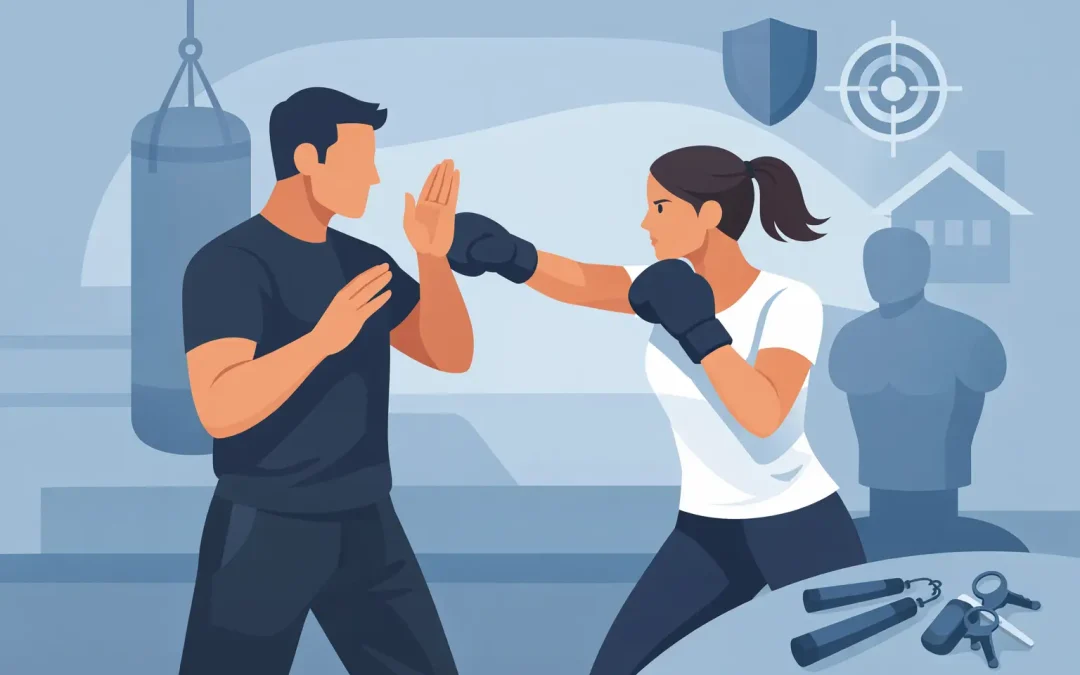
A crowded parking garage. An aggressive stranger closing distance. A wrist grabbed before you have time to think. Private self defense lessons are not about collecting impressive moves for a future that may never come. They are about building a fast, usable response when your space, safety, and choices are under pressure.
For many adults, group classes are a strong starting point. But a private setting gives you something different: focused coaching built around your body, your routine, your concerns, and the situations you are most likely to face. No waiting for your turn. No trying to copy a sequence designed for someone else. Just practical training with a clear purpose – get safer, faster.
Why Private Self Defense Lessons Work Differently
A real confrontation is messy. You may be carrying a laptop bag, wearing work clothes, walking to your car after dark, managing a child, or caught off guard in a confined space. There is no referee, no clean starting position, and no guarantee that the other person follows rules.
That is why private instruction should not look like a performance. It should focus on awareness, positioning, verbal boundaries, escaping grabs, creating distance, and responding decisively when escape is not immediately available. The best answer is often leaving early. The second-best answer is creating the opening to leave.
Private coaching allows the instructor to identify what slows you down. Some people freeze when someone raises their voice. Others have trouble maintaining balance when pulled or pushed. Someone with prior martial arts experience may default to techniques that work in a controlled gym but break down under surprise and resistance. These are not failures. They are training priorities.
Instead of repeating forms or rehearsed choreography, you can work on the moments that matter: recognizing danger sooner, protecting yourself at close range, moving with purpose, and making simple actions work under stress.
Training Should Fit the Threat, Not a Template
Good private self defense lessons begin with an honest conversation. What is making you seek training now? Is it commuting alone, traveling for work, dealing with unwanted attention, workplace concerns, or a recent incident that has changed how safe you feel?
Your answer shapes the training. A person concerned about elevator or hallway encounters needs different practice from someone who wants to feel more prepared while jogging, using ride-share services, or returning to a vehicle late at night. A corporate leader arranging coaching for a small team may need practical awareness and boundary-setting alongside physical escape skills.
A focused instructor will also consider your current fitness, injuries, height, reach, confidence level, and available training time. You do not need to be athletic to start. You do need instruction that respects reality. A technique that requires perfect timing, high flexibility, or exceptional strength is a poor first answer for most people.
The goal is simple: use direct, natural movements that can be learned, tested, and repeated. At Urban Street Defense, that means a Jeet Kune Do-inspired approach centered on simplicity, directness, adaptability, and effectiveness under pressure. No fancy moves – just what works.
What a Productive Session May Cover
Private training is not one fixed syllabus. Still, effective sessions commonly build around four areas:
- situational awareness and early decision-making
- verbal boundaries, posture, and managing distance
- releases and escapes from common grabs or close-range attacks
- pressure-based drills that test whether the response still works when you are startled or resisted
The physical work matters, but mindset matters too. Many people have been taught to be polite, avoid making a scene, or second-guess their instincts. Self-defense training gives you permission to act early, use your voice, protect your space, and leave without apologizing for it.
Who Benefits Most From One-to-One Coaching?
Private lessons are especially useful for beginners who do not want to feel lost in a larger class. You can ask questions, slow down a drill, and repeat the same scenario until the movement begins to feel natural. That focused attention often builds confidence quickly.
They also suit busy professionals. A scheduled one-to-one session can be more efficient than trying to fit into a fixed class timetable, especially if your work involves travel, late hours, or unpredictable commitments. You are training for your actual life, not an ideal schedule.
Private instruction can also help people returning after an injury, those who feel anxious in group environments, and students with past martial arts training who want to strip away unnecessary habits. For couples, friends, or families, a private small-group format can create a more comfortable learning environment while still allowing realistic partner drills.
There is a trade-off. Group classes expose you to different body types, energy levels, and reactions. That variety is valuable. Private training delivers individual correction and targeted repetition. The strongest path for many students is to start privately, then add group sessions or controlled sparring once they have core movement and confidence.
How to Choose Private Self Defense Lessons
Do not choose based on flashy social media clips, belt rank, or how complicated the techniques look. Ask what the training prepares you to do when someone is bigger, closer, angry, and not cooperating.
A quality instructor should be able to explain why a technique works, when it does not, and what the safer alternative is. They should not promise that any move works every time. Real safety training deals in probabilities, positioning, awareness, and repeated practice – not guarantees.
Look for instruction that includes progressive resistance. Learning a movement slowly is useful at first. Staying there is not. If every drill ends with a compliant partner pausing in the right place, you have learned choreography, not response. Pressure must be introduced carefully and progressively so you can think, move, and recover when the situation feels less predictable.
Also pay attention to the atmosphere. You should feel challenged, not intimidated. The instructor must be direct about danger without using fear as a sales tool. A supportive environment lets you make mistakes, ask questions, and train hard without embarrassment.
Before committing, ask practical questions. How are sessions tailored? Will you practice verbal and physical responses? How is pressure introduced? Can training account for injuries or mobility limits? Is there a clear progression beyond the first lesson? Straight answers are a good sign.
What to Expect in Your First Session
Your first private lesson should not throw you into full-intensity sparring. It should establish a baseline. You may discuss your daily routines, past experience, physical limitations, and the situations that concern you most.
From there, expect simple work: how to stand without looking confrontational, how to use your voice, how to maintain a safer distance, and how to move when someone crowds or grabs you. The instructor may use pads or controlled resistance to help you experience contact safely. That contact is useful because it replaces imagination with feedback.
You may feel awkward at first. That is normal. Under pressure, most people discover that knowing an idea and doing it quickly are not the same thing. Private coaching closes that gap through repetition, correction, and realistic progression.
Wear comfortable clothing you can move in. Leave jewelry that could catch or snag at home. More importantly, arrive ready to be coached. Self-defense is not about proving toughness. It is about being willing to learn what you need before you need it.
Build Capability, Not False Confidence
One lesson can improve awareness and introduce useful actions. It cannot create dependable instinct by itself. Skill comes from practice over time, especially when drills become more dynamic and less predictable.
You do not need to train every day. Consistency beats intensity followed by long gaps. A regular private session, combined with simple practice and occasional group pressure training, can build meaningful progress. Your reactions become cleaner. Your voice becomes more decisive. Your ability to recognize when to leave improves.
Personal safety is not about living afraid. It is about refusing to be unprepared. Start with the situations you face most often, train the simplest responses until they are reliable, and give yourself more options when seconds count.