
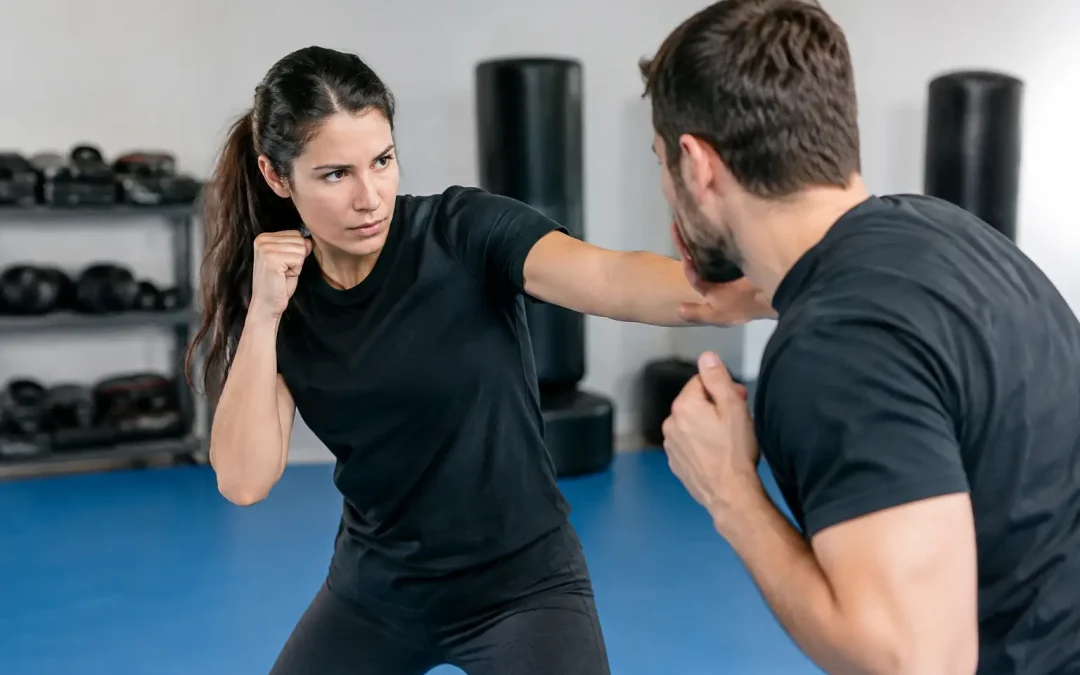
A self defense class selection guide should start with one hard question: will this training still work when you are scared, off-balance, tired, and caught by surprise? A class can look impressive from the sidelines and still leave students unprepared for the speed, confusion, and pressure of a real confrontation.
The right class does not promise superhero skills. It gives you simple actions, better awareness, and the ability to make decisions under stress. Your goal is not to win a fight or collect belts. Your goal is to create an opening, protect yourself, escape, and get help.
What a Self Defense Class Must Prepare You For
Real danger is rarely clean, fair, or scheduled. It may begin in a parking area, elevator, workplace, public transit stop, or social setting. You may have limited space, poor footing, restricted movement, a bag in one hand, or no warning at all.
That is why training should go beyond rehearsed attacks and compliant partners. Look for instruction that addresses awareness, verbal boundaries, distance management, escape routes, and physical responses when avoidance has failed. A useful class teaches you when to leave, when to de-escalate, and when immediate action is necessary.
Technique matters, but context matters more. A complicated sequence may work beautifully in a calm demonstration. Under pressure, most people need direct movements they can recall without stopping to think. Simplicity is not basic training. Simplicity is what remains available when adrenaline takes over.
7 Reality Checks Before You Join
1. Watch how students train under pressure
Ask to observe a class before you commit. Do students only take turns performing set moves, or do they work through resistance, movement, noise, uncertainty, and realistic timing? You do not need to see people being reckless or injured. You should see controlled pressure that gradually teaches students to function when a partner does not cooperate.
Pressure-tested training exposes gaps early. It shows whether a technique still makes sense when someone pulls away, pushes forward, grabs harder, or refuses to stand still. Sparring, scenario drills, and resistance should be scaled to the student. Beginners need a safe entry point. More experienced students need enough challenge to avoid false confidence.
2. Check whether the moves are simple enough to remember
If a class depends on ten-step combinations, perfect positioning, or a cooperative attacker, be cautious. Fine motor skills and memory can deteriorate under fear. Training should favor natural, direct actions that work from awkward positions and do not require perfect timing.
This does not mean every answer is a punch. Practical self-defense can include creating distance, breaking a grip, using your voice, protecting your head, moving toward an exit, or getting back to your feet. The question is whether the method is efficient and adaptable, not whether it looks dramatic.
3. Ask what happens after the technique fails
A good instructor does not pretend the first response always works. Grips slip. Strikes miss. Space closes. An attacker may be larger, stronger, or acting unpredictably. Training must teach recovery, follow-up decisions, and escape rather than freezing when Plan A does not go perfectly.
Listen for instructors who explain trade-offs honestly. Running is usually better than fighting, but escape may not be immediately available. Ground skills are useful, but staying on the ground in a public-space attack can create additional risks. There are no magic answers, only better choices for the situation in front of you.
4. Look for instructors who teach judgment, not aggression
Self-defense is about personal safety, not proving toughness. The right instructor makes it clear that force has consequences and should be used only when necessary to protect yourself or another person from an immediate threat.
You should also hear practical discussion about verbal boundaries, recognizing predatory behavior, managing distance, and leaving early. A class that treats every disagreement as a fight is not teaching mature self-protection. It is teaching poor judgment.
5. Make sure the class fits your body and your life
You do not need to be athletic, young, or experienced to begin. A quality program should give beginners clear progressions while still challenging people who have trained before. The instructor should be able to adjust drills for fitness level, injury history, mobility, and confidence without lowering the standard of practical effectiveness.
Schedule matters too. The best class is not the one with the most dramatic marketing. It is the one you can attend consistently. Weekly group training may suit someone who wants regular practice and community. Private coaching may be better if you need flexible times, focused attention, or help working through a specific concern. A short crash course can give useful foundations, but it cannot replace repeated practice.
6. Test the culture before you pay for a package
A serious training environment can be demanding without being intimidating. You should feel challenged, not humiliated. Students should train with control, respect boundaries, and understand that safety equipment and clear rules make harder practice possible.
Watch how the instructor responds when someone struggles. Do they offer useful coaching, or do they use embarrassment as motivation? Look at the class mix as well. Adults with different backgrounds should be able to learn together without ego taking over the room.
At Urban Street Defense, the standard is reality-based training with support behind it: no ceremonial routines, no waiting for a perfect pause, and no pressure to perform for appearances. That combination matters. People improve faster when they can train hard, ask questions, and make mistakes safely.
7. Ask direct questions about the curriculum
Before enrolling, ask what the first few sessions cover and how skills progress after that. A clear program should explain how it teaches awareness, verbal defense, common grabs, close-range attacks, standing recovery, and pressure-based drills. It should also explain what students are not being taught and why.
Be careful with sweeping claims such as “works against anyone” or “learn everything in one day.” Good training respects the unpredictability of violence. It gives you useful tools, then builds your ability to apply them across changing situations.
Red Flags That Should Make You Walk Away
Walk away from classes that encourage students to train through dangerous injuries, glorify street fights, or promise guaranteed outcomes. Be skeptical if the instructor refuses to let you observe, cannot explain how drills become more realistic, or relies entirely on titles and lineage instead of clear teaching.
Another warning sign is a program built only around choreography. Forms can develop coordination and discipline, and sport training can build timing and fitness. Those benefits are real. But if your purpose is personal safety, neither should be mistaken for realistic defense training unless the class also addresses surprise, resistance, escape, and decision-making under pressure.
Choose Training You Will Actually Use
The right class should make you more alert, more capable, and less likely to freeze. It should not make you reckless or convinced that danger is easy to control. Confidence built on honest practice is quiet. You notice exits. You set boundaries earlier. You move with purpose.
Choose an instructor who respects the seriousness of violence without making fear the center of your life. Train the basics until they are instinctive, keep your judgment sharp, and remember the standard that matters most: when something goes wrong fast, you need actions that are simple enough to use.