
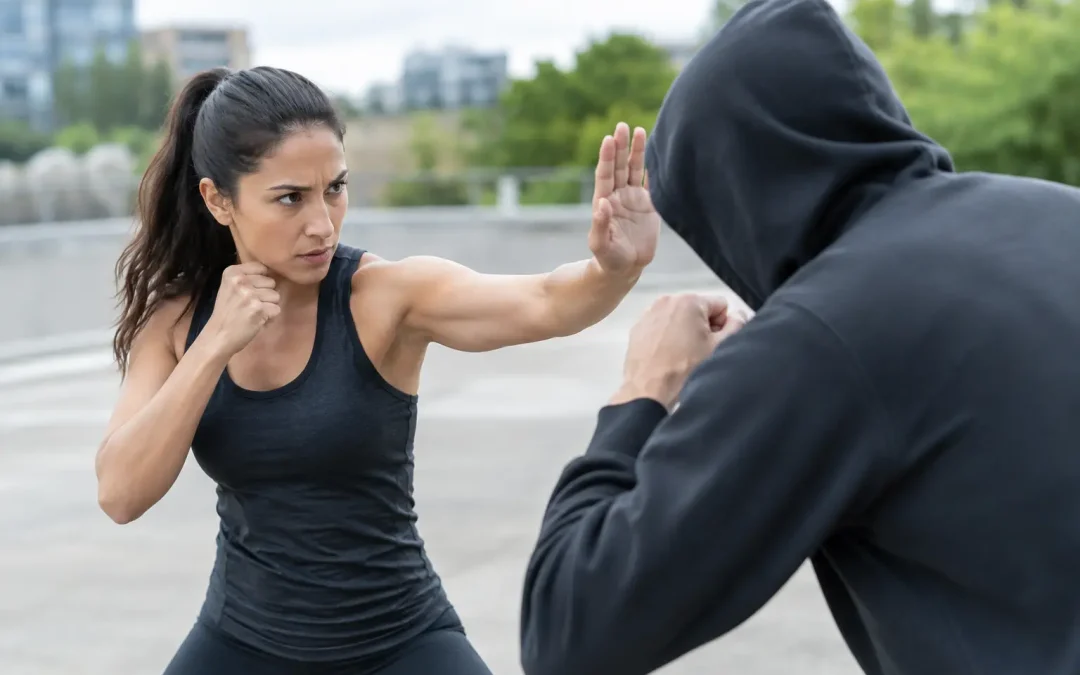
A clean punch thrown at a cooperative partner can look convincing. A technique that still works when you are startled, off-balance, trapped near a wall, and afraid is something else entirely. So, which self defense style works? The honest answer is not a single style name. It is the training method that prepares you to recognize danger, act simply under pressure, and get away.
Real self-defense is not about winning a fight or proving you know more moves than someone else. It is about creating a chance to escape a bad situation with the least harm possible. That requires more than memorizing techniques. It requires timing, awareness, decision-making, physical conditioning, and practice against resistance.
Which Self Defense Style Works in Real Danger?
The style that works is the one that trains for the situation you may actually face. It should give you a small set of high-percentage responses, practiced repeatedly until they are available under stress. It should also teach you when not to engage, how to manage distance, and how to leave as soon as an exit opens.
A good reality-based program does not promise that a smaller person can effortlessly defeat a larger attacker. Size, strength, surprise, weapons, multiple attackers, and the environment all matter. Anyone claiming otherwise is selling fantasy. Practical training gives you better options, not guarantees.
Look for training built around simplicity, directness, adaptability, and pressure. That means natural strikes, movement, protective positioning, escape from common grabs, and the ability to keep functioning when your first response fails. The objective is not a perfect sequence. The objective is to disrupt the threat long enough to get safe.
The Test Is Pressure, Not Appearance
Many martial arts can build fitness, discipline, confidence, and coordination. Those benefits are real. But self-defense has a different standard: Can you use it when someone is resisting, moving unpredictably, shouting, grabbing, or closing distance fast?
A technique may work beautifully in slow-motion practice and disappear under adrenaline. Fine motor skills fade when fear takes over. Your hands shake. Your vision narrows. You may not remember a six-step response, even if you performed it perfectly in class last week.
That is why pressure testing matters. It does not mean reckless training or getting injured to prove toughness. It means controlled drills where a partner gives realistic resistance, timing, movement, and verbal intensity. You learn what distance feels like. You learn how quickly a person can rush you. You learn whether your response is simple enough to use.
Sparring also has value when it is coached properly. It develops composure, footwork, reactions, and the ability to make decisions while tired. But sparring alone is not self-defense. Sport rules, gloves, a clear start, a known opponent, and a safe surface change the problem. Good self-defense training takes useful attributes from sparring and applies them to messy, civilian situations.
What Effective Training Should Include
Start with awareness. The best physical technique is the one you never need because you spotted trouble early, changed direction, left a place, or trusted your instincts. Effective programs teach positioning in public spaces, boundary-setting language, and how to avoid being trapped in an isolated area, vehicle, elevator, or narrow walkway.
Then comes distance management. Most attacks become harder to stop once the attacker is already holding you. Learn to keep space when possible, use your hands in a non-threatening protective position, and move toward exits rather than standing still. If someone ignores a clear verbal boundary and keeps closing in, treat that behavior seriously.
Physical responses should be direct and easy to recall. Strong body mechanics, palm strikes, elbows, knees, low-line attacks, framing, and simple escapes can be more reliable than high kicks or complicated joint locks. The exact tools depend on the situation, your mobility, and the available escape route. A technique that puts you on the ground may be a poor choice if there could be another attacker nearby.
Training should also cover the ugly middle range: being grabbed, pushed into a wall, crowded at close distance, or knocked off balance. This is where rehearsed choreography often breaks down. You need to protect your head, regain posture, create space, strike if necessary, and move out.
Finally, the program should address aftermath. Get to safety. Call emergency services. Seek medical attention even if you think you are fine. Document what you can. If you used force, explain only the essential facts to responding authorities and get appropriate legal advice. Self-defense is not over the moment you escape.
The Strengths and Limits of Popular Styles
There is no need to dismiss every traditional or sport-based martial art. Each can offer useful pieces. The mistake is assuming the label alone makes it street-ready.
Boxing develops hands, footwork, timing, fitness, and calm under pressure. Its limits are obvious: no training for grabs, weapons, or ground survival in its standard format. Muay Thai adds knees, elbows, clinch work, and durable conditioning, though competition habits and rule sets still need adjustment for civilian defense.
Brazilian Jiu-Jitsu can be valuable for escaping pins and understanding what happens when a fight goes to the ground. Yet staying on the ground is dangerous in a street setting, especially around hard surfaces, multiple attackers, or weapons. The goal is not to submit someone. It is to stand up and leave.
Wrestling and judo develop balance, control, and resistance against grabs. They can be highly useful, but throws carry risks on concrete and may keep you tied to an attacker longer than you want. Krav Maga and other reality-based systems often focus directly on common threats, but quality varies widely from school to school. Ask how often students train against resistance and whether instructors can explain the legal and tactical reasons behind their methods.
Jeet Kune Do-inspired training can be a strong fit because its core idea is not loyalty to a fixed catalog of moves. It favors what is simple, direct, and useful for the person and problem in front of you. At Urban Street Defense, that means training practical responses under pressure, not collecting forms or waiting for a perfect setup.
How to Choose a Self-Defense Class
Watch a class before committing. You should see students learning safely, working with partners, and gradually dealing with movement and resistance. Beginners should not be thrown into hard sparring on day one, but they also should not spend months practicing against a frozen partner.
Ask what the course prepares you for. A credible instructor can explain how the training addresses surprise, verbal aggression, close-range attacks, escape, and situational awareness. Be cautious if every answer is a flashy disarm, an advanced kick, or a claim that one move works against everyone.
The right class should make you more capable without making you reckless. Confidence is useful. False confidence is dangerous. You want an environment that is supportive, honest, and demanding enough to expose what needs work.
Frequency matters more than collecting techniques. One weekend course can improve awareness and give you a starting point. Regular practice builds reactions, fitness, and decision-making. Private coaching can help if you have specific concerns, while group training gives you varied partners and controlled pressure.
Train for Escape, Not Ego
Self-defense is a safety skill, not an identity. You do not need to become a fighter to be harder to victimize. You need a plan that works with your body, your schedule, and the places you move through every day.
Choose training that challenges you realistically, teaches you to avoid trouble when you can, and gives you direct answers when you cannot. Then practice consistently. When danger gives you no time to think, simple actions trained under pressure are what you will have left.