
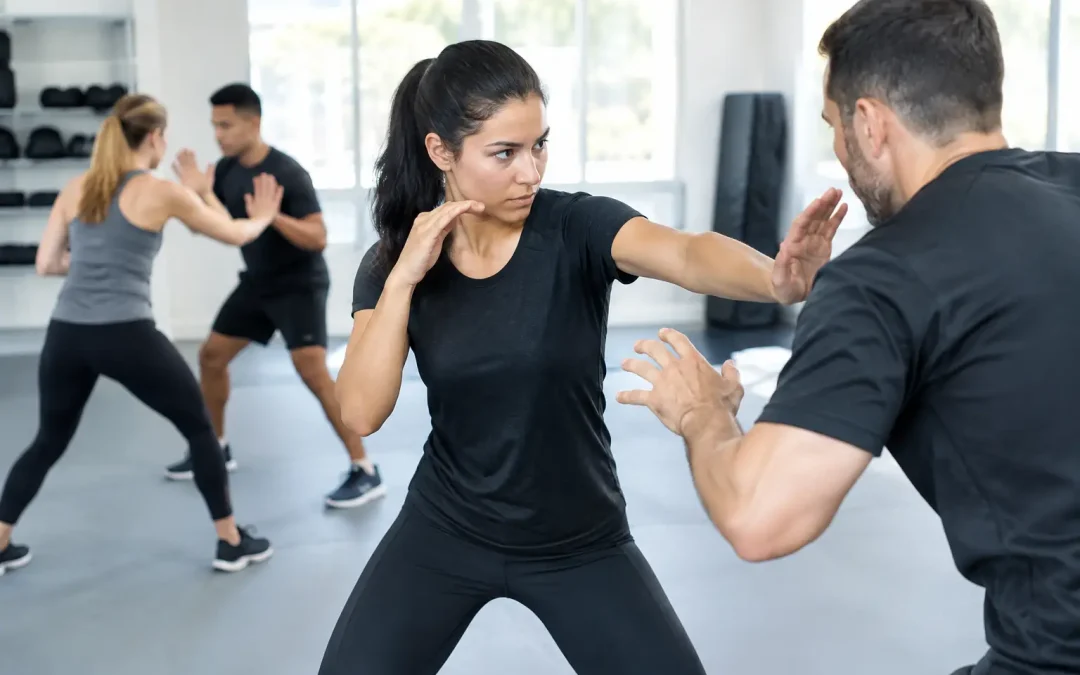
A self-defense class should prepare you for the moment your body wants to freeze: an aggressive grab, a threatening approach in a parking area, an unwanted confrontation on a commute. The best self defense class formats are not all the same because people have different schedules, safety concerns, confidence levels, and training goals. What matters is choosing a format that moves you from knowing what to do to responding when pressure hits.
No fancy moves. No collecting techniques you cannot use. Choose training that builds simple, direct actions you can recall when an unexpected threat gives you no time to think.
What Makes a Self-Defense Class Format Effective?
The format matters, but the training method matters more. A large class can be useful if students get supervised repetitions, realistic scenarios, and feedback. A private session can be a waste of time if it becomes a performance of complicated moves against a cooperative partner.
Look for instruction built around awareness, verbal boundary setting, escape, striking, movement, and decision-making under stress. Students should practice from awkward positions and common urban situations, not just from a neat starting stance. There should be progressive resistance too. You do not begin with full-force sparring, but you should eventually test whether your response still works when someone moves, pushes back, or creates pressure.
A good class also teaches judgment. Self-defense is not about winning a fight. It is about recognizing danger early, creating an opportunity to leave, and acting decisively if physical force is unavoidable.
Best Self Defense Class Formats by Goal
There is no single best format for every person. The right choice depends on whether you need a strong foundation, a fast introduction, individual coaching, or a program that protects an entire team.
Ongoing Group Classes: Best for Building Instinct
Regular group classes are the strongest option for people who want skills that hold up over time. You train consistently, repeat core movements, work with different partners, and become more comfortable managing distance and pressure. That repetition is what turns a technique into an instinctive response.
Group training also exposes you to different body types, speeds, and energy levels. A response that feels easy with one familiar partner may feel completely different against someone taller, stronger, faster, or more aggressive. Training with a range of people helps remove false confidence.
The trade-off is attention. Even in a well-run small class, an instructor must divide time among students. Beginners who feel nervous about physical contact may need a few sessions before they settle in. Still, for adults who can commit to regular practice, this is usually the best value and the best path toward lasting capability.
Private Coaching: Best for Specific Needs and Fast Progress
One-to-one self-defense coaching is built around you. It works especially well for people with a specific concern, such as commuting alone, recovering confidence after an incident, preparing for travel, or managing a physical limitation. It can also help experienced students correct gaps that are hard to spot in a group setting.
Private instruction moves at your pace. More time can be spent on stance, movement, awareness habits, and the situations most relevant to your life. You also receive immediate correction instead of waiting for an instructor to rotate back to you.
However, private coaching should not become overly comfortable. Real threats do not arrive in a predictable pattern from one familiar person. The best private programs eventually include scenario work, controlled resistance, and opportunities to train with others. Use private sessions to build a solid base, then pressure-test that base.
Private Group Training: Best for Families and Trusted Circles
A private class for friends, family members, or a small social group creates a practical and supportive setting. People often learn faster when they can ask direct questions without feeling exposed in front of strangers. It can be particularly useful for a family with teenagers, a group of roommates, or friends who regularly travel or socialize together.
This format allows training to focus on shared routines. That may include arriving safely at vehicles, handling an unwanted encounter while out together, or responding when one person in the group is targeted. It also creates accountability. When the class ends, participants can keep practicing awareness and safety habits together.
The limitation is variety. A close group may have similar sizes, fitness levels, and habits. A skilled instructor should adjust drills so students do not only learn to handle the people they already know.
Women-Focused Crash Courses: Best for an Immediate Safety Reset
A women-focused self-defense crash course can deliver urgent, useful skills in a short period. It is a strong entry point for someone who has never trained, wants a safer way to begin, or needs practical preparation before a move, trip, or major lifestyle change.
The right crash course covers more than strikes. It should address boundary setting, recognizing pre-attack behavior, breaking common holds, using simple targets, escaping, and getting to safety. The environment should be supportive without pretending that danger is polite or predictable.
A short course has a clear limit: one session cannot build the timing, conditioning, and emotional control that come from ongoing practice. Treat it as a starting point, not a finish line. Learn the immediate tools, then keep training if you want those tools available under pressure.
Corporate Self-Defense Training: Best for Workplace Readiness
Organizations have a duty to think beyond fire drills and cybersecurity slides. Employees may face harassment, aggressive visitors, travel risks, late-night commutes, or difficult situations around parking areas and public-facing workplaces. Corporate self-defense training gives teams a practical framework for recognizing risk and taking action.
For employers, the best sessions are tailored to the workplace. A team that deals with customers needs different scenarios than employees who travel between sites or finish shifts after dark. Training should include prevention, communication, physical safety principles, and clear escalation or reporting procedures relevant to the organization.
Corporate workshops are highly accessible, especially for busy teams, but they are usually time-limited. They are most effective when followed by refresher sessions, optional deeper training, and a workplace culture that takes personal safety seriously. For organizations in Malaysia, an HRDCorp-claimable program may also make practical safety training easier to implement.
Public Workshops: Best for Trying Reality-Based Training
A public workshop is a low-barrier way to experience practical self-defense without committing to a long program immediately. It can help you understand what reality-based training feels like: direct movements, active drills, scenario awareness, and a focus on escape rather than choreography.
Workshops are also useful for people who want to train with a friend or test whether an instructor’s approach matches their needs. You should leave with a few clear actions you can remember, not a long sequence that disappears by the next week.
Because time is short, workshops cannot replace regular training. Use them to get moving, identify your weak points, and decide what format should come next.
Online Self-Learning: Best for Flexible Foundations
Online learning is valuable when schedules, distance, or confidence make in-person classes difficult at first. It can introduce core principles, awareness habits, body mechanics, and simple drills you can practice safely. For people in Kuala Lumpur, Petaling Jaya, or Ipoh who cannot attend every session, it can also support their in-person development between classes.
But video cannot measure your distance, correct your posture in real time, or recreate the adrenaline of resistance. Online training works best as a foundation or supplement, not as the only preparation for physical confrontation. Watch, practice, and then get coached in person whenever possible.
How to Choose the Right Format
Start with the problem you are trying to solve. If you want long-term confidence and physical readiness, choose ongoing group training. If you have a personal concern or need focused attention, begin with private coaching. If your family, friends, or team share a safety need, train together in a private group. If time is tight, a workshop or crash course is better than doing nothing, provided you continue building from it.
Then assess the quality of the instruction. Ask whether beginners practice against movement and controlled resistance. Ask how the class handles common situations such as grabs, pushes, close-range attacks, and attempts to control your movement. Ask whether the instructor teaches avoidance and escape alongside physical action.
Be cautious of programs built around long forms, fixed routines, rank chasing, or techniques that require perfect timing from a cooperative attacker. There is nothing wrong with martial arts as sport, culture, or fitness. But if your goal is personal protection, your training must prepare you for confusion, imbalance, stress, and an opponent who does not follow the script.
Urban Street Defense uses reality-based, Jeet Kune Do-inspired principles because simple actions are easier to learn, adapt, and apply when conditions turn messy. The goal is not to look skilled. The goal is to get home safely.
Choose the format that gets you training now, then keep moving toward more realistic practice. Confidence does not come from watching a technique once. It comes from knowing you can act when the moment is real.