
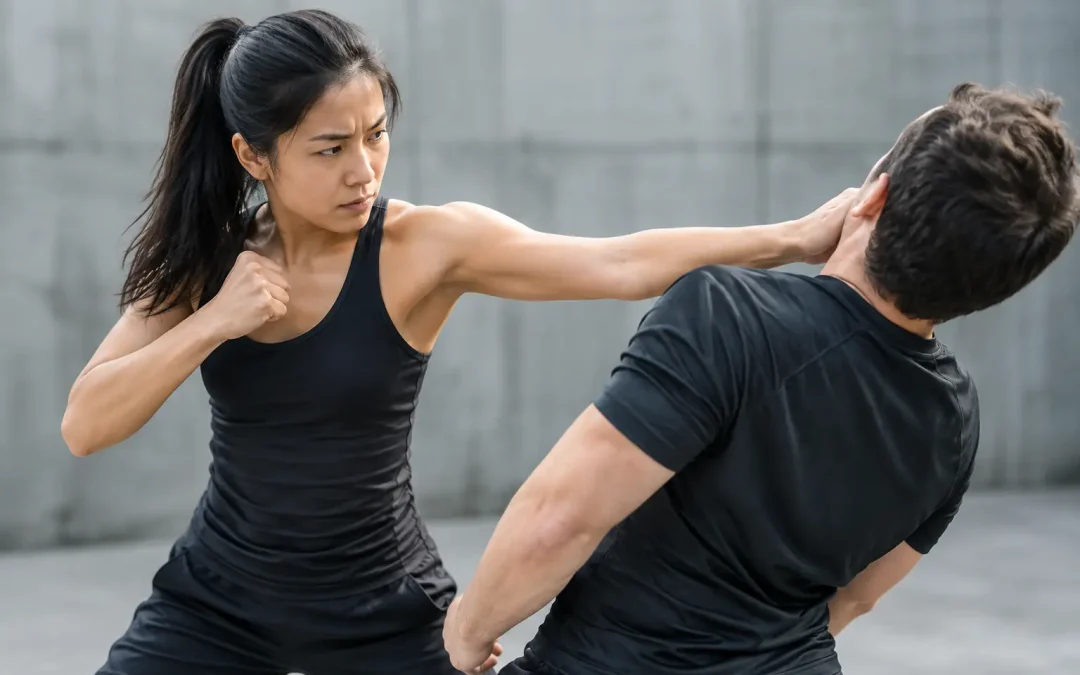
A threat does not wait for a bow, a referee, or a perfect fighting stance. It happens in a parking lot, an elevator, outside a bar, or during a commute, often before you have processed what is happening. So, is JKD effective? It can be highly effective for self-defense when it is trained as Bruce Lee intended: simple, direct, adaptable, and tested under pressure.
That last part matters. Jeet Kune Do is not a magic formula, and no martial art can guarantee safety. A system is only as useful as the way it is taught, practiced, and applied. If training is built around cooperative drills, flashy combinations, and memorized responses, it can create false confidence. If it builds awareness, fast decision-making, functional striking, escape skills, and the ability to keep moving under stress, JKD has a strong place in real-world self-defense.
Is JKD Effective Outside the Training Room?
JKD was never meant to be a museum piece. Its core idea is practical: use what works, discard what does not, and adapt to the person and the situation in front of you. That is a useful mindset when personal safety is the goal.
Real violence is messy. There may be no warning. The ground may be wet. You may be carrying a bag, wearing work clothes, protecting a friend, or trapped in a narrow space. An attacker may be larger, aggressive, intoxicated, or armed. A method that depends on long routines, fine motor skills, or a compliant partner can break down quickly.
JKD favors economy. Rather than collecting dozens of techniques, it focuses on tools that can be delivered quickly and adjusted as conditions change. Direct attacks, protective positioning, footwork, interception, close-range control, and immediate escape all fit this approach. The objective is not to win a beautiful fight. It is to create an opening, break contact, and get to safety.
That makes JKD especially relevant for adults who do not have hours each day to train. A working professional needs skills that are clear enough to remember under stress and practical enough to develop through consistent training. Simplicity is not a shortcut. It is a survival advantage.
What Makes JKD Useful for Self-Defense
JKD effectiveness comes from principles, not from a fixed list of moves. A trained person learns to recognize distance, timing, body position, and intent. They learn when to move away, when to use a barrier, when to speak firmly, and when physical action is unavoidable.
The first principle is directness. Under pressure, extra movement costs time. A direct response can interrupt an attack before it builds momentum. This does not mean charging forward blindly. It means choosing the shortest useful action for the moment, whether that is moving off line, using a palm strike, creating space with a push, or driving toward an exit.
The second principle is adaptability. There is no single answer to every grab, punch, shove, or attempted restraint. An attacker may resist, change position, or bring friends into the situation. JKD training should teach students to respond to what is actually happening, not force a preset technique that is no longer available.
The third is interception. Waiting to absorb an attack and then responding is a poor plan when danger is close. JKD encourages recognizing the moment an attack is developing and acting decisively when action is necessary. Sometimes that means moving away before contact. Sometimes it means disrupting the attacker’s forward movement long enough to escape.
The fourth is efficiency. Street self-defense is not about trading punches. It is about using your strongest available options while protecting yourself and leaving as soon as you can. A short, forceful action followed by movement is often safer than staying engaged to prove a point.
The Hard Truth: JKD Is Not Effective if Training Is Soft
Calling a class JKD does not automatically make it realistic. Some programs focus heavily on lineage, theory, or rehearsed drills. Those elements may have value for martial arts study, but they are not enough for personal protection.
A person can perform a clean technique ten times against a partner who stands still and still freeze when someone shouts, rushes forward, grabs hard, or swings wildly. Stress changes breathing, balance, vision, timing, and judgment. Effective self-defense training must account for that.
Pressure does not mean students need to be injured or thrown into reckless full-contact fights. It means training should progressively include resistance, surprise, movement, verbal pressure, awkward positions, and decision-making. Students need to feel what it is like when a drill does not go according to plan. That is where instinct starts replacing hesitation.
Good JKD-based self-defense training also acknowledges that physical techniques are only one layer of protection. Awareness, boundary setting, positioning near exits, reading pre-attack behavior, and leaving early are often more valuable than any strike. The best fight is the one you spot early enough to avoid.
JKD Versus Sport Fighting
Sport martial arts and combat sports build real attributes. Boxing can develop timing and punching. Wrestling can develop balance and control. Brazilian jiu-jitsu can teach composure and positional awareness. Muay Thai can build durable striking and clinch skills. These are valuable tools.
But sport has rules, weight classes, controlled settings, and a defined start. Real violence may involve concrete, confined spaces, multiple attackers, improvised weapons, or legal consequences after the incident. A self-defense approach must account for those realities.
JKD can borrow useful material from many disciplines without becoming trapped by their rule sets. That is one of its strengths. The risk is that some schools borrow too much and lose focus, turning training into a random collection of techniques. Effective JKD has a clear filter: does this improve your ability to avoid danger, stop immediate harm, and escape?
What Should a Practical JKD Class Include?
If you are evaluating a program, watch what students actually do. Are they practicing only in lines, or are they learning to deal with movement and resistance? Are instructors correcting distance, awareness, and escape routes, or only the appearance of a technique?
A credible program should train simple striking and protective movement, but it should also cover common urban problems: unwanted grabs, close-range aggression, being pinned against a wall, sudden punches, and the need to move through crowded spaces. It should teach students to use their voice, create boundaries, and recognize when escape is the correct answer.
Classes should be scalable. Beginners need a safe introduction to stance, balance, awareness, and basic tools. More experienced students need increasing pressure, realistic sparring, scenario work, and honest feedback. Neither group benefits from fantasy techniques or macho promises.
At Urban Street Defense, the focus is not on ceremonial forms or collecting ranks. It is on building usable responses through direct instruction, scenario-based practice, and pressure-oriented training. The aim is simple: help ordinary people react faster, move with purpose, and get home safely.
Is JKD Effective for Everyone?
JKD can be adapted for different ages, body types, and fitness levels because it does not demand that everyone move the same way. A smaller person should not be taught to overpower a larger attacker. Someone with limited mobility may need different options than a fit athlete. Effective instruction works with the student’s real capabilities while improving them over time.
Still, JKD is not a substitute for judgment. It cannot erase the danger of weapons, groups, or a determined attacker. It cannot make every situation safe. Training should make this clear, because honest preparation is more valuable than false confidence.
The goal is not fear. It is readiness. You may never need to use a physical skill, and that is a good outcome. But knowing how to notice danger, set a boundary, move decisively, and act when there is no other choice changes how you carry yourself.
JKD is effective when it stays true to its purpose: no fancy moves, no routines for show, and no waiting for a perfect moment. Train the basics under pressure, keep your decisions simple, and make getting away the priority. Better. Faster. Stronger.