
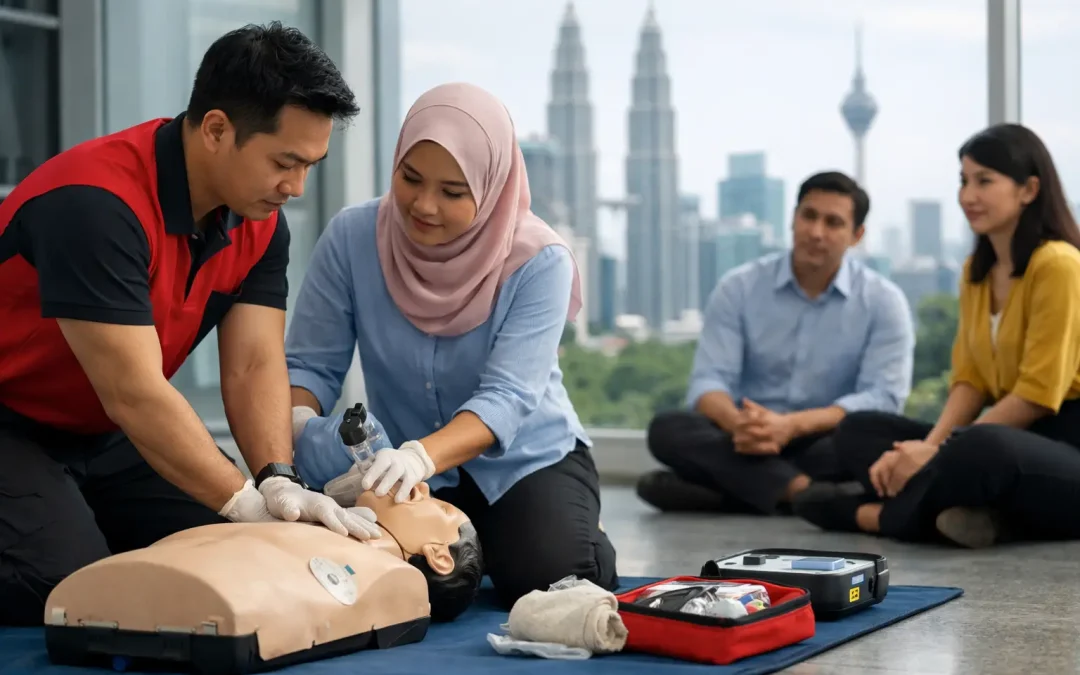
A medical emergency does not wait for a convenient time. It can happen in an office meeting, on the LRT platform, during a family meal, or after a traffic collision. First aid training in Malaysia gives ordinary people a practical advantage: the ability to recognize danger, take the right immediate action, and stay useful until professional help arrives.
That does not mean playing doctor. It means knowing your limits, protecting yourself from further risk, contacting emergency services, and delivering the basic care a casualty may need in the first critical minutes. Under pressure, simple actions beat panic, hesitation, and half-remembered advice.
What First Aid Training in Malaysia Should Teach
A useful course is not a lecture where participants watch an instructor demonstrate skills from the back of a room. It should put people close to the real decisions they may face: Is the area safe? Is the person responsive? Are they breathing normally? Who calls 999? What must happen first?
The exact syllabus varies by provider, course duration, and whether the training is designed for workplaces, parents, schools, or the public. Still, solid first aid training should cover the situations most likely to demand immediate action.
CPR and AED response
When a person collapses and is not breathing normally, every second counts. Participants should practice checking responsiveness, calling for help, performing CPR, and using an automated external defibrillator, or AED. An AED is designed to guide users with voice prompts, but training matters because stress can make even straightforward instructions feel difficult.
Hands-on repetition is the point. You need to feel the correct body position, learn the rhythm of compressions, and understand how quickly fatigue appears. Watching a video is not the same as kneeling beside a manikin and doing the work.
Severe bleeding, wounds, and shock
Major bleeding needs fast, direct action. A course should teach participants how to apply firm pressure, use dressings appropriately, recognize when bleeding is life-threatening, and monitor a casualty for signs of shock while waiting for emergency responders.
This is where practical instruction matters most. In an emergency, people can become distracted by the sight of blood or unsure whether they are making the injury worse. Clear training replaces guesswork with a sequence: make the scene safe, protect yourself where possible, call for help, control the bleeding, and keep observing the casualty.
Choking, burns, and common medical events
First aid is not only about dramatic accidents. Choking, fainting, seizures, allergic reactions, burns, heat-related illness, diabetic emergencies, and asthma attacks can happen at home, at work, or in public. The right response depends on what you see, what the person can communicate, and whether their condition is getting worse.
Good instructors do not pretend every incident has one magic technique. They teach recognition, basic care, escalation, and when not to interfere. For example, moving an injured person may be unsafe unless there is an immediate danger such as traffic, fire, or an unstable environment.
The Gap Between Knowing and Acting
Most people have heard that CPR saves lives. Far fewer have practiced what they would actually say when calling for help, where they would place their hands, or how they would manage bystanders who are crowding the scene.
The gap is pressure. Your heart rate rises. Someone is crying. The casualty may look completely different from a training manikin. You may fear getting it wrong. That is why first aid should be learned as an active response, not as a collection of facts.
Scenario-based practice builds calm decision-making. It forces participants to prioritize the next action rather than trying to solve every problem at once. In a real emergency, you do not need an encyclopedic answer. You need to notice the immediate threat and act decisively within your training.
This principle also applies to personal safety. A first aid course prepares you to respond after an injury or medical crisis. Reality-based self-defense training prepares you to recognize risk, create distance, escape danger, and protect yourself before an incident becomes a medical emergency. They are different skills, but both reject passive thinking.
How to Choose a Course That Is Worth Your Time
Not all training is equal. A short awareness session can be useful, but it may not provide enough time for meaningful skills practice. A full certification course may be the better choice for a designated workplace first aider, a parent, a coach, or someone responsible for a group.
Before enrolling, ask how much of the program is hands-on. Confirm whether participants practice CPR on manikins and train with an AED device. Find out who delivers the course, whether the certification is recognized for your intended purpose, and how often you should refresh your skills.
For employers, the course must match the actual risks of the workplace. An office has different concerns from a warehouse, construction site, gym, school, kitchen, or field-based team. Training should also account for shift schedules, staff numbers, access to emergency equipment, and how quickly ambulance services can reach the location.
A course is less useful if it is built around passing a test but leaves participants afraid to act. Look for instructors who explain the reason behind each step, correct technique in real time, and allow questions about realistic situations.
First Aid at Work Is a Team Responsibility
A first aider cannot carry an entire workplace safety plan alone. Employers and teams need clear procedures: accessible first aid kits, visible emergency contacts, known AED locations, incident reporting, and a plan for guiding emergency responders to the right floor, gate, or building.
Training is also a chance to expose small failures before they become serious. Does anyone know where the kit is? Has it expired? Is the AED blocked by furniture or locked behind a door? Who takes charge when the designated first aider is away?
For corporate teams, first aid training works best when it is treated as a live operational skill rather than a compliance box. Run realistic scenarios. Assign roles. Practice communication. Review what slowed the response down. The goal is not drama. The goal is coordinated action when someone needs it.
Confidence Without False Confidence
Training should make you more capable, not reckless. A first aider must assess the scene before rushing in. Traffic, electrical hazards, violence, fire, chemicals, and unstable structures can turn one casualty into two.
There are also moments when the best move is to get professional help immediately and provide reassurance rather than attempt treatment beyond your ability. First aid training teaches boundaries as well as interventions. That restraint is part of competence.
The same mindset belongs in personal safety training. No fancy moves. No assumption that you can control every outcome. Use simple actions, create space, seek safety, and get help early. Urban Street Defense applies that reality-first approach to self-protection: train for the pressure you may actually face, not for a performance.
Make Training Part of Your Safety Plan
A certificate is a starting point, not permanent readiness. Skills fade when they are never practiced. Refresh training at the interval recommended by your provider, revisit workplace procedures after staff or layout changes, and make sure family members know the basics of calling for help and sharing an exact location.
Keep the standard simple: if someone near you stopped breathing, bled heavily, collapsed, or choked, could you recognize the emergency and take the first useful step? You do not need to be fearless. You need enough practice to move before panic takes over.